 Dou Dou (豆豆)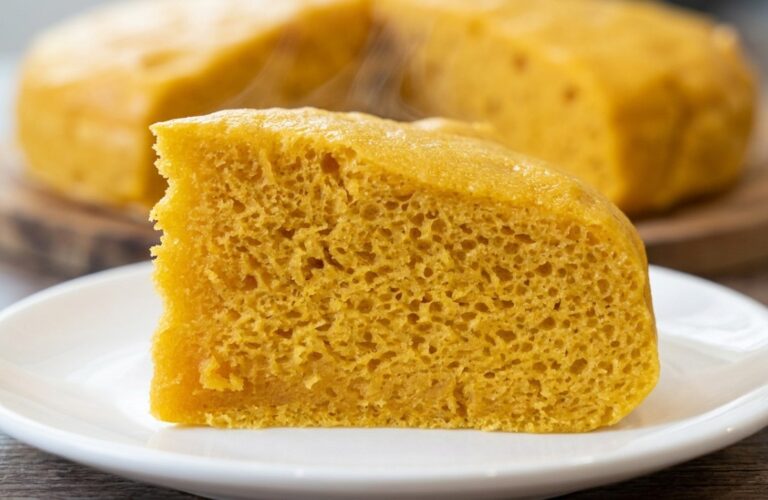
One simple batter of pumpkin and flour steam into the softest, most fluffy vegan sponge cake imaginable — no eggs, no oven, no fuss.
用南瓜加麵粉調成麵糊,蒸出鬆軟綿密的無蛋素蒸蛋糕——不用烤箱,做法簡單,入口即化。
📹 Watch the Recipe
Recipe by 家常素 Irene Yong — thank you for the inspiration!
🥘 Why This Recipe Works
This classic Chinese steamed cake, known in Cantonese as 南瓜蒸糕 (naam gwa zing gou), proves that the vegan kitchen never needs to apologise for a tender, cloud-soft dessert. Instead of a heavy butter-and-egg sponge bright from the oven, the sweet potato-coloured cake relies on naturally sweet pumpkin, a living yeast fermentation, and a gentle blanket of steam to rise into something impossibly light.
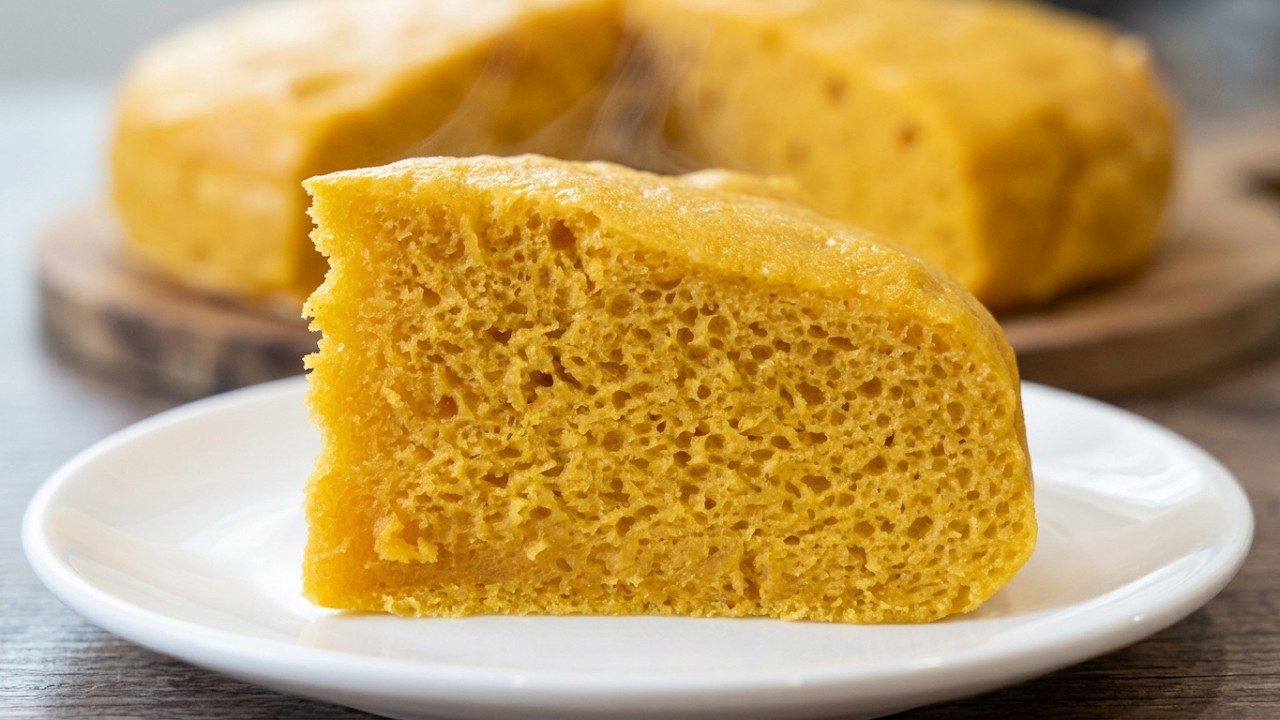
What makes it so special is the crown of fine bubbles and the gentle, springy bounce you can press into the surface with a fingertip. The pumpkin does double duty here: it lends a golden colour, a mellow earthiness, and enough moisture that the crumb stays supple for days. It is the kind of tea-time delight you would find in old Cantonese dim sum houses, trusted to pair with nothing more than a pot of oolong.
Eight pantry ingredients, one steamer basket, and just over an hour from first mix to first slice — this is the gentlest possible introduction to yeasted vegan baking, and it never fails to win over even the most sceptical eater.
🛒 Ingredients
| Ingredient | Amount | Notes |
|---|---|---|
| Pumpkin (butternut squash) (南瓜) | 200g | Steamed 20 minutes, then mashed |
| Sugar (糖) | 50g | White or cane sugar |
| Water (水) | 200g | For the batter |
| Instant yeast (酵母) | 3g | Active dry works too |
| Plain flour (中筋麵粉) | 180g | All-purpose flour |
| Tapioca starch (木薯澱粉) | 120g | Adds a light, chewy bounce |
| Baking powder (泡打粉) | 3g | For extra lift |
| Water (for baking powder) (水(泡打粉用)) | 1 tbsp | To dissolve the baking powder |
| Cooking oil (食用油) | 20g | Neutral oil like sunflower |
👨🍳 Instructions
Step 1 — Steam and mash the pumpkin
- Cut 200g pumpkin into even chunks and steam over high heat for 20 minutes until fork-tender.
- Mash until completely smooth, then set aside to cool slightly.
Step 2 — Mix the wet base
- In a large bowl, combine 50g sugar with 200g water and stir until dissolved.
- Add 3g yeast and the cooled pumpkin mash, whisking to blend into a smooth liquid.
Step 3 — Make a thick batter
- Sift in 180g plain flour and 120g tapioca starch.
- Mix thoroughly until no dry flour remains — the batter should be fairly thick and cohesive.
Step 4 — First ferment
- Cover the bowl with cling film and leave to ferment at room temperature (about 30°C) for roughly 40 minutes, until bubbles appear on the surface.
Step 5 — Degas and enrich
- Dissolve 3g baking powder in 1 tablespoon of water and pour it into the fermented batter.
- Add 20g cooking oil and mix by hand to deflate the batter back to its pre-fermentation volume.
Step 6 — Steam to perfection
- Line a 6-inch loose-bottom cake tin and pour in the batter. Tap the tin a few times to shake out trapped air bubbles.
- Place directly into a preheated steamer and steam over high heat for 30 minutes.
- Turn off the heat and let the cake rest in the steamer for 5 minutes before removing.
- Cool until no longer hot to the touch, then slice. Soft, fluffy, and naturally golden!
💡 Tips & Substitutions
| Problem / Question | Fix / Answer |
|---|---|
| My pumpkin mash left extra water — what now? | Drain any excess liquid before mixing so the batter stays thick; a runny batter will steam into a dense cake. |
| The weather is cold and my batter won’t rise. | Warm the mixing water to lukewarm (about 35°C) and place the covered bowl in a slightly warm oven or near a sunny window to help the yeast along. |
| Can I make this without tapioca starch? | Yes — swap it for the same weight of plain flour, though the crumb will be slightly less bouncy and chewy. |
| It stuck to the tin. What should I do differently? | Use a proper loose-bottom tin lined with parchment paper on the base, and brush the sides lightly with oil. |
📊 Nutrition
~230 calories per serving · 43g carbs · 4g protein · 4g fat (per 1/8 of cake)
Ingredients
Method
- Cut 200g pumpkin into even chunks and steam over high heat for 20 minutes until fork-tender. Mash until completely smooth, then set aside to cool slightly.
- In a large bowl, combine 50g sugar with 200g water and stir until dissolved. Add 3g yeast and the cooled pumpkin mash, whisking to blend into a smooth liquid.
- Sift in 180g plain flour and 120g tapioca starch. Mix thoroughly until no dry flour remains — the batter should be fairly thick and cohesive.
- Cover the bowl with cling film and leave to ferment at room temperature (about 30°C) for roughly 40 minutes, until bubbles appear on the surface.
- Dissolve 3g baking powder in 1 tablespoon of water and pour it into the fermented batter. Add 20g cooking oil and mix by hand to deflate the batter back to its pre-fermentation volume.
- Line a 6-inch loose-bottom cake tin and pour in the batter. Tap the tin a few times to shake out trapped air bubbles. Place directly into a preheated steamer and steam over high heat for 30 minutes. Turn off the heat and let the cake rest in the steamer for 5 minutes before removing. Cool until no longer hot to the touch, then slice. Soft, fluffy, and naturally golden!
Notes
🌱 Why This Dish
南瓜蒸糕 is a beloved tradition across the Cantonese-speaking world, where steamed cakes (蒸糕) are a beloved teahouse companion and a lucky-symbol food for festivals. The round, golden cake symbolises fullness and prosperity, which is why a steamed sponge often appears on celebratory tables during lunar new year and family gatherings. In Chinese medicine, pumpkin (南瓜, naam gwa) is prized as a warming, nourishing ingredient said to support the spleen and stomach — a comfort food gentle enough for all ages. The character 糕 (gou) rhymes with 高 (higher), so eating cake carries the wish for rising fortune, making each airy, golden slice both a treat and a blessing.