 Dou Dou (豆豆)
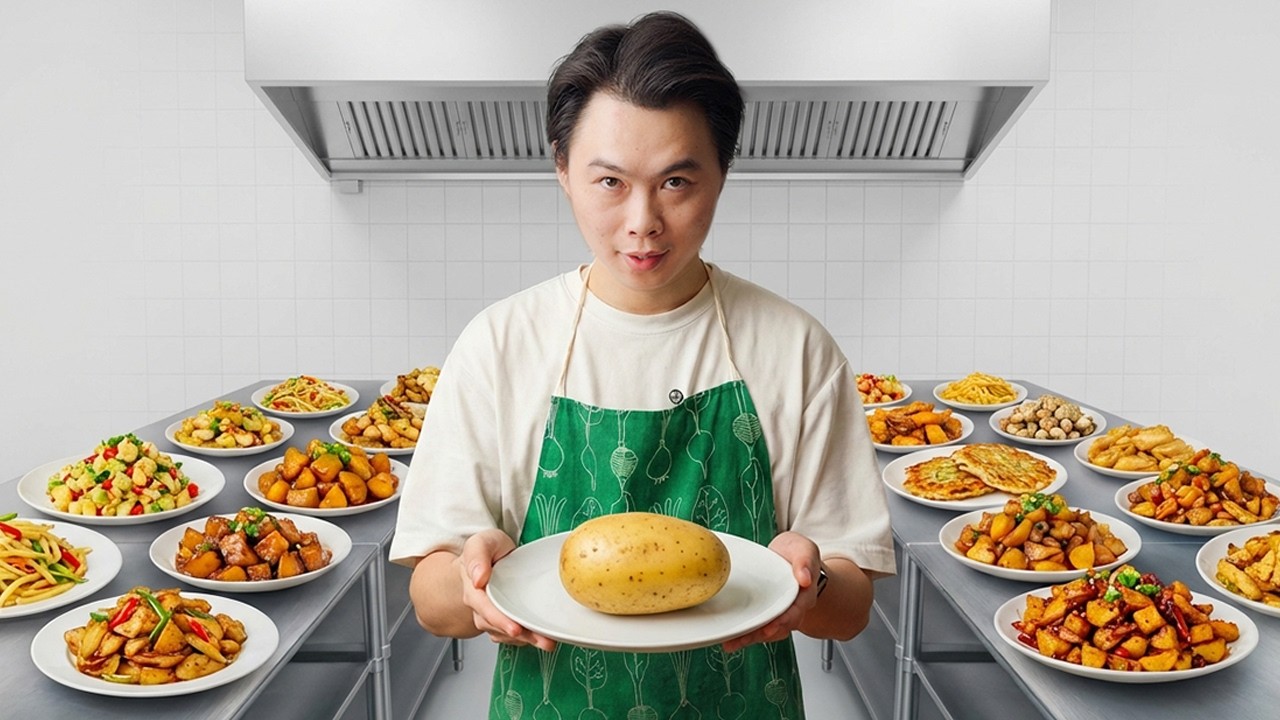
There’s a reason this fiery, vinegar-kissed plate of shredded potatoes is the ultimate test of a Sichuan chef’s wok skills — it’s all about that jaw-dropping crunch.
这道酸辣脆爽的炝炒土豆丝是检验川菜师傅锅功的试金石,关键在于那一口令人上瘾的脆嫩,每一根都裹着干辣椒和锅气的焦香。
📹 Watch the Recipe
Recipe adapted from Lionel Zeng, a Sichuan home cook based in the US who creates brilliant plant-based Chinese recipes.
🥘 Why This Recipe Works
炝炒土豆丝 (Qiàng Chǎo Tǔ Dòu Sī) is the sleeper hit of Sichuan home cooking. Walk into any restaurant in Chengdu and you’ll see locals demolishing a plate of these glistening, chili-flecked shreds alongside twice-cooked pork or mapo tofu. It’s the dish every Sichuan home cook learns first — and spends a lifetime perfecting.
The magic is in the contrast: the potatoes are blanched just 20 seconds in vinegared water to set their crunch, then flash-fried at screaming-hot wok temperatures for barely 30 seconds. The dried chilies and garlic hit the oil first, perfuming everything, while a splash of Chinese black vinegar at the end cuts through with bright acidity. The result? Potatoes that snap when you bite them, with layers of mala, sour, and savory in every strand.
4 main ingredients, one wok, 20 minutes — and a lifetime of craving. This is Sichuan cooking at its simplest and most brilliant.
🛒 Ingredients
| Ingredient | Amount | Notes |
|---|---|---|
| Russet or Red potatoes (土豆) | 1 large or 3 medium | High-starch = best crunch; avoid waxy potatoes |
| Green bell pepper (青椒) | ½ | Julienned to match the potato shreds |
| Green onions (葱) | 2 | Cut into 2-inch sections |
| Garlic (大蒜) | 3 cloves | Finely chopped |
| Dried red chilies (干辣椒) | 2 | Snipped into pieces, seeds optional |
| For the sauce: | ||
| Soy sauce (酱油) | 1 tsp | Light soy preferred |
| Chinese black vinegar (陈醋) | 2 tsp | Chinkiang vinegar; essential for authentic flavor |
| Sugar (糖) | 1 tsp | Balances the heat and acidity |
| Salt (盐) | Pinch | To taste |
| Neutral oil | 2 tbsp | For stir-frying; avocado, peanut, or canola |
| White vinegar (白醋) | 2 tbsp | For the blanching water only |
👨🍳 Instructions
Step 1 — Prepare the Potatoes
- Slice the potatoes into thin planks (about ⅛ inch / 3 mm), then cut into fine matchsticks (julienne). The thinner and more uniform, the better the texture.
- Immediately submerge the shreds in a bowl of cold water. Swish with your hands, drain, and repeat 2-3 times until the water runs crystal clear. This removes excess starch — the secret to crunchy, non-gluey potatoes.
Step 2 — Blanch for Crunch
- Bring a pot of water to a rolling boil and add 2 tablespoons of white vinegar.
- Drop in the potato shreds and blanch for exactly 20 seconds — they should turn slightly translucent at the edges but still have a firm bite.
- Drain immediately and plunge into ice water (or run under cold tap water) to stop cooking. Drain well.
Step 3 — Mix the Sauce
- In a small bowl, combine 1 tsp soy sauce, 2 tsp Chinese black vinegar, 1 tsp sugar, and a pinch of salt.
- Stir until the sugar dissolves. Have this ready by the stove — the stir-fry happens fast.
Step 4 — Heat the Wok
- Set your wok or largest skillet over high heat until it starts to smoke lightly.
- Add 2 tablespoons of neutral oil and swirl to coat.
- Toss in the snipped dried chilies and chopped garlic. Stir-fry for about 10 seconds until fragrant — do not burn the garlic.
Step 5 — Flash-Fry the Potatoes
- Add the drained potato shreds and julienned bell pepper to the wok.
- Toss and stir-fry vigorously for about 30 seconds. Keep everything moving so the potatoes cook evenly without sticking.
Step 6 — Finish and Serve
- Pour the prepared sauce over the potatoes, add the green onion sections, and toss on high heat for another 10-15 seconds until everything is glossy and well-coated.
- Transfer to a plate immediately. Serve hot as a side dish or light main with steamed rice.
💡 Tips and Substitutions
| Problem | Fix |
|---|---|
| No Chinese black vinegar? | Substitute 1.5 tsp rice vinegar + 0.5 tsp balsamic vinegar. Not exact, but close enough for a weeknight dinner. |
| Potatoes turning gluey? | You didn’t rinse enough! Keep washing until the water runs crystal clear. All that excess starch needs to go. |
| No wok at home? | A large carbon steel or non-stick skillet works fine. Just get it screaming hot before adding oil. |
| Want it milder? | Use 1 dried chili and remove the seeds. The dish will still have great aroma without punishing heat. |
📊 Nutrition
Per serving (as a side dish, serves 2): ~175 calories | 7g fat | 26g carbs | 3g protein | 3g fiber | 420mg sodium
Ingredients
Method
Notes
🌱 Why This Dish
炝炒土豆丝 (Qiàng Chǎo Tǔ Dòu Sī) is the ultimate expression of jiā cháng cài (家常菜) — home-style Chinese cooking. The character “炝” (qiàng) describes a specific technique: heating oil until it’s just smoking, then flash-frying aromatics (dried chilies, garlic, Sichuan peppercorns) to release their fragrance into the oil before adding the main ingredient. It’s a cornerstone of Sichuan cooking that appears in dozens of classic dishes.
Potatoes (土豆, tǔ dòu — literally “earth bean”) arrived in China via the Silk Road during the Ming dynasty and were embraced with enthusiasm in Sichuan, where they thrive in the cool mountain soils. Today, Sichuan province is one of China’s largest potato-growing regions, and locals eat them at every meal — breakfast pancakes, lunch stir-fries, and dinner braises.
This dish is also naturally vegan, making it a staple in Buddhist vegetarian (素斋, sù zhāi) cooking across China’s temple kitchens. Many monastic communities rely on quick, vegetable-forward stir-fries like this one, where the chilies and vinegar provide such bold flavor that no meat or dairy is missed. It’s proof that plant-based eating is not a trend in China — it’s a 2,000-year-old culinary tradition.