 Dou Dou (豆豆)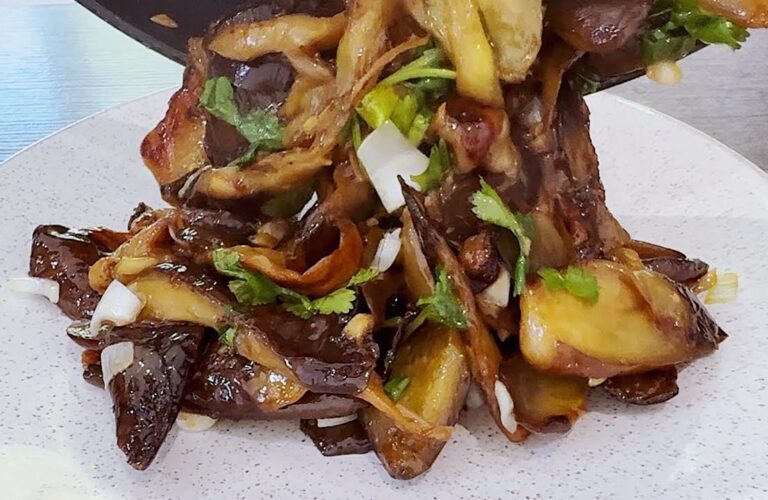
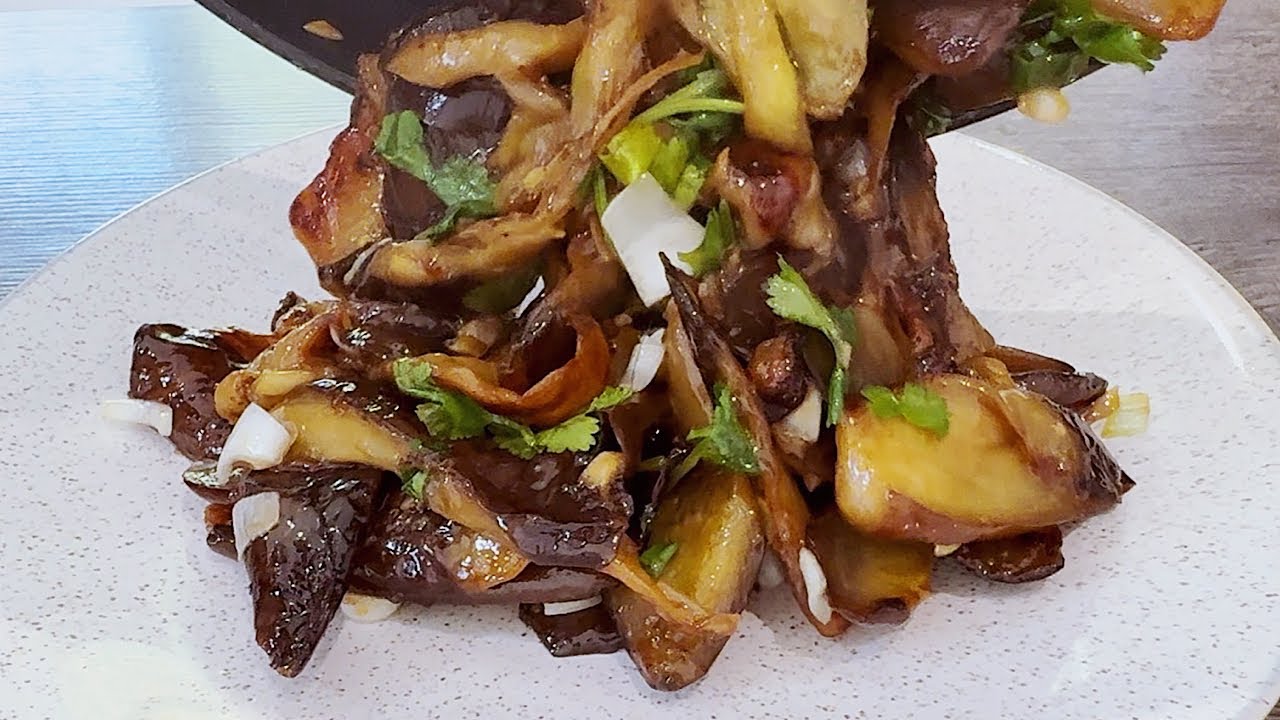
Juicy pan-fried eggplant lacquered in a glossy miso-garlic glaze — a humble Japanese-style home dish that turns an ordinary aubergine into something irresistible. 一盤油亮鹹香的蒜香茄子,把平凡的茄子變成了白飯小偷,軟糯入味,香氣撲鼻。
📹 Watch the Recipe
Recipe by 家常素 Irene Yong (Homemade Vegan):
🥘 Why This Recipe Works
Eggplant is famously a sponge for oil, but this version sidesteps that problem entirely. Salting the cut pieces first draws out moisture and relaxes the flesh, so it cooks quickly and sops up far less oil — then a light dusting of potato starch seals the outside and gives the sauce something to cling to. The result is silky, tender aubergine with a rich, glossy glaze instead of a greasy mess.
The magic is in the sauce: a piquant blend of miso, soy sauce, mushroom stir-fry sauce and a touch of sugar, finished with sesame oil and a burst of garlic and spring onion. It’s a perfect balance of salty, sweet and deeply savoury — the kind of flavour that makes you reach for more rice. 8 ingredients, one pan, under 10 minutes of cooking.
This is classic home-style Japanese cooking at its most approachable. No deep frying, no complicated techniques — just a little patience salting the eggplant and a hot pan, and you have a restaurant-quality side that’s completely vegan.
🛒 Ingredients
| Ingredient | Amount | Notes |
|---|---|---|
| Eggplant / Aubergine 茄子 | 500–550 g | Japanese or long Chinese eggplant; look for firm, glossy ones |
| Salt 盐 | ½ teaspoon | For salting and drawing out moisture |
| Potato starch 马铃薯淀粉 | ½ tablespoon | Light coating; cornstarch works too |
| Cooking oil 食用油 | 1 tablespoon | Neutral oil; enough to coat the pan |
| Mushroom stir-fry sauce 蘑菇炒酱 | ½ tablespoon | Umami base; adds depth |
| Miso 味噌 | ⅔ teaspoon | White or light miso preferred |
| Sugar 糖 | ⅔ teaspoon | Balances the salty savoury |
| Cooking wine 料酒 | 2 teaspoons | Shaoxing or mirin-style |
| Soy sauce 酱油 | 2 teaspoons | Light soy for flavour |
| Sesame oil 香油 | ½ teaspoon | Added at the end for aroma |
| Garlic 蒜 | 2 cloves | Finely minced |
| Spring onion 葱 & coriander 香菜 | To garnish | Chopped, for serving |
👨🍳 Instructions
Step 1 — Prep the eggplant
- Cut the eggplant into large, thick diagonal slices.
- Toss with ½ teaspoon salt and coat evenly; set aside for 10 minutes.
- Rinse off the salt, then gently squeeze out excess water — be careful not to crush the pieces.
- This step removes moisture so the eggplant cooks faster and absorbs less oil.
Step 2 — Coat and pan-fry
- Dust the eggplant lightly with potato starch so it coats evenly.
- Heat 1 tablespoon cooking oil in a pan over medium heat; add the eggplant and toss to coat in the oil, adding a little more if needed.
- Lay the pieces cut-side down so you can watch the browning, and cook for about 2 minutes until done.
- Flip and cook the other side for about 1 minute, until softened.
Step 3 — Make the sauce
- In a small bowl combine mushroom stir-fry sauce, sugar, miso, cooking wine and soy sauce.
- Stir well to dissolve the miso and sugar completely.
Step 4 — Sauté aromatics
- Push the pan-fried eggplant to one side of the pan.
- Add sesame oil and sauté the minced garlic and spring onion until fragrant.
- Stir to combine with the eggplant.
Step 5 — Glaze and serve
- Turn the heat up to high so the pan is sizzling.
- Give the sauce a quick stir, then pour it in batches while tossing.
- Stir-fry until every piece is evenly coated and glossy.
- Finish with chopped spring onion and coriander, and serve hot with rice.
💡 Tips & Substitutions
| Problem / Question | Fix / Answer |
|---|---|
| Eggplant drinks up too much oil | Salting and squeezing first is key — it removes water and prevents the flesh from absorbing excess oil during cooking. |
| No miso on hand | Swap for a splash of extra soy sauce plus a little more sugar, or use a teaspoon of your favourite savoury paste. |
| Don’t want potato starch | You can skip it; the eggplant will be softer and the sauce slightly less clingy but still delicious. |
| Sauce not clinging | Make sure the pan is on high heat when you add the sauce so it reduces and coats the eggplant instead of pooling. |
📊 Nutrition
Per serving (about ⅓ of the dish): ~180 calories, 10g fat, 20g carbohydrates, 5g protein, 6g fibre. Eggplant is wonderfully low in calories and rich in fibre, making this a light yet satisfying side.
🌱 Why This Dish
Eggplant has been farmed in China for well over a thousand years and is a staple of Buddhist and vegetarian cooking across East Asia, prized for its mild flavour that soaks up whatever it’s cooked with. The Chinese name 茄子 (qié zi) is thought to derive from ancient terms for its drooping, fruit-laden branches — a plant that rewards patience and a light hand. In Chinese temple cuisine, eggplant is often slow-braised or pan-fried to create rich, meaty textures without any animal products, proving that a simple vegetable can carry a whole meal. This garlic-and-miso version is a Japanese home-style twist on that same idea: an everyday dish that makes the most of one humble ingredient, paired perfectly with a bowl of steamed rice.
Ingredients
Method
- Cut the eggplant into large, thick diagonal slices. Toss with 1/2 tsp salt, coat evenly and rest 10 minutes. Rinse off the salt, gently squeeze out excess water without crushing the pieces. This helps it cook faster and absorb less oil.
- Dust the eggplant lightly with potato starch so it coats evenly. Heat 1 tbsp oil over medium heat, add the eggplant and toss to coat in oil, adding more if needed. Lay cut-side down and cook about 2 minutes until done, then flip and cook the other side about 1 minute until softened.
- In a small bowl combine mushroom stir-fry sauce, sugar, miso, cooking wine and soy sauce. Stir well to dissolve the miso and sugar.
- Push the pan-fried eggplant to one side of the pan. Add sesame oil and sauté the minced garlic and spring onion until fragrant, then stir to combine with the eggplant.
- Turn the heat up to high. Give the sauce a quick stir, pour it in batches while tossing, and stir-fry until every piece is evenly coated and glossy. Finish with chopped spring onion and coriander. Serve hot with rice.