 Dou Dou (豆豆)
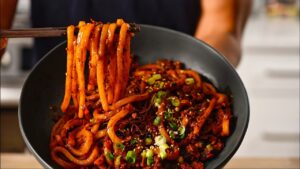
Tonight’s dinner is a one-pan Taiwanese home-cooking classic: glossy mung bean glass noodles stir-fried with sweet cabbage, earthy shiitake, and a savory soy-oyster glaze — chewy, saucy, and ready in about 10 minutes. 今晚的晚餐,是一道一鍋到底的台式家常美味:Q彈的冬粉,配上清甜高麗菜、香氣濃郁的乾香菇,用醬油素蠔油調味,鹹香入味,不到十分鐘就能上桌。
📹 Watch the Recipe
Recipe by 芭樂媽的家 Qistin Wong TV:
https://www.youtube.com/watch?v=p0SqoOa1Xao
🥘 Why This Recipe Works
高麗菜 — Taiwanese for cabbage — is quite literally the “national vegetable” of Taiwan, the backbone of countless lightning-fast home dinners. Here it pairs with 冬粉 (mung bean glass noodles), which soak up every drop of the savory sauce like little translucent sponges. The result is a humble, deeply satisfying dish where sweet cabbage and fragrant shiitake do all the heavy lifting.
The secret to the perfect bouncy texture is soaking the noodles in cold water, not hot. Hot water softens them too far, too fast, so they turn mushy when simmered. Cold-soaked noodles stay springy and absorb the sauce during the final braise, giving you that irresistible chewy bite.
Nine everyday ingredients, one pan, about 10 minutes. Serve it as a side dish with rice, or load up the noodles and let it stand alone as a main. The ratio is up to you — more cabbage for a side, more noodles for a hungry table.
🛒 Ingredients
| Ingredient 食材 | Amount 份量 | Notes 備註 |
|---|---|---|
| 高麗菜 Cabbage | 1/4 head | Sliced into thin shreds |
| 冬粉 Glass noodles | 1 bundle | Mung bean noodles, soaked in cold water |
| 乾香菇 Dried shiitake mushrooms | 3 pieces | Rehydrated, then sliced |
| 紅蘿蔔 Carrot | 1/3 medium | Julienned into thin strips |
| 食用油 Cooking oil | as needed | For sautéing the aromatics |
| 清水 Water | 250 ml | For braising the noodles |
| 醬油 Soy sauce | 1 tbsp | Base of the sauce |
| 素蠔油 Vegan oyster sauce | 1 tbsp | Adds savory depth |
| 白胡椒粉 White pepper | 1/2 tsp | Finishing warmth |
👨🍳 Instructions
Step 1 — Prep the vegetables
- Slice the cabbage into thin shreds and rinse well, then drain. Thin shreds cook quickly.
- Peel 1/3 carrot and cut into fine julienne strips.
- Soak 3 dried shiitake in hot water until soft, then slice into thin strips.
Step 2 — Soak the glass noodles
- Soak the noodles in cold water (filtered is fine) for a few minutes — not hot water, which makes them mushy.
- Once softened, drain and snip them shorter with scissors so they’re easy to eat.
- They should stay slightly firm at this point; they’ll finish cooking in the braise.
Step 3 — Sauté the shiitake
- Heat oil in a wok over medium-high heat and add the sliced shiitake.
- Stir-fry until fragrant and lightly caramelized at the edges — this builds deep umami.
- Add the carrot and stir-fry until just softened.
Step 4 — Add the cabbage
- Add the shredded cabbage and toss well; it will release its own moisture.
- Lower the heat and season with 1 tbsp soy sauce, 1 tbsp vegan oyster sauce, and 1/2 tsp white pepper.
- Crank the heat back up and stir-fry fast to coat everything in the glaze.
Step 5 — Braise until glossy
- Add 250 ml water and the soaked noodles.
- Cover and simmer for about 10 minutes, until the noodles plump up and absorb the sauce.
- Remove the lid, toss once more, and serve hot.
💡 Tips & Substitutions
| Problem / Question | Fix / Answer |
|---|---|
| My noodles turn mushy | Soak in cold water, not hot — they keep their spring and finish absorbing sauce in the braise. |
| Too salty? | Use light soy sauce, or add the oyster sauce first and taste before the full soy amount. |
| No vegan oyster sauce? | Use mushroom dark soy sauce, tamari, or a splash of vegetarian stir-fry sauce for depth. |
| Making it a main dish? | Increase the noodles and cut back on cabbage so the ratio favors the noodles. |
📊 Nutrition
Per serving (about 2 as a side): ~210 kcal, 8g protein, 38g carbs, 3g fat. Naturally vegan and oil-free-to-light.

Ingredients
Method
- Slice cabbage into thin shreds, rinse and drain. Julienne 1/3 carrot. Rehydrate 3 dried shiitake in hot water, then slice into strips.
- Soak the noodles in cold water (not hot, which makes them mushy). Drain and snip shorter with scissors. Keep them slightly firm — they finish cooking in the braise.
- Heat oil in a wok. Add sliced shiitake and stir-fry until fragrant and lightly caramelized. Add carrot and stir-fry until just soft.
- Add shredded cabbage and toss; it releases moisture. Lower heat, season with soy sauce, vegan oyster sauce and white pepper. Turn heat up and stir-fry fast to coat.
- Add 250 ml water and the noodles. Cover and simmer about 10 minutes until the noodles plump and absorb the sauce. Remove lid, toss, and serve hot.
Notes
🌱 Why This Dish
冬粉 (glass noodles) are made from mung bean starch, a staple of Chinese and Taiwanese cooking prized for their clear, soap-jelly appearance and springy chew. In Taiwan, cabbage is everywhere — cheap, sweet, and endlessly adaptable — which is why 高麗菜炒冬粉 shows up in homes, temple kitchens, and Buddhist vegetarian restaurants alike.
The dish reflects the Buddhist-influenced 素菜 (vegetarian) tradition central to Chinese home cooking: simple plant ingredients, a wok of hot oil, and restraint — no meat needed when umami comes from shiitake and soy. It’s the kind of meal made on busy weeknights across Taiwan, Hong Kong, and Malaysia, and proof that the humblest pantry staples can become something genuinely delicious.
English title: Stir-Fried Cabbage with Glass Noodles — 高麗菜炒冬粉.