 Dou Dou (豆豆)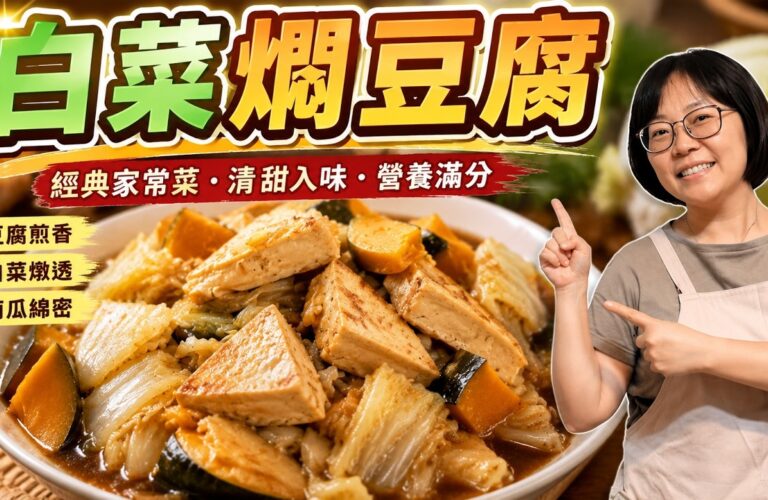
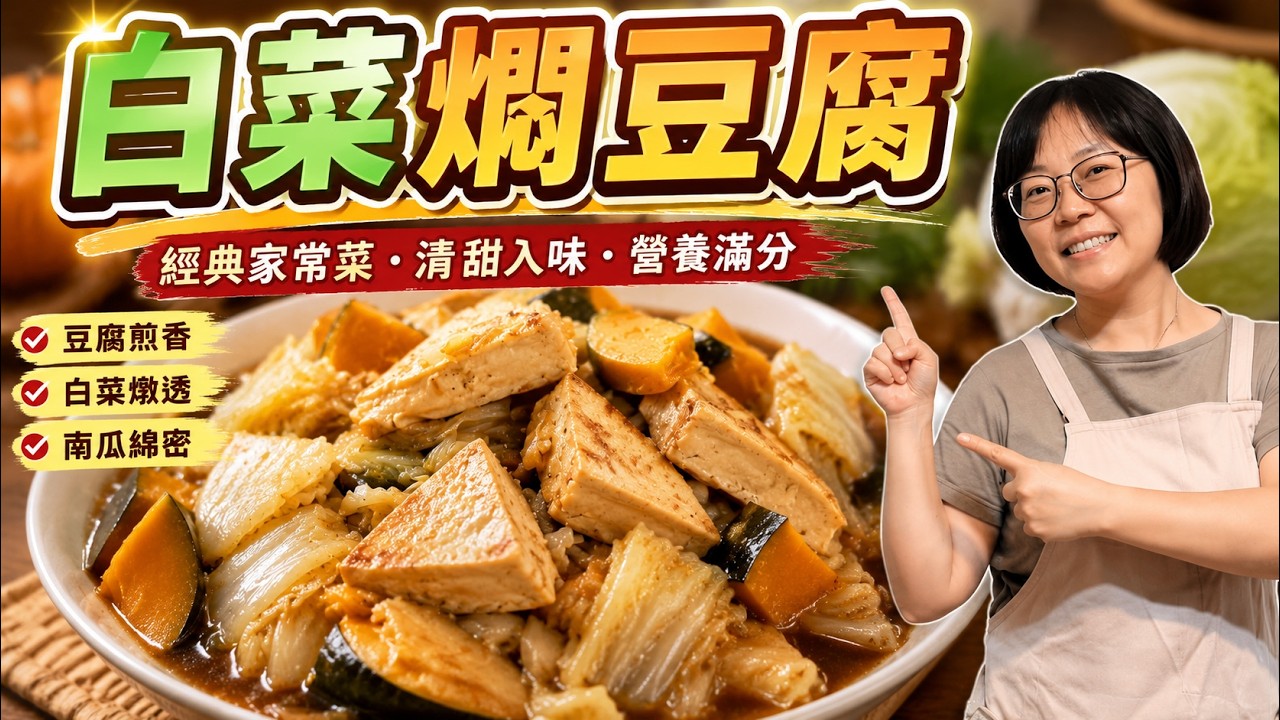
Golden-seared tofu and sweet baby pumpkin simmer gently with tender napa cabbage in a light soy-based broth — one pan, ten everyday ingredients, and a deeply comforting dish that begs for a big bowl of steamed rice.
大白菜煎到金黃的豆腐、清甜的貝貝南瓜,一鍋燜煮,簡單調味卻無敵下飯,是台灣家常餐桌上的暖心料理。
📹 Watch the Recipe
Recipe by 芭樂媽的家 Qistin Wong TV. Watch the full video for hands-on technique:
Ingredients
Method
- Cut the napa cabbage into wide strips, wash and drain. Cut the baby pumpkin into bite-size cubes (skin on), and cut firm tofu into thick slabs, patting them dry so they sear well.
- Heat oil in a wide pan over medium-high heat. Pan-fry the tofu slabs until both sides are golden and crisp, which keeps them intact and adds flavor during the braise.
- Add the cubed pumpkin and cabbage strips to the pan with the tofu. Season with soy sauce, vegan oyster sauce, salt, and white pepper, tumbling to coat.
- Pour in about 120ml water and bring to a gentle simmer. Cover and braise about 5 minutes until the cabbage softens and releases its sweet liquid.
- Gently turn the cabbage and tofu, then braise covered another 5 minutes until the pumpkin is tender and the cabbage has absorbed the broth. Optional: stir in mung bean vermicelli. Serve hot over steamed rice.
Notes
🥘 Why This Recipe Works
This is the kind of dish that proves great home cooking doesn’t need fancy technique or exotic ingredients. Napa cabbage — the humble winter staple of northern Chinese kitchens — softens into silky, sweet ribbons as it braises in its own released juices, absorbing every drop of the seasoned broth. It’s the definition of 清甜 (clear, natural sweetness).
The real star trick is the tofu. By pan-frying the slabs until both sides are golden and slightly crisp before braising, you build a beautiful caramelized crust that not only adds depth of flavor but keeps the tofu intact — no crumbling cubes in your stew. Around it, creamy baby pumpkin melts into the sauce, lending a natural, gentle sweetness that balances the savory soy and vegetarian oyster sauce.
Ten ingredients, one pan, about thirty minutes. That’s the magic of 白菜燜豆腐 — an unfussy, nourishing one-pot meal that families return to week after week.
🛒 Ingredients
| Ingredient | Amount | Notes |
|---|---|---|
| 大白菜 Napa Cabbage | ½ 顆 (about half a head) | Trimmed, cut into wide strips |
| 豆腐 Firm Tofu | 400g (1 box) | Sliced into thick slabs, patted dry |
| 貝貝南瓜 Baby Pumpkin | ¼ 顆 | Cubed, skin left on |
| 食用油 Cooking Oil | 適量 (as needed) | For searing the tofu |
| 醬油 Soy Sauce | 1 大匙 (1 tbsp) | Light soy |
| 素蠔油 Vegan Oyster Sauce | 1 大匙 (1 tbsp) | Plant-based mushroom sauce |
| 胡椒粉 White Pepper | 1 茶匙 (1 tsp) | Freshly ground preferred |
| 鹽 Salt | ½ 茶匙 (1/2 tsp) | Adjust to taste |
| 水 Water | 120 c.c. (about ½ cup) | Less is more — cabbage releases its own liquid |
| 冬粉 Mung Bean Vermicelli | 適量 (optional) | Added at the end to soak up sauce |
👨🍳 Instructions
Step 1 — Prepare the ingredients
- Cut the napa cabbage into wide strips; wash thoroughly and drain.
- Cut the baby pumpkin into bite-size cubes, skin on; cut the firm tofu into thick slabs and pat completely dry with paper towels (dry tofu sears better).
Step 2 — Sear the tofu
- Heat a generous splash of oil in a wide pan over medium-high heat.
- Add the tofu slabs and pan-fry until both sides are deeply golden and crisp — this is what keeps them from breaking apart during the braise.
Step 3 — Build the braise
- Add the cubed pumpkin and cabbage strips to the pan with the tofu.
- Season with soy sauce, vegan oyster sauce, salt, and white pepper, tumbling everything to coat.
Step 4 — Braise, covered
- Pour in about 120ml of water and bring to a gentle simmer.
- Cover and braise for about 5 minutes; the cabbage will begin to soften and release its own sweet liquid.
Step 5 — Second braise & finish
- Gently turn the cabbage and tofu, then braise covered for another 5 minutes until the pumpkin is tender and the cabbage has fully absorbed the seasoned broth.
- Optional: stir in mung bean vermicelli to soak up the remaining sauce.
- Turn off the heat and serve piping hot over steamed rice.
💡 Tips & Substitutions
| Problem / Question | Fix / Answer |
|---|---|
| Why fry the tofu first? | Pan-searing builds a golden crust that adds rich flavor and prevents the tofu from crumbling while braising. |
| No baby pumpkin on hand? | Use butternut squash or sweet potato instead; denser squash may need a few extra minutes of braising. |
| Need it gluten-free? | Swap the vegan oyster sauce for mushroom soy sauce plus a pinch of sugar to keep the savory-sweet balance. |
| Broth too watery or too dry? | Napa cabbage releases plenty of moisture — start with less water and add only if the pan looks dry. |
| Want more substance? | Fold in mushrooms, slices of dried tofu, or seitan for an extra layer of plant protein. |
📊 Nutrition
Per serving (about 3 servings): ~260 kcal · protein 14g · carbs 22g · fat 12g. A light, whole-food vegan meal.
Ingredients
Method
- Cut the napa cabbage into wide strips, wash and drain. Cut the baby pumpkin into bite-size cubes (skin on), and cut firm tofu into thick slabs, patting them dry so they sear well.
- Heat oil in a wide pan over medium-high heat. Pan-fry the tofu slabs until both sides are golden and crisp, which keeps them intact and adds flavor during the braise.
- Add the cubed pumpkin and cabbage strips to the pan with the tofu. Season with soy sauce, vegan oyster sauce, salt, and white pepper, tumbling to coat.
- Pour in about 120ml water and bring to a gentle simmer. Cover and braise about 5 minutes until the cabbage softens and releases its sweet liquid.
- Gently turn the cabbage and tofu, then braise covered another 5 minutes until the pumpkin is tender and the cabbage has absorbed the broth. Optional: stir in mung bean vermicelli. Serve hot over steamed rice.
Notes
🌱 Why This Dish
The character 燜 (mèn) describes a cornerstone of Chinese braised cooking: ingredients covered with a lid and gently steamed in their own juices until tender. It is an economy of technique that lets humble vegetables shine, and it belongs to the grand tradition of 家常菜 — the everyday home-style dishes that sustain Chinese families.
Napa cabbage (大白菜) has long been the affordability and comfort of northern China’s winters, while tofu (豆腐), born over two thousand years ago, remains the backbone of plant-based Chinese cuisine — and a staple of Buddhist temple kitchens, where vegetarian cooking (素食) is elevated to an art. The addition of pumpkin brings a round, golden sweetness that symbolizes prosperity and plenty in Chinese culture.
This is the food that nourishes Chinese households: a single, soul-warming pan of braised vegetables that transforms the simplest market finds into a bowl of pure comfort.