 Dou Dou (豆豆)
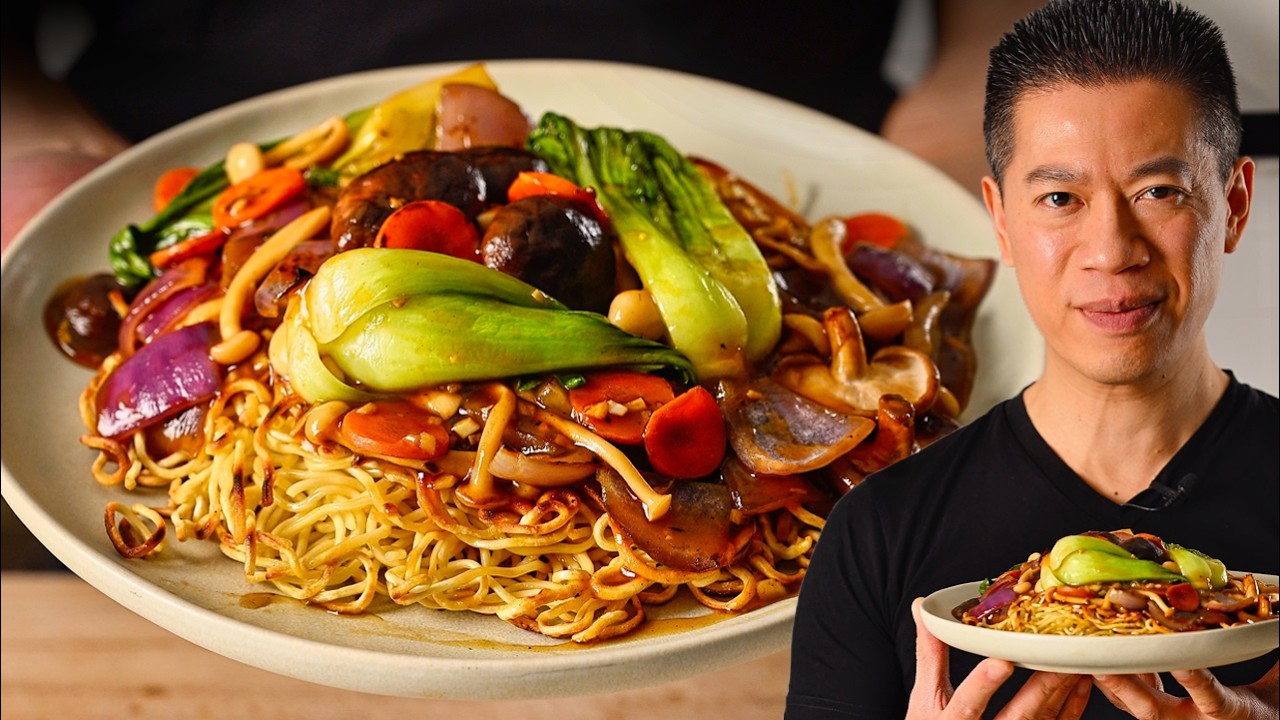
Crispy chow mein is the ultimate Cantonese comfort food — golden pan-fried noodles topped with a glossy, savory vegetable gravy. 香脆炒麵是經典的粵式家常菜,金黃酥脆的麵條配上香濃的蔬菜芡汁,每一口都是滿足。
📹 Watch the Recipe
Recipe by Yeung Man Cooking
🥘 Why This Recipe Works
There’s something magical about the contrast between a perfectly crispy noodle pillow and a silky, umami-rich sauce. This Cantonese-style chow mein delivers exactly that — a symphony of textures and flavors that will make you forget takeout ever existed.
The secret lies in the double-cooking method: a quick blanch softens the fresh chow mein noodles, then a slow pan-fry in aromatic chili oil transforms them into a golden, crackling crust. Meanwhile, the vegetable topping — featuring shiitake and shimeji mushrooms, bok choy, and carrots — is blanketed in a glossy sauce made from soy sauce, plant-based oyster sauce, and ginger-garlic aromatics.
11 ingredients, one pan, 30 minutes — this is weeknight magic at its finest.
🛒 Ingredients
| Ingredient | Amount | Notes |
|---|---|---|
| Fresh chow mein noodles | 225 g | ½ lb; fresh preferred, frozen works (thaw first) |
| Red onion | ½ | Cut into bite-sized pieces |
| Garlic | 2 cloves | Finely chopped |
| Fresh ginger | Small piece | Finely chopped |
| Carrot | ¼ | Sliced thinly |
| Bok choy | 1 large | Quartered; rinse well to remove grit |
| Shimeji mushrooms | ~50 g | Or use any mixed mushrooms |
| Shiitake mushrooms | ~50 g | Fresh, sliced |
| Soy sauce | 2 tbsp | Regular or light soy |
| Plant-based oyster sauce | 1 tbsp | Also called vegetarian oyster sauce or mushroom sauce |
| Toasted sesame oil | ½ tsp | For fragrance |
| Vegetable stock | 1 cup | Low sodium preferred |
| Potato starch (or cornstarch) | 1 tbsp | For thickening the sauce |
| Chili oil | 2 tbsp | Divided; use for frying noodles |
| Avocado oil | 1 tsp | For sautéing vegetables |
👨🍳 Instructions
Step 1 — Prepare the Vegetables and Sauce
- Chop ½ red onion into bite-sized pieces.
- Finely chop 2 cloves of garlic and a small piece of ginger.
- Slice ¼ carrot thinly, and quarter 1 large bok choy (rinse well).
- Slice the shiitake mushrooms and separate the shimeji mushrooms.
- In a bowl, combine 2 tbsp soy sauce, 1 tbsp plant-based oyster sauce, ½ tsp toasted sesame oil, 1 cup vegetable stock, and 1 tbsp potato starch. Stir well and set aside.
Step 2 — Blanch the Noodles
- Bring a pot of water to a boil.
- Add 225 g fresh chow mein noodles and blanch for about 30 seconds.
- Drain well, shaking out as much excess water as possible. Set aside.
Step 3 — Crisp the Noodles
- Place a nonstick pan over medium heat and add 1 tbsp chili oil, swirling to coat the surface.
- Carefully slide the blanched noodles into the pan and let them cook undisturbed for 3–4 minutes, until the bottom is golden brown and crispy.
- Drizzle another 1 tbsp chili oil over the noodles, then carefully flip them over. Cook the other side for another 3–4 minutes.
- Slide the crispy noodle cake onto a serving plate.
Step 4 — Sauté the Vegetables
- Return the pan to medium heat and add 1 tsp avocado oil.
- Sauté the red onion for 2 minutes, then add the carrots and cook for another 2 minutes.
- Add the garlic, ginger, and mushrooms. Sauté for 2 minutes.
- Add the bok choy and sauté for 1 more minute.
Step 5 — Make the Gravy and Serve
- Give the sauce a good stir and pour it into the pan with the vegetables.
- Cook for 2–3 minutes, stirring, until the sauce thickens into a glossy gravy.
- Pour the vegetable gravy over the crispy noodles and serve immediately.
💡 Tips & Substitutions
| Problem / Question | Fix / Answer |
|---|---|
| Can I use dried chow mein noodles? | Yes — cook them according to package directions first, then drain well before pan-frying. Fresh noodles give the best texture. |
| No chili oil on hand? | Use any neutral oil (avocado, canola, or peanut) for frying. Add a pinch of chili flakes to the sauce if you want heat. |
| Can’t find plant-based oyster sauce? | Substitute with 1 tbsp soy sauce + 1 tsp sugar, or use mushroom stir-fry sauce. Hoisin sauce also works in a pinch. |
| My noodles didn’t get crispy — why? | Make sure the pan is hot enough and don’t overcrowd. Don’t stir the noodles while they’re crisping — let them form a crust undisturbed. |
📊 Nutrition
Per serving (approx. 2 servings): ~420 cal | 12g protein | 14g fat | 62g carbs | 6g fiber
Ingredients
Method
Notes
🌱 Why This Dish
Chow mein (炒麵, chǎo miàn) literally translates to “stir-fried noodles” in Cantonese. While it originated in China’s northern regions where wheat noodles are traditional, the crispy version we know today — with its separate fried noodle cake and poured-on gravy — became a hallmark of Cantonese restaurant cuisine in Guangdong and Hong Kong.
In Chinese Buddhist vegetarian cooking, this dish is beloved because it showcases how plant-based ingredients can create something truly luxurious. The mushrooms provide the deep umami that meat would normally contribute, while the technique of double-cooking the noodles (blanch then pan-fry) makes texture the star of the show. It’s a reminder that vegan cooking isn’t about subtraction — it’s about creativity and respect for ingredients.
Traditionally served at family gatherings and celebratory meals, crispy chow mein symbolizes abundance and togetherness. The long noodles represent longevity, making this a lucky dish for birthdays and Lunar New Year feasts.