 Dou Dou (豆豆)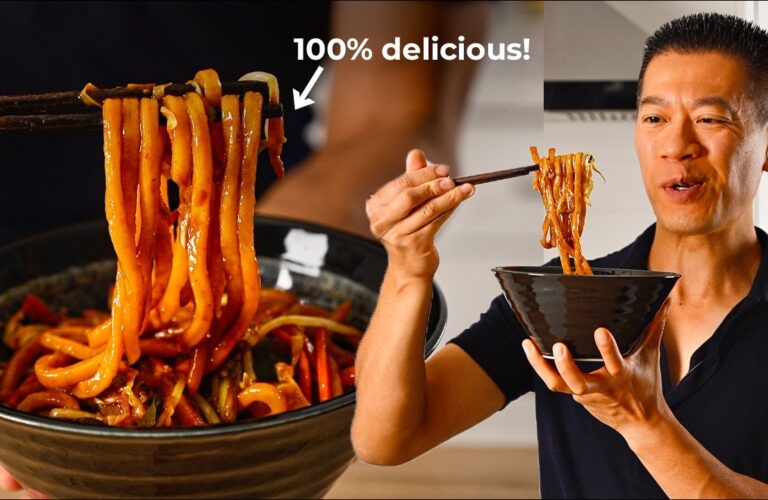
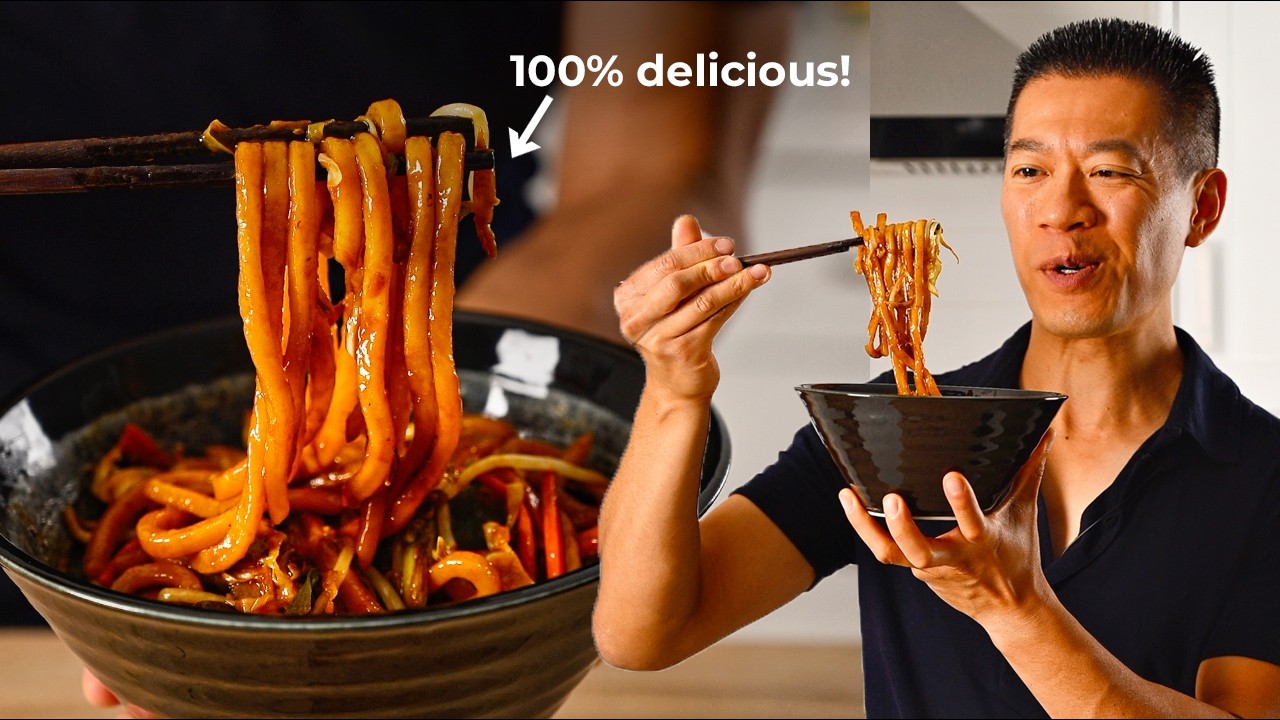
Better than takeout and ready in about 25 minutes — this saucy, plant-based Chinese Lo Mein (撈麵, lou mein) tosses springy udon noodles with crunchy vegetables in a glossy umami sauce, all from one pan. 這道中式素撈麵醬香濃郁、蔬菜爽脆,在家一鍋快炒二十五分鐘,比外賣更滋味!
📹 Watch the Recipe
Recipe by Yeung Man Cooking (Wil Yeung)
🥘 Why This Recipe Works
Lo mein (撈麵, lou mein) is the ultimate weeknight noodle — it tastes like something you would queue up for at a Chinatown takeout counter, yet the whole dish comes together in the time it takes to boil water. The secret is the sauce: dark soy sauce for that glossy mahogany color, black vinegar for a bright tang, and hoisin plus plant-based oyster sauce for deep, savory sweetness. Everything else is a quick toss in a hot pan.
This version from Wil Yeung of Yeung Man Cooking is brilliantly simple. Frozen udon noodles are boiled for one minute less than the package says, then rinsed and drained — a trick that keeps them springy instead of mushy. Shiitake mushrooms bring a meaty chew, while cabbage, carrot, and bean sprouts add crunch and color. It is the kind of recipe you will memorize after one try.
This version: 16 ingredients, one pan, 25 minutes.
🛒 Ingredients
| Garlic (大蒜) | 2 cloves | Thinly sliced |
| Green onion (青蔥) | 3 stalks | Cut into batons |
| Carrot (紅蘿蔔) | ½ | Cut into matchsticks |
| Cabbage (高麗菜) | 100 g | Shredded |
| Shiitake mushrooms (香菇) | 60 g | Sliced |
| Soy sauce (醬油) | 1½ tbsp | |
| Dark soy sauce (老抽) | 1 tsp | For deep color |
| Black vinegar (黑醋) | 1 tsp | Chinkiang-style |
| Plant-based oyster sauce (素蠔油) | 1 tbsp | Mushroom-based |
| Hoisin sauce (海鮮醬) | 1½ tbsp | |
| Toasted sesame oil (香油) | ½ tsp | |
| Chili oil (辣椒油) | 1 tbsp | Adjust to taste |
| Frozen udon noodles (冷凍烏龍麵) | 250 g | |
| Avocado oil (酪梨油) | 1 tbsp | Or other neutral oil |
| Bean sprouts (豆芽) | 85 g | |
| White sesame seeds (白芝麻) | 2 tsp | For garnish |
👨🍳 Instructions
Step 1: Prep the vegetables
- Thinly slice the garlic cloves.
- Chop the green onions into bite-sized batons and the carrot into thin matchsticks.
- Shred the cabbage and slice the shiitake mushrooms.
Step 2: Make the sauce
- In a small bowl, combine the soy sauce, dark soy sauce, black vinegar, plant-based oyster sauce, hoisin sauce, toasted sesame oil, and chili oil.
- Stir until the hoisin dissolves into a glossy, pourable sauce, then set aside.
Step 3: Cook the noodles
- Bring a pot of water to a boil and cook the frozen udon noodles for 1 minute less than the package instructions.
- Rinse under cold water, drain well, and set aside — the final toss in the pan will finish cooking them.
Step 4: Stir-fry everything
- Heat a sauté pan over medium heat. Add the avocado oil, then the shiitakes and garlic, and sauté for a couple of minutes until fragrant.
- Add the green onions and sauté for another couple of minutes.
- Add the cabbage and carrot and sauté for 3–4 minutes, until tender-crisp.
- Add the bean sprouts, noodles, and sauce, and toss well to coat every strand.
Step 5: Serve
- Plate the noodles and sprinkle with white sesame seeds. Serve hot.
💡 Tips & Substitutions
| Can’t find plant-based oyster sauce? | Mushroom-based vegan oyster sauce is the closest match; otherwise use extra hoisin plus a splash of mushroom soy for the same deep umami. |
| No udon noodles on hand? | Swap in lo mein, chow mein, or any thick wheat noodle — adjust the boil time to the package and undercook by 1 minute. |
| Too spicy? | The chili oil is fully adjustable — start with ½ tbsp or use a mild chili crisp. Keep the rest of the sauce as written. |
| Gluten-free? | Use rice noodles or 100% buckwheat soba and swap the soy sauces for gluten-free tamari. |
| Want more protein? | Add cubed tofu or tempeh with the mushrooms, or toss in edamame with the bean sprouts. |
📊 Nutrition
Per serving (serves 2 as a main)
~350 cal · Protein: 13g · Carbs: 62g · Fat: 11g · Fiber: 6g
Ingredients
Method
- Thinly slice the garlic. Chop the green onions into bite-sized batons and the carrot into thin matchsticks. Shred the cabbage and slice the shiitake mushrooms.
- In a small bowl, combine the soy sauce, dark soy sauce, black vinegar, plant-based oyster sauce, hoisin sauce, toasted sesame oil, and chili oil. Stir until the hoisin dissolves into a glossy, pourable sauce and set aside.
- Bring a pot of water to a boil and cook the frozen udon noodles for 1 minute less than the package instructions. Rinse under cold water, drain well, and set aside — the final toss in the pan finishes cooking them.
- Heat a sauté pan over medium heat. Add the avocado oil, then the shiitakes and garlic, and sauté for a couple of minutes until fragrant. Add the green onions and sauté for another couple of minutes. Add the cabbage and carrot and sauté for 3-4 minutes until tender-crisp. Add the bean sprouts, noodles, and sauce, and toss well to coat every strand.
- Plate the noodles and sprinkle with white sesame seeds. Serve hot.
Notes
🌱 Why This Dish
Lo mein takes its name from the Cantonese lou mein (撈麵): 撈 (lou) means “to mix or toss” and 麵 (mein) means “noodles” — the dish is literally defined by the motion of tossing slippery noodles through sauce in a hot wok. In Hong Kong and Guangdong, dai pai dong street stalls and cha chaan teng diners serve tossed noodles at every hour of the day, from a quick breakfast to a late-night snack.
Noodles hold a special place in Chinese Buddhist vegetarian cooking (齋菜): long, uncut strands symbolize longevity, which is why 長壽麵 (long-life noodles) appear at birthdays and New Year celebrations. A plant-based lo mein like this one carries that spirit into everyday cooking — a humble, nourishing bowl built on mushrooms and vegetables, where the umami comes from the earth rather than the butcher.