 Dou Dou (豆豆)
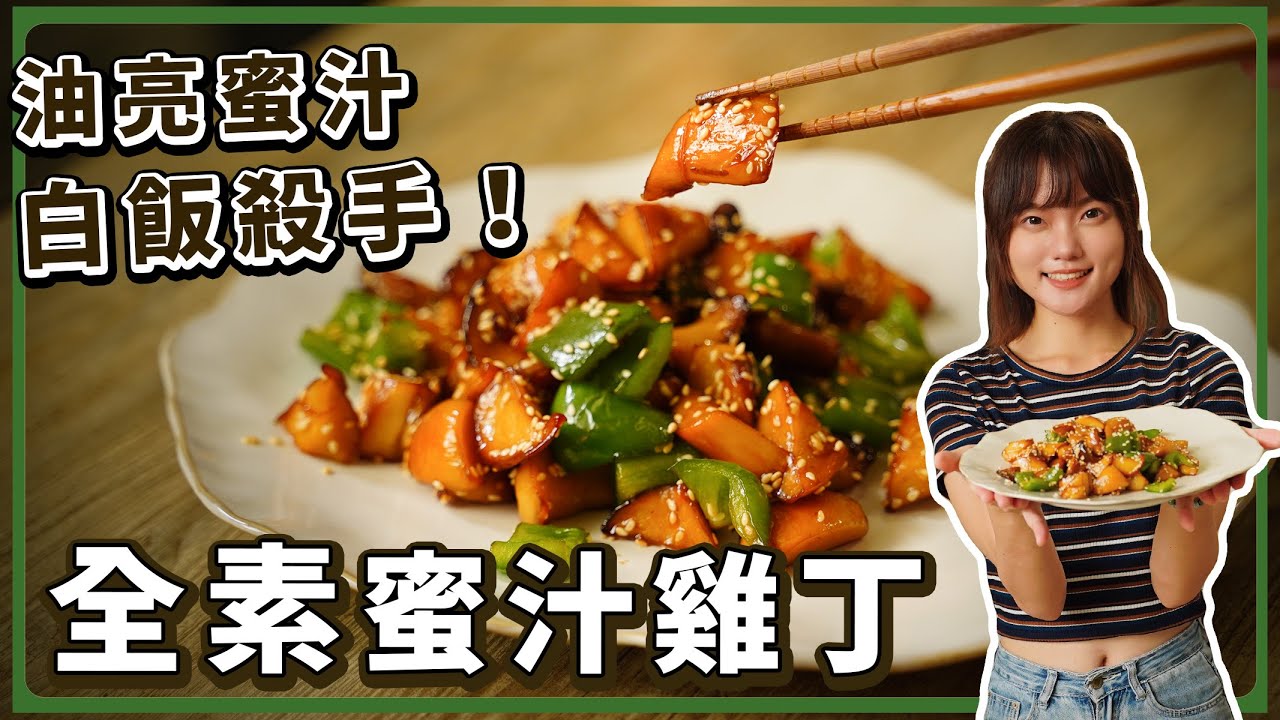
Craving the glossy, sticky-sweet honey chicken from your favorite bento shop — without the chicken? 這道全素蜜汁雞丁用杏鮑菇取代雞肉,煎到金黃酥脆再裹上蜜汁醬,比葷食版本還香!
📹 Watch the Recipe
Recipe by 野菜鹿鹿 Veggie Deer
🥘 Why This Recipe Works
蜜汁雞丁 (mì zhī jī dīng, “honey-glazed chicken cubes”) is one of Taiwan’s most beloved bento-box dishes — tender bites of chicken lacquered in a sweet-salty glaze that begs for rice. This fully vegan version (全素, no eggs, no dairy) pulls off the same magic with king oyster mushrooms (杏鮑菇, xìng bào gū): pan-fried until every face is golden and caramelized, they turn dense, meaty, and remarkably chicken-like, especially where the mushroom is torn by hand instead of cut.
The genius is in the glaze. Soy sauce, mirin, and maple syrup go into the pan with no added water, so they reduce into a thick, glossy lacquer that clings to every craggy mushroom edge — the maple syrup even develops a gentle caramel aroma as it bubbles. A handful of green pepper adds freshness, white sesame adds nuttiness, and the whole thing comes together in about 20 minutes.
This version: 6 ingredients, one pan, 20 minutes.
🛒 Ingredients
| King oyster mushrooms (杏鮑菇) | 4 (about 500 g) | Torn, then roll-cut — the torn face soaks up glaze |
| Green bell pepper (青椒) | 1 large | Sliced into small pieces |
| White sesame seeds (白芝麻) | 1 tbsp | Toasted, stirred in at the end |
| Soy sauce (醬油) | 2 tbsp | Regular light soy sauce |
| Mirin (味醂) | 1 tbsp | Sweet rice cooking wine |
| Maple syrup (楓糖漿) | 1½ tbsp | Or agave / brown sugar |
| Neutral oil (食用油) | 2 tbsp | For pan-frying |
| Optional: Red/yellow bell pepper (紅黃甜椒) | ½ each | Extra color and sweetness |
| Optional: Roasted peanuts (花生) | 2 tbsp | Kung-pao-style crunch |
👨🍳 Instructions
Step 1: Tear the mushrooms
- Press down on the middle of each king oyster mushroom to find its “weak point,” then pull it apart in half.
- Cut the halves into roll-cut (滾刀塊) chunks, keeping one torn, irregular face on each piece — the rough surface is what lets the glaze cling.
Step 2: Prep the vegetables
- Slice the green bell pepper into small pieces (about 2 cm squares).
- If using red/yellow bell pepper or cucumber, slice them into similar small pieces.
Step 3: Pan-fry until golden
- Heat oil in a wok or skillet over high heat and add the mushrooms.
- Fry until every face is golden brown and the moisture they release has cooked off — they will shrink a lot. This takes patience, but it is where all the flavor concentrates.
Step 4: Glaze and reduce
- Add soy sauce, mirin, and maple syrup. There is no water in the pan, so the glaze gets very hot very fast.
- Keep stirring constantly — oil, sugar, and soy alone will burn quickly if you walk away.
- Reduce until the sauce clings to every piece and the surface turns glossy and lacquered.
Step 5: Finish and serve
- Toss in the green pepper — stir a few extra times if you like slightly charred edges; one quick toss if you prefer it crisp.
- Sprinkle in the white sesame seeds, toss to coat, and serve hot over steamed rice.
💡 Tips & Substitutions
| No maple syrup on hand? | Use agave syrup, or plain brown/white sugar. Maple adds a subtle caramel aroma as it caramelizes, but any sweetener works. |
| Don’t like green pepper? | Swap in cucumber (very kung-pao-like) or add red and yellow bell peppers. Avoid green beans — they need water to cook off their raw flavor and won’t work in this dry glaze. |
| Glaze burning? | There’s no water in the pan, so it gets extremely hot. Stir constantly and pull it off the heat the moment the sauce coats the mushrooms evenly. |
| Want more “chicken” texture? | Tear the mushrooms into smaller shreds instead of chunks — the torn fibers really do mimic shredded chicken. |
| Leftovers? | Refrigerate and reheat the next day — it tastes even better, like 冰鎮滷味 (chilled braised snacks). Perfect bento material. |
📊 Nutrition
Per serving (serves 3 as a main with rice)
~290 cal · Protein: 9g · Carbs: 26g · Fat: 17g · Fiber: 5g
Ingredients
Method
Notes
🌱 Why This Dish
蜜汁雞丁 belongs to Taiwan’s bento-shop canon — the sweet, lacquered chicken cubes that have fueled office lunches for generations. The vegan version is a star of the Chinese Buddhist mock-meat tradition (素肉 / 仿葷), in which temple kitchens recreate familiar meat dishes using only plants. The name 杏鮑菇 (xìng bào gū) literally means “apricot-abalone mushroom,” and it’s the temple cook’s favorite stand-in for poultry because of its dense, springy bite — exactly why the video’s host jokes that her first bite made her wonder if she was eating real chicken.
In Taiwan, this dish is also a classic typhoon-season budget meal: when storms send vegetable prices soaring, mushrooms hold their price steady, making 蜜汁杏鮑菇 a smart, delicious choice for the whole family. Served over steaming white rice, it proves that plant-based cooking doesn’t mean giving anything up — just swapping in something even better.