 Dou Dou (豆豆)
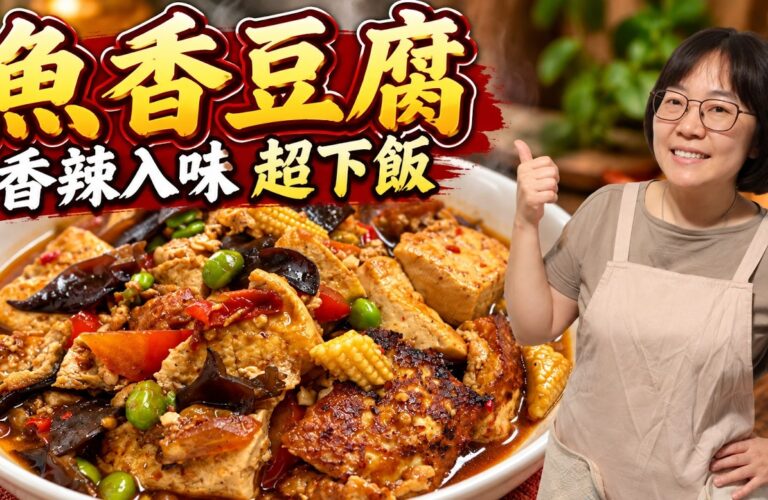
An easy Taiwanese-style Yuxiang tofu where the whole block goes straight into the pan — no cutting board needed. 豆腐不用切,整塊下鍋邊煎邊分塊,甜鹹微辣,超級下飯。
📹 Watch the Recipe
Recipe by 芭樂媽的家 Qistin Wong TV
🥘 Why This Recipe Works
Yuxiang tofu (魚香豆腐, yú xiāng dòufu) borrows its name from one of Sichuan cooking’s most famous flavor profiles. “Fish-fragrant” does not mean the dish contains fish — it describes the sweet-savory-sour-hot balance that cooks once used to dress freshwater fish in Sichuan. Vegetarian kitchens adopted the same sauce for tofu, mushrooms and eggplant, and today the meatless version is arguably more popular than the original.
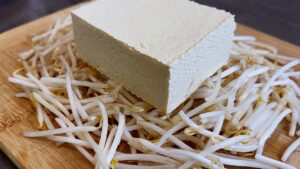
What makes this home version stand out is the technique: the tofu never touches a knife. Qistin pulls the block out of its box, slides it whole into an oiled pan, and breaks it apart with the spatula as it fries. The torn edges catch the pan and turn crisp and golden, while the inside stays soft enough to soak up sauce. It saves five minutes of prep and gives the tofu a rougher, more rustic surface than a clean dice ever would.
The sauce is built from pantry staples — vegan oyster sauce, soy sauce, a spoon of doubanjiang, white pepper and a nugget of Japanese brown sugar — loosened with a little water so the tofu can braise and glaze. Tomato, baby corn, black wood ear and shelled edamame add color, crunch and protein. About 12 ingredients, one pan, 25 minutes.
🛒 Ingredients
| Firm tofu (板豆腐 / 老豆腐) | 1 block (~400g) | The firm kind that holds a shape and browns — not silken |
| Tomato (番茄) | ½ medium | Cut into rough chunks for color and gentle acidity |
| Baby corn (玉米筍) | 3 stalks | Roll-cut so each piece has bite |
| Black wood ear (黑木耳) | 2 pieces | Fresh or rehydrated; slice into small pieces |
| Shelled edamame (毛豆仁) | a small handful | Frozen is fine — add at the braising stage |
| Vegetable oil (食用油) | 1 tbsp | Enough to coat the pan for a shallow fry |
| Vegan oyster sauce (素蠔油) | 1 tbsp | Mushroom-based vegan version |
| Light soy sauce (醬油) | 1 tbsp | For the savory base of the sauce |
| Doubanjiang (豆瓣醬) | 1 tsp | Use a non-spicy version if cooking for kids |
| White pepper (胡椒粉) | ½ tsp | Warms the sauce without adding heat |
| Japanese brown sugar (日本黑糖) | 1 small piece | Palm sugar or coconut sugar also work |
| Water (水) | 100 ml | Added in two stages to braise and thicken |
👨🍳 Instructions
Step 1: Prep everything except the tofu
- Drain the tofu block but leave it whole — do not cut it.
- Cut the tomato into irregular chunks and roll-cut the baby corn into bite-sized pieces so they look three-dimensional in the finished dish.
- Slice the black wood ear into small pieces. Keep the edamame, oil and all the seasonings within reach — the stir-fry moves fast.
Step 2: Pan-fry the whole block
- Heat the oil in a wide pan or wok over medium heat and slide in the entire block of tofu.
- As the bottom sets, break the block into rough chunks with the spatula — tearing rather than slicing gives ragged edges that crisp better.
Step 3: Brown both sides
- Let the pieces fry undisturbed until the underside is golden, then flip and brown the second side, about 4–5 minutes total.
- Don’t crowd the pan — a single layer browns; a piled-up pan steams.
Step 4: Add the vegetables and season
- Add the tomato, baby corn and black wood ear, then stir-fry about a minute so they start to soften and release their juices.
- Add the vegan oyster sauce, soy sauce, doubanjiang and white pepper, and toss to coat every piece.
Step 5: Braise, thicken and serve
- Pour in about 50 ml of water, scatter in the edamame and drop in the piece of brown sugar.
- Add the remaining water, cover and simmer for about 2 minutes until the sugar melts, the tomato collapses and the sauce thickens enough to cling to the tofu.
- Taste, adjust the seasoning, and serve hot with steamed rice — this is a classic 下飯 (rice-killer) dish.
💡 Tips & Substitutions
| Can I cut the tofu first? | Yes, but cut it into thick slabs rather than small cubes. Tearing the block in the pan gives more surface area for browning; small cubes break up and go soft instead. |
| Tofu sticks to the pan | Let the pieces fry untouched until they release on their own — forcing them early tears the crust. A well-seasoned carbon steel or nonstick pan helps more than extra oil. |
| Too spicy for kids | Use a non-spicy doubanjiang (不辣豆瓣醬) or reduce it to ½ tsp. The dish still tastes complete thanks to the sugar and soy. |
| No Japanese brown sugar | Palm sugar or coconut sugar works beautifully, adding a subtle caramel note. Regular brown sugar is fine too. |
| Bell peppers too expensive? | Tomato is the thrifty substitute for red color, and it makes the sauce slightly tangier and more fragrant. |
📊 Nutrition
Per serving (serves 3 as a side, 2 as a main)
~205 cal · Protein: 13g · Carbs: 15g · Fat: 11g · Fiber: 4g
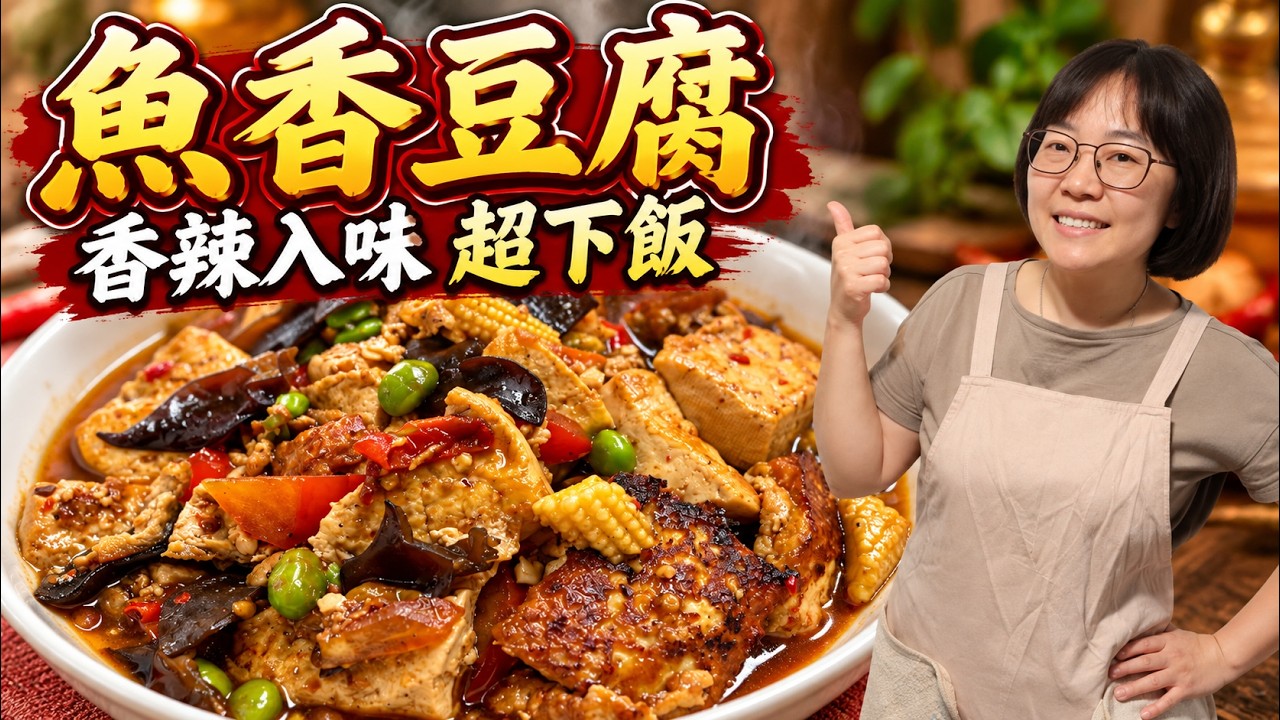
Yuxiang Tofu (魚香豆腐)
Ingredients
Method
- Drain the tofu but keep the block whole. Cut the tomato into rough chunks, roll-cut the baby corn into bite-sized pieces, and slice the wood ear small. Keep all seasonings within reach — the stir-fry moves fast.
- Heat the oil in a wide pan or wok over medium heat and slide in the whole block of tofu. As the bottom sets, break it into rough chunks with the spatula — tearing gives ragged edges that crisp better than a clean cut.
- Fry undisturbed until the underside is golden, then flip and brown the second side, 4-5 minutes total. Keep the pieces in a single layer so they brown instead of steam.
- Add the tomato, baby corn and black wood ear and stir-fry for about a minute, then add the vegan oyster sauce, soy sauce, doubanjiang and white pepper and toss to coat.
- Pour in about 50 ml water, add the edamame and the piece of brown sugar, then add the remaining water. Cover and simmer about 2 minutes until the sugar melts, the tomato collapses and the sauce glazes the tofu. Serve hot with steamed rice.
Notes
🌱 Why This Dish
魚香 (yú xiāng) literally means “fish fragrance,” and its origin story is a reminder of how Chinese cooking layers flavor rather than relying on one ingredient. In Sichuan, cooks braised river fish in a sauce of pickled chilies, garlic, ginger, vinegar and sugar, then reused the same sauce for other ingredients — eggplant, pork slivers, and eventually tofu. Because meat and fish never enter Buddhist temple kitchens, the 魚香 profile became a natural bridge: all of its fragrance comes from aromatics and fermentation, none from animals.
That is why Yuxiang tofu turns up so often at 素食 (vegetarian) restaurants and temple canteens across Taiwan, Hong Kong and Malaysia. It is a dish that performs what Chinese vegetarian cooking does best — delivering the deep, savory, appetite-driving 下飯 quality of a classic meat dish with tofu, bean paste and sugar. Served over plain rice with a bowl of light soup, it makes an ordinary weeknight dinner feel like a proper meal.