 Dou Dou (豆豆)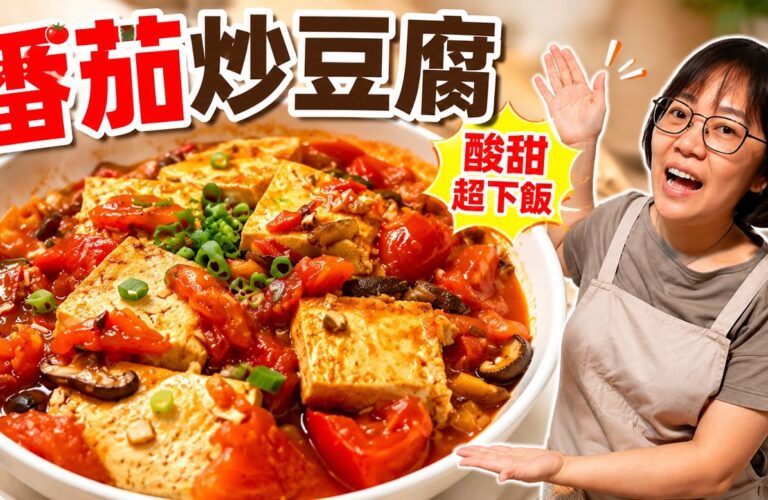
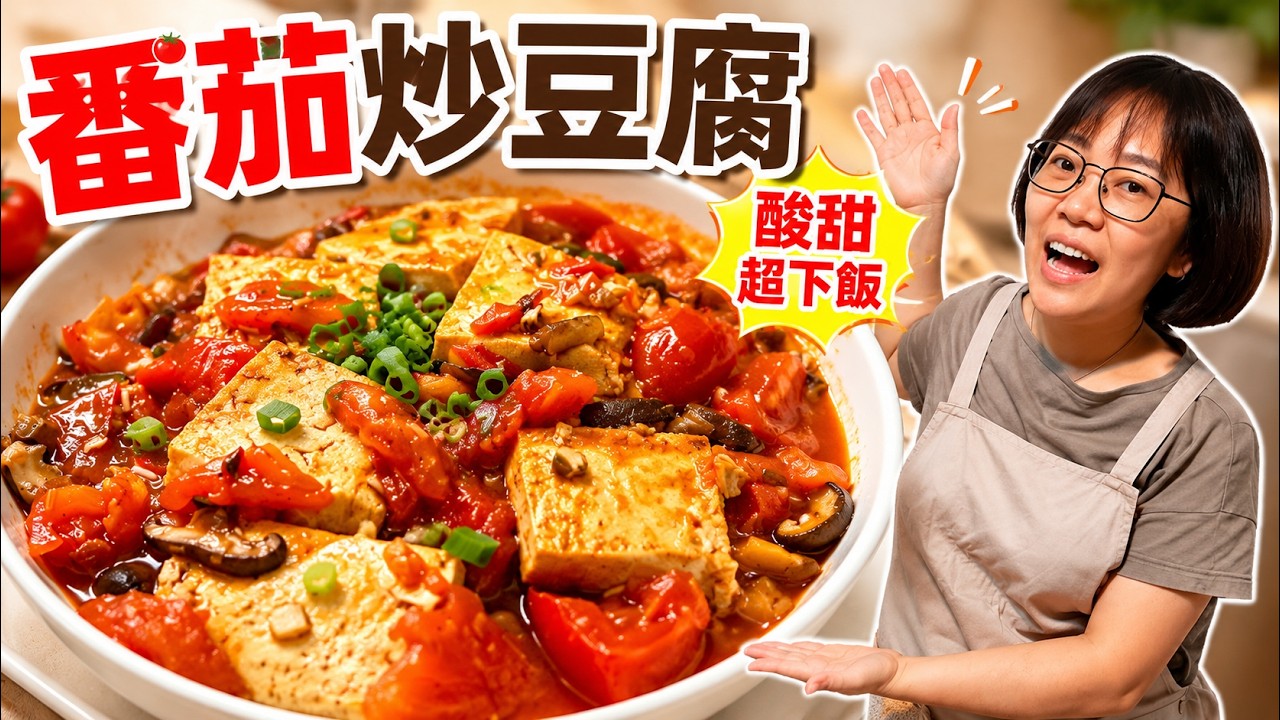
When golden pan-fried tofu soaks up a sweet-tangy tomato sauce, you get the kind of humble, soul-satisfying plate that defines Taiwanese home cooking. 煎得金黃的豆腐吸滿酸甜番茄醬汁,就是台灣家常菜裡最樸實、卻最撫慰人心的一盤。
📹 Watch the Recipe
Recipe by 芭樂媽的家 Qistin Wong TV
🥘 Why This Recipe Works
番茄炒豆腐 (fān qié chǎo dòu fǔ, stir-fried tomato tofu) is a staple of Taiwanese home kitchens — a dish born of practicality. Tofu is one of the cheapest sources of plant protein you can buy, and a single ripe tomato brings sweetness, acidity, and color to the pan. In this version, just half a box of tofu stretches into a generous plate thanks to fresh shiitake and enoki mushrooms, which add savory depth and a pleasant bite.
The magic lives in the order of cooking. The mushrooms are bloomed first until golden and fragrant, the tofu is pan-fried until each side turns crisp and golden — locking in a nutty flavor and keeping the slices intact — and the tomato goes in last so it softens into the sauce instead of dissolving into it. A quick glaze of ketchup, sugar, salt, and white pepper with 60 ml of water is then boiled down until the tofu drinks up every drop of the glossy, sweet-sour sauce.
This version: 10 ingredients, one pan, 10 minutes. Spoon it over steaming rice and it quietly transforms into a rice bowl — 番茄豆腐蓋飯 (fān qié dòu fǔ gài fàn) — dinner solved.
🛒 Ingredients
| Firm tofu (板豆腐) | ½ box (~200 g) | Sliced into 6 pieces |
| Tomato (番茄) | 1 large | Cut into small chunks |
| Fresh shiitake mushrooms (鮮香菇) | 3–4 | Sliced into strips |
| Enoki mushrooms (金針菇) | 1 small handful | Chopped into short lengths |
| Cooking oil (食用油) | 2 tbsp | For frying |
| Ketchup (番茄醬) | 1 tbsp | Sweet-tangy sauce base |
| Sugar (糖) | 1 tsp | Balances the tomato acidity |
| Salt (鹽) | 1 tsp | Adjust to taste |
| White pepper (白胡椒粉) | ¼ tsp | Warm, gentle heat |
| Water (水) | 60 ml (¼ cup) | To build the glossy sauce |
👨🍳 Instructions
Step 1: Prep Everything First
- Cut half a box of firm tofu into three equal parts, then into six slices total.
- Slice the fresh shiitake into strips and chop the enoki mushrooms into short lengths.
- Remove the tomato stem and cut the tomato into small chunks.
Step 2: Bloom the Mushrooms
- Heat oil in a non-stick pan over medium-high heat.
- Add the enoki and shiitake mushrooms and stir-fry until golden and fragrant, about 1–2 minutes.
Step 3: Fry the Tofu, Then the Tomato
- Push the mushrooms to one side of the pan and lay in the tofu slices.
- Fry until golden on both sides, about 2 minutes, then flip gently with a spatula.
- Add the tomato chunks to the pan and cook until they soften.
Step 4: Glaze and Reduce
- Stir everything together and season with ketchup, sugar, salt, and white pepper.
- Pour in the 60 ml of water and bring it to a rolling boil over high heat.
- Let it boil for about 2 minutes until the tofu absorbs the glossy sauce, then turn off the heat and serve hot.
💡 Tips & Substitutions
| Tomatoes not sweet enough? | Add ½ teaspoon extra sugar or a touch more ketchup. Heavy, fully ripe tomatoes give the sweetest sauce. |
| Want extra sauce for rice? | Add 30 ml more water and simmer one minute longer — the sauce loves being spooned over steamed rice. |
| Tofu crumbles when flipping? | Use firm or extra-firm tofu, pat the slices dry before frying, and turn them with a wide spatula. |
| No fresh shiitake? | Swap in rehydrated dried shiitake or oyster mushrooms — any mushroom with a meaty bite works. |
| Short on time? | Chop everything before the pan heats up — this dish finishes in minutes once the fire is on. |
📊 Nutrition
Per serving (serves 2 as a main)
~210 cal · Protein: 13g · Carbs: 16g · Fat: 12g · Fiber: 4g
Ingredients
Method
Notes
🌱 Why This Dish
Tofu has been the backbone of Chinese vegetarian cooking for more than two thousand years — legend credits Liu An, a Han-dynasty prince, with its invention around 164 BC, and Buddhist temple kitchens have relied on it ever since as the protein that needs no animal. Tomatoes reached China much later, arriving by way of the maritime trade routes and earning the name 番茄 (fān qié, “foreign eggplant”) for their overseas origins and eggplant-like shape. The pairing of the two is a triumph of everyday ingenuity: sweet-sour 酸甜 (suān tián) is one of the most beloved flavor profiles in Taiwanese and southern Chinese cooking, and in a vegetarian kitchen this dish proves that a meatless plate needs nothing but color, texture, and balance. Served at family dinners, packed into bento boxes, and ladled over rice as a 蓋飯 (gài fàn, rice bowl), it is home cooking at its most honest — proof that the simplest ingredients, treated with care, make the most memorable meals.