 Dou Dou (豆豆)

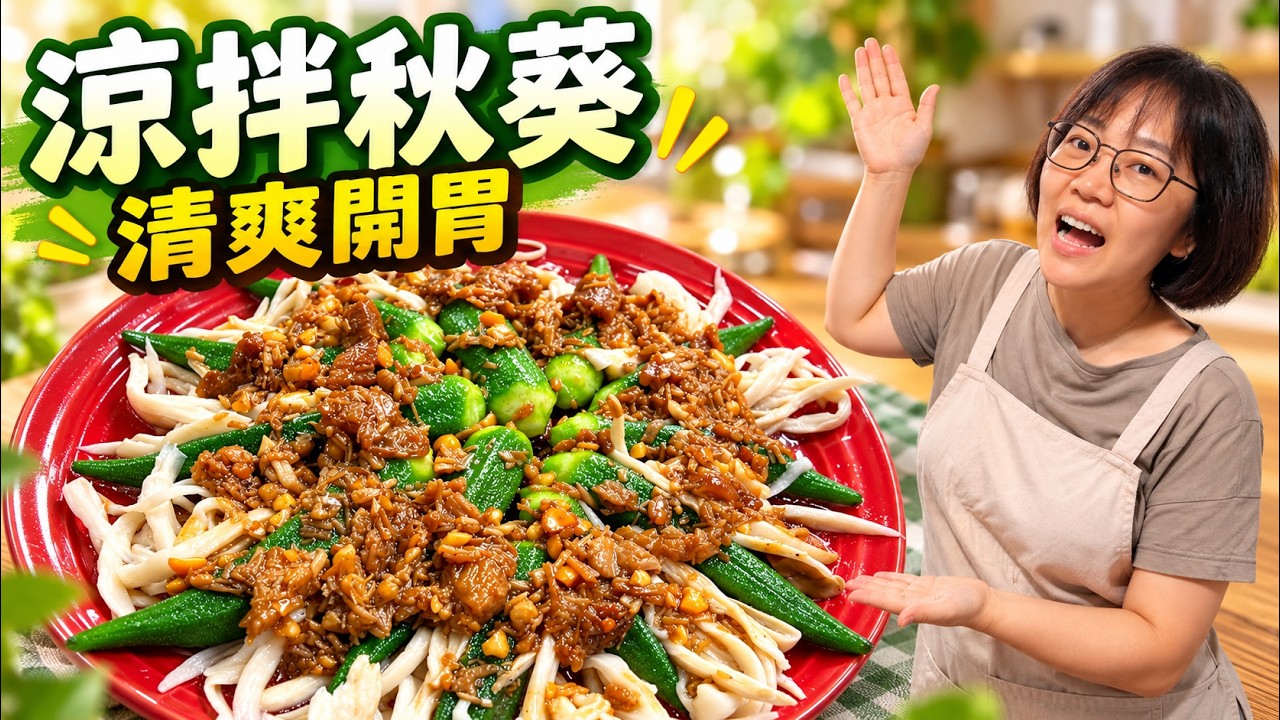
A chilled plate of silky poached okra under a glossy, deeply caramelized enoki mushroom sauce — no garlic or scallion required. 川燙秋葵淋上焦香金針菇醬,清爽入味又漂亮,簡單食材也能做出宴客菜的賣相。
📹 Watch the Recipe
Recipe by 芭樂媽的家 Qistin Wong TV
🥘 Why This Recipe Works
涼拌秋葵 (liáng bàn qiū kuí), or cold-tossed okra, is the kind of dish that looks like restaurant plating but comes together in a home kitchen in about ten minutes. Okra is poached whole for just two minutes so it stays jade-green and snappy, then fanned over a round plate and dressed at the table. The trick that makes it special is the sauce: finely chopped enoki mushrooms are fried slowly in oil until they collapse into golden, nutty shards.
That caramelized enoki is the clever part. Traditional cold okra is dressed with garlic, ginger and scallion, but Qistin Wong deliberately uses enoki to stand in for garlic — frying it until deep gold gives the same savory aroma and a little natural sweetness, while keeping the dish fully plant-based and free of the five pungent vegetables (五辛) that strict Buddhist kitchens avoid. A spoon of vegan oyster sauce, a spoon of soy, a pinch of sugar and crushed peanuts finish a sauce that coats every pod without drowning it.
Because okra releases its mucilage when sliced, poaching it whole keeps the texture clean rather than slippery, and the bite stays firm. It is a classic warm-weather 開胃菜 (appetizer) that eats well cold from the fridge the next day.
This version: 9 ingredients, one pot plus one pan, about 15 minutes.
🛒 Ingredients
| Okra (秋葵) | 10–12 pods (~200g) | Choose small, firm, bright-green pods; avoid long fibrous ones |
| Enoki mushrooms (金針菇) | 1 pack (~200g) | Finely chopped; this is the sauce base and garlic substitute |
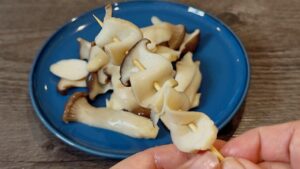
| King oyster mushroom (杏鮑菇) | 1 stalk | Torn into thin strips, poached as a “white” garnish |
| Cooking oil (食用油) | 3–4 tbsp | Generous oil is needed to fry the enoki evenly golden |
| Soy sauce (醬油) | 1 tbsp | Light soy sauce is fine |
| Vegan oyster sauce (素蠔油) | 1 tbsp | Use the vegetarian/vegan version to keep the dish plant-based |
| White pepper (白胡椒粉) | 1/4 tsp | Adds quiet warmth without heat |
| Crushed roasted peanuts (花生碎) | 1 tbsp | Adds crunch and aroma to the sauce |
| Sugar (糖) | 1/2 tsp | Balances the salty sauce |
| Water (水) | 120 cc (about 1/2 cup) | Loosens the sauce so it drizzles cleanly |
| Optional: fresh chili (辣椒) | to taste | Slice in for a little heat |
👨🍳 Instructions
Step 1: Trim the okra with less waste
- Rinse the okra and pat dry. Instead of lopping off the whole cap, use a peeler to shave away just the tough outer ring and the stem tip.
- The inner flesh under that ring is tender and edible, so shaving keeps more of the pod — handy when vegetables are pricey.
- If you are in a hurry, a single straight cut across the top is fine; keep the pods whole either way.
Step 2: Prep the mushrooms
- Tear the king oyster mushroom by hand into thin, irregular strips about the width of chicken shreds — rough edges catch sauce better than knife cuts.
- Finely chop the whole pack of enoki into short pieces. This is your aromatic base and the stand-in for garlic.
Step 3: Fry the enoki to deep gold
- Heat a generous amount of oil in a pan over medium heat, add the chopped enoki and spread it into an even layer.
- Fry patiently, adding a little more oil if it looks dry, stirring occasionally until the enoki turns a deep golden, caramelized brown.
- Do not rush this step — the color and aroma of the finished sauce depend entirely on how far you take the fry.
Step 4: Poach the okra and king oyster
- Bring a pot of water to a rolling boil and add a splash of oil.
- Drop in the whole okra and poach for about 2 minutes — no longer, or it loses its snap and color.
- Add the torn king oyster strips to the same pot and poach until just cooked through, then drain both well.
Step 5: Build the sauce
- With the enoki now deep gold, pour in 1 tbsp soy sauce, 1 tbsp vegan oyster sauce and 1/4 tsp white pepper; stir briefly.
- Add 120 cc water, 1 tbsp crushed peanuts and 1/2 tsp sugar. Add sliced chili now if using.
- Turn the heat to high and stir until the sauce thickens slightly and tastes balanced — a quick taste check is essential before switching off.
Step 6: Plate and dress
- Lay the drained okra pods neatly in a fan on a round plate, angling them outward for a clean, restaurant-style look.
- Tuck the white king oyster strips into the gaps between the okra so the green-and-white pattern shows through.
- Spoon the warm caramelized enoki sauce over the top without burying the okra, and serve warm or chilled.
💡 Tips & Substitutions
| Okra turned brown and mushy | You overcooked it. Two minutes in boiling water is the ceiling — drain and cool it immediately. |
| No enoki on hand | Use finely chopped fresh shiitake or a handful of shredded oyster mushrooms; fry them just as dark for the same effect. |
| Want it garlicky the traditional way | Add minced garlic or scallion when you stir the sauce — the enoki version is intentionally free of the five pungent vegetables. |
| Okra feels slippery/sticky | Keep the pods whole for poaching and only dress them just before serving; slicing them early releases mucilage. |
📊 Nutrition
Per serving (serves 3–4 as a side dish)
~110 cal · Protein: 3g · Carbs: 7g · Fat: 8g · Fiber: 3g
Ingredients
Method
- Rinse and dry the okra. Shave away just the tough outer ring and stem tip with a peeler instead of cutting off the whole cap — the inner flesh is tender and edible. Keep the pods whole; if rushed, a single straight cut across the top is fine.
- Tear the king oyster mushroom by hand into thin irregular strips. Finely chop the whole pack of enoki — it is the aromatic base standing in for garlic.
- Heat a generous amount of oil in a pan over medium heat, add the chopped enoki in an even layer and fry patiently, adding oil if dry, until deeply golden and caramelized. Do not rush this — the sauce's color and aroma depend on it.
- Bring water to a rolling boil with a splash of oil. Poach the whole okra about 2 minutes only, then add the torn king oyster strips and poach until just cooked. Drain both well.
- With the enoki deep gold, add 1 tbsp soy sauce, 1 tbsp vegan oyster sauce and 1/4 tsp white pepper and stir. Add 120 cc water, 1 tbsp crushed peanuts and 1/2 tsp sugar (plus chili if using). Turn heat to high and stir until slightly thickened; taste to balance.
- Fan the drained okra pods outward on a round plate, tuck the white king oyster strips between them, then spoon the warm caramelized enoki sauce over the top without burying the okra. Serve warm or chilled.
Notes
🌱 Why This Dish
涼拌 (liáng bàn) means “cold-tossed,” and it names a whole family of Chinese dishes where vegetables are briefly blanched, cooled, then dressed with a seasoned sauce. In Buddhist temple kitchens, 涼拌 dishes are everyday fare because they are fast, hold up well at room temperature, and let a cook show off a single vegetable rather than a heavy braise. 秋葵 itself arrived in Chinese kitchens relatively recently by way of Taiwan and Southeast Asia, and it is prized in vegetarian cooking for its mucilage, which is traditionally regarded as soothing to the stomach.
What makes this version notable is the substitution at its heart: enoki standing in for garlic and scallion. Buddhist vegetarian cooking (素菜) avoids the five pungent vegetables — garlic, scallion, onion, chives and leek — which are believed to unsettle the mind during meditation. Frying enoki until golden supplies the savory depth those aromatics would normally give, which is why a dish with no garlic at all still tastes full and rounded. The finishing plate, green okra interspersed with white mushroom and a shower of peanuts, is the kind of modest three-ingredient arrangement that Chinese hosts serve as a cold 前菜 to open a meal — proof that plain vegetables, handled well, can carry the table.