 Dou Dou (豆豆)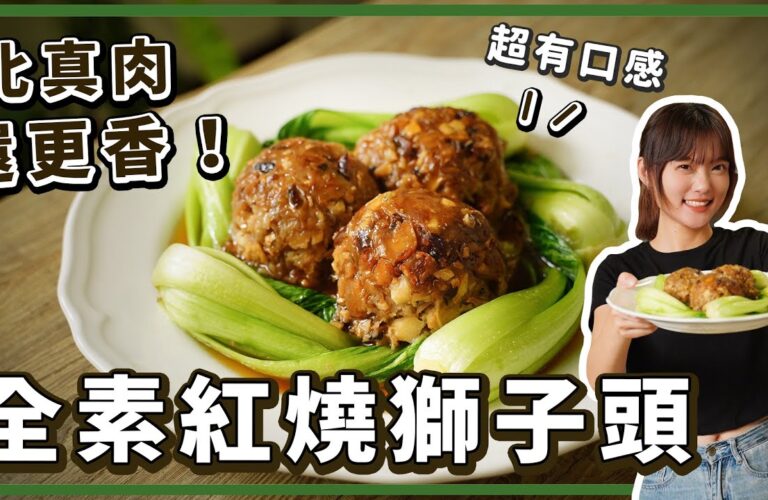
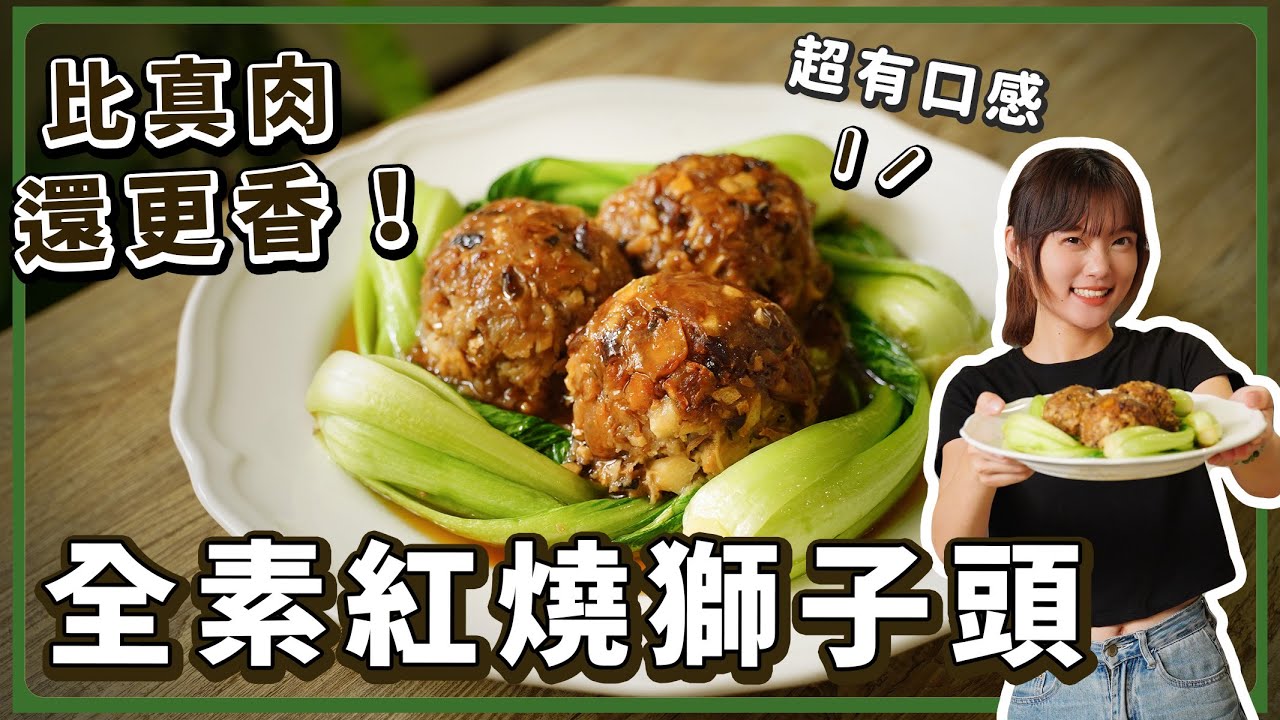
These vegan “lion’s head” meatballs are nothing short of spectacular. Made from frozen tofu, lotus root, mushrooms, and yam, they’re braised until fork-tender in a deep, savory sauce. The texture is remarkably close to traditional pork meatballs — tender on the inside with a satisfying bite — and the flavor is pure umami comfort. Veggie Deer proves that plant-based Chinese New Year feasts can be every bit as impressive as the originals.
今天要跟大家分享超級經典的年菜——純素紅燒獅子頭!用滿滿的植物食材取代肉類,也可以做出一樣入口鬆軟、醬香濃郁的風味。絕對是過年餐桌上最吸睛的一道年菜!
📹 Watch the Recipe
🥘 Why This Recipe Works
The genius of this vegan lion’s head is in the binder. Instead of eggs and pork fat, grated Japanese yam (山藥) acts as a natural binder that holds everything together without needing excessive starch. Lotus root adds a subtle crunch, rehydrated shiitake mushrooms deliver deep umami, and jicama (or water chestnuts) provides that classic lion’s head texture. The result is a meatball that’s tender, aromatic, and satisfying.
Braised low and slow in a soy-based broth with napa cabbage, the meatballs absorb all the surrounding flavors while staying intact. The sauce reduces to a glossy, savory glaze that’s incredible over steamed rice.
🛒 Ingredients
| Ingredient | Amount | Notes |
|---|---|---|
| Frozen tofu (冻豆腐) | 250g | Thawed, squeezed dry, and crumbled |
| Lotus root (莲藕) | 100g | Grated and squeezed dry |
| Dried shiitake mushrooms (干香菇) | 5 pieces | Soaked, finely chopped |
| Jicama / yam bean (豆薯) | 50g | Finely diced (or water chestnuts) |
| Japanese yam (日本山藥) | 80g | Grated |
| Enoki mushrooms (金針菇) | 50g | Finely chopped |
| Shimeji mushrooms (鴻禧菇) | 50g | Finely chopped |
| Baby napa cabbage (娃娃菜) | 300g | For braising |
| Bok choy (青江菜) | 200g | For garnish |
| Old ginger (老薑) | 20g | Minced |
| Light soy sauce (生抽) | 3 tbsp | |
| Dark soy sauce (老抽) | 1 tbsp | |
| Vegetable stock | 500ml | |
| Cornstarch slurry | 2 tbsp cornstarch + 3 tbsp water |
👨🍳 Instructions
Step 1: Prep the Vegetables
- Soak dried shiitake mushrooms in warm water until softened, then finely chop
- Grate lotus root and squeeze out excess moisture
- Finely chop enoki and shimeji mushrooms
- Finely dice jicama (or water chestnuts if using)
- Peel and grate Japanese yam
- Mince old ginger
Step 2: Make the Meatball Mixture
- Thaw frozen tofu and squeeze out as much water as possible, crumble finely
- Combine crumbled tofu with all chopped mushrooms, diced jicama, and grated lotus root
- Add grated Japanese yam — this acts as the binder
- Season with minced ginger, 1 tbsp light soy sauce
- Mix thoroughly until the mixture holds together when pressed
- Form into large golf-ball-sized or slightly larger balls
Step 3: Pan-Fry the Meatballs
- Heat oil in a deep pan or wok over medium-high heat
- Gently place each meatball in the oil
- Pan-fry, turning occasionally, until all sides are golden brown
- Remove and drain on paper towels
Step 4: Braise
- In a clay pot or deep saucepan, arrange napa cabbage leaves at the bottom
- Place the fried meatballs on top of the cabbage
- Add vegetable stock, remaining soy sauce, and dark soy sauce
- Bring to a boil, then reduce heat to low
- Cover and simmer for 20-25 minutes, basting occasionally
Step 5: Finish and Serve
- Carefully remove meatballs and cabbage to a serving plate
- Thicken the remaining braising liquid with cornstarch slurry
- Pour the glossy sauce over the meatballs
- Garnish with blanched bok choy
- Sprinkle with sesame seeds or chopped spring onions
💡 Tips & Substitutions
| Question | Answer |
|---|---|
| Can’t find Japanese yam? | Use potato starch or arrowroot powder mixed with water as a binder — start with 2 tablespoons |
| No jicama available? | Water chestnuts are the traditional choice and work perfectly |
| Can I bake instead of fry? | Yes — bake at 200°C for 15-18 minutes until golden, then braise as directed |
| How far ahead can I prep these? | Make the meatballs a day ahead and refrigerate. Braise just before serving for best texture |
📊 Nutrition
Per serving (2 meatballs with sauce): ~350 cal · 22g protein · 12g fat · 38g carbs · Packed with plant-based protein, fiber, iron, and immunity-boosting mushrooms
🌱 Why This Dish
紅燒獅子頭 (hóng shāo shī zi tóu) — “red-cooked lion’s head” — is one of Chinese cuisine’s most iconic banquet dishes. The “lion’s head” refers to the large, fluffy meatballs, while the “mane” is the surrounding braised greens. Traditionally made with pork, this dish has deep roots in Huaiyang cuisine (淮扬菜) and is a staple of Chinese New Year feasts, where it symbolizes family reunion and good fortune. The red cooking technique (紅燒) — slow-braising in soy sauce and aromatics — is one of the oldest and most beloved cooking methods in Chinese gastronomy. This plant-based version honors the tradition while making it accessible to everyone at the table.