 Dou Dou (豆豆)
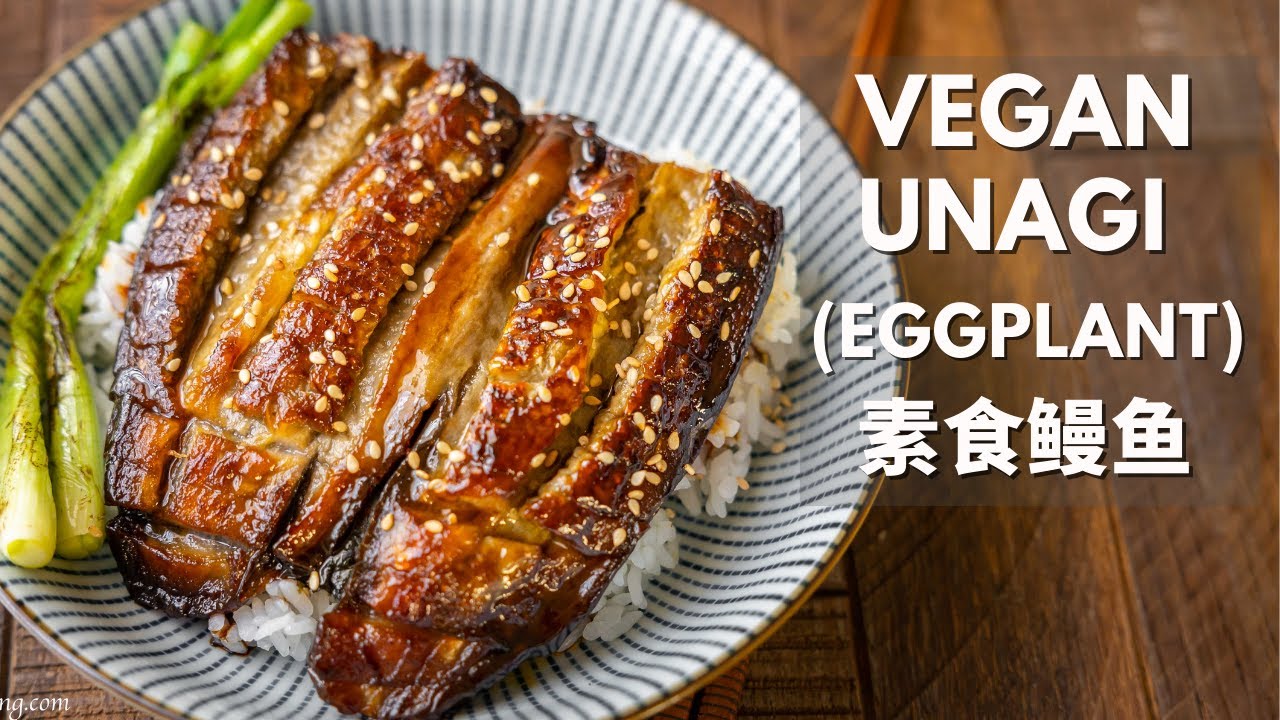
This genius vegan unagi uses eggplant instead of eel — steamed until tender, scored to absorb the sweet-savory glaze, then pan-fried to caramelized perfection. Served over rice with nori and charred scallions, it’s a drool-worthy plant-based take on a Japanese classic. 一道充滿巧思的純素料理,用茄子模仿鰻魚的口感與風味,蒸軟、劃開、煎香、刷醬,每一口都是驚喜。
📹 Watch the Recipe
Recipe by WoonHeng
🥘 Why This Recipe Works
The secret to convincing vegan unagi lies in the texture — Chinese or Japanese eggplant, when steamed until just tender, develops a soft, almost meaty interior that mimics the delicate flakiness of eel. Scoring the flesh creates channels that soak up the umami-rich glaze, while a quick pan-fry caramelizes the surface for that signature glossy, slightly charred finish. The sauce — a simple blend of mirin, kombu dashi, soy sauce, and maple syrup — delivers the same sweet-savory punch as traditional unagi no tare.
6 ingredients, one pan, 20 minutes — a weeknight miracle that tastes like a Japanese restaurant special.
🛒 Ingredients
| Ingredient | Amount | Notes |
|---|---|---|
| Chinese or Japanese eggplant (茄子) | 1 lb (450g) | Long, slender variety |
| Scallions (青蔥) | A few stalks | For charring |
| Nori sheet (紫菜) | 1 sheet | Cut to fit bowl |
| Sesame seeds (芝麻) | For garnish | |
| Cooked rice (米飯) | For serving | Sushi or jasmine |
| Cooking oil | As needed |
For the Sauce (醬汁)
| Ingredient | Amount |
|---|---|
| Mirin (味醂) | 3 tablespoons |
| Hot water | ⅓ cup (80ml) |
| Kombu dashi powder (昆布高湯粉) | 1 teaspoon |
| Light soy sauce (生抽) | 2 tablespoons |
| Maple syrup (楓糖漿) | 1 tablespoon |
| Sugar (糖) | ½ teaspoon |
👨🍳 Instructions
Step 1: Prepare the Eggplant
- Trim off the eggplant top
- Cut into 2-3 logs depending on length
- Place on a steamer-safe plate and steam over high heat until tender, about 8-10 minutes
- When cool enough to handle, slice each log lengthwise in half, opening like a book — but do NOT cut through
- Score the exposed flesh vertically in several places to create channels for the sauce
Step 2: Make the Sauce
- Combine mirin, hot water, kombu dashi powder, light soy sauce, maple syrup, and sugar
- Stir until dissolved
- Kombu dashi can be found online or at Asian markets
Step 3: Pan-Fry the Eggplant
- Heat a non-stick pan over medium heat with a spoonful of oil
- Carefully transfer the steamed eggplant to the pan, cut side down
- Cook until lightly golden (this brown layer prevents the flesh from tearing)
- Flip and cook the skin side while basting the top with sauce (about 2½ tbsp per piece)
- Flip once more to let the flesh absorb remaining sauce from the pan
- If you have extra sauce, reduce it and use as a drizzle
Step 4: Char the Scallions & Serve
- Place cleaned scallions on a heat-safe plate, drizzle with oil, and sprinkle with salt
- Char using a hand torch, broiler, or grill
- Place rice in a bowl, top with a square sheet of nori
- Lay the eggplant unagi on top, add charred scallions
- Drizzle with extra sauce and garnish with sesame seeds
💡 Tips & Substitutions
| Problem | Fix |
|---|---|
| No steamer? | Poke eggplant with fork, wrap in foil, bake at 450°F (232°C) for 30-45 min |
| No kombu dashi powder? | Use homemade kombu stock to replace the ⅓ cup water |
| Eggplant tearing during frying? | Ensure cut side is well-browned before flipping |
| Not a fan of mirin? | Substitute 2 tbsp sake + 1 tbsp sugar, or dry sherry |
📊 Nutrition
Per serving (serves 2): ~350 kcal | Protein 6g | Fat 8g | Carbs 65g | Fiber 8g
Ingredients
Method
Steam & Score
Make Sauce
Pan-Fry & Glaze
Assemble & Serve
Ingredients
Method
🌱 Why This Dish
Unagi (grilled eel) is a beloved Japanese comfort food, but overfishing has made eel increasingly unsustainable. This brilliant plant-based hack by WoonHeng transforms the humble eggplant — a staple in Chinese cooking for over 2,000 years — into a convincing substitute. The technique of steaming then pan-frying is quintessentially Chinese, while the sweet-savory glaze nods to Japan’s unagi no tare tradition. In Buddhist vegetarian cooking (which has deeply influenced Chinese vegan cuisine), mimicking the texture and flavor of meat and fish is considered a high art — this dish is a perfect example of that craft.