 Dou Dou (豆豆)

One pan, ten minutes, and a spoonful of Malaysian curry powder turn okra into something silky, fragrant and quietly addictive. 一鍋到底、十分鐘上桌,一匙馬來西亞咖哩粉就能把秋葵炒得滑嫩濃香。
📹 Watch the Recipe
Recipe by 芭樂媽的家 Qistin Wong TV
🥘 Why This Recipe Works
Okra (秋葵, qiū kuí) has a reputation problem. Boiled too long it turns to slime; sliced flat and stir-fried it collapses into a grey tangle. 芭樂媽’s answer is a roll cut (滾刀塊) — the blade comes down on the bias, rolling the pod forward with each stroke. The pod keeps its thick cross-section, so the inside stays jammy while the outside chars just enough to hold its shape. It looks like the way a Cantonese cook cuts a cucumber for soup, and it works here for exactly the same reason: more surface, less collapse.
The second trick is 秀珍菇 (oyster mushrooms) seared first, alone, until their edges go deep gold. Mushrooms are the vegetarian kitchen’s substitute for the maillard flavour that meat would otherwise bring — but only if you give them the pan to themselves. Add them with wet vegetables and they steam instead. So the mushrooms go in first, get their colour, and only then do the sweet orange carrot batons follow, because carrot needs twice as long as okra and nothing cooked together in a hurry tastes of anything.
The finish is what makes it Malaysian: curry powder (咖哩粉), a splash of light soy, and coconut milk powder whisked with water so it cannot clump. Malaysian curry powder is the dry-spice legacy of the spice trade by way of Indian indentured cooks — turmeric, coriander, chilli, fennel, star anise — toasted in oil for twenty seconds until the kitchen smells like a Penang street stall, then bound into a thin cream. In Taiwan nobody cooks okra this way; in Malaysia it is ordinary weeknight food.
This version: 9 ingredients, one pan, 10 minutes.
🛒 Ingredients
| Okra (秋葵) | ~15 pods (200 g) | Small, firm, tips snapping cleanly. Rub with salt, rinse, trim the stem only — never open the cap |
| Oyster mushrooms (秀珍菇) | 5 small clusters (~100 g) | Hand-torn into strips, never knife-sliced, so the frilly edges catch the pan |
| Carrot (紅蘿蔔) | 1/4 medium | Cut into thin batons — they go in before the okra |
| Baby corn (玉米筍) | 6–8 pieces | Trim the dried ends, roll-cut into short lengths |
| Curry powder (咖哩粉) | 1 tsp | Malaysian-style — turmeric-heavy, warm rather than fiery |
| Light soy sauce (醬油) | 1 tsp | For the savoury backbone, deliberately light so the curry stays forward |
| Salt (鹽) | 1/4 tsp | Plus 1 tbsp coarse salt set aside for scrubbing the okra fuzz off |
| Coconut milk powder (椰奶粉) | 1 tsp | Whisked smooth with 2 tbsp water first — never added dry |
| Cooking oil (食用油) | 1½ tbsp | Neutral oil; enough to sear, not to deep-fry |
| Optional: bird’s eye chilli (朝天椒) | 1–2 | Toss in with the curry powder for the Malaysian version with real heat |
👨🍳 Instructions
Step 1: De-fuzz and roll-cut the okra
- Sprinkle about a tablespoon of coarse salt over the dry okra pods and rub them between your palms — the grains scour the fine fuzz off the surface. Rinse under running water.
- Cut away only the woody stem. Do not slice into the cap: breach the pod and the mucilage bleeds out in the pan.
- Roll-cut the pods — one diagonal stroke, roll a quarter turn, stroke again — into thick 2 cm chunks. The angled faces hold their bite far better than flat coins.
Step 2: Prep the supporting vegetables
- Peel the carrot and cut a quarter of it into thin matchsticks — long, even batons, because they need to soften before the okra arrives.
- Take five small clusters of oyster mushrooms and tear them apart by hand into strips. Large ones would swamp the dish; small ones keep the balance right.
- Trim the dried-out tips and tails from the baby corn and roll-cut into short pieces, on the same bias as the okra.
Step 3: Sear the mushrooms golden — alone
- Heat the oil in a wok over medium-high. Add the torn mushrooms and spread them out.
- Let them sit untouched for 30–40 seconds, toss, then let them sear again. Repeat until the edges are deep golden brown — this is the entire flavour base of the dish.
- Only when the colour is right move on. Rushing here means pale, watery mushrooms.
Step 4: Carrot first, then everything green and yellow
- Add the carrot batons to the mushrooms and stir-fry until they lose their raw opacity and start to soften — about two minutes.
- Add the okra and baby corn and toss for 30 seconds only. The pan should be hot and the vegetables still bright.
Step 5: Season with curry, soy and salt
- Sprinkle over 1 tsp curry powder, pour in 1 tsp light soy sauce, add 1/4 tsp salt.
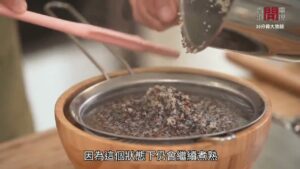
- Toss fast so the dry spice toasts in the oil rather than clumping — the powder should smell toasted within seconds, and will coat every piece with a yellow bloom.
- Add chilli now if using.
Step 6: Coconut cream, high heat, off the stove
- Whisk 1 tsp coconut milk powder into 2 tbsp water in a small bowl until completely smooth — no lumps.
- Pour it in and stir-fry over high heat until the sauce thickens enough to cling to the vegetables and the okra has softened to your liking — 60 to 90 seconds more.
- Kill the heat the moment the okra is tender. Plate immediately: okra keeps cooking, and an extra minute in the pan is the difference between silky and slimy.
💡 Tips & Substitutions
| My okra turned slimy and stringy — what went wrong? | Almost always slicing the pod open (flat coins or a cut into the cap) or overcooking. Roll-cut it thick, salt-rub it, and keep total pan time under three minutes. |
| No coconut milk powder? | Use 3 tbsp full-fat coconut milk from a can, whisked with 1 tbsp water. Powder is used in Malaysia because it never splits — with canned coconut milk, keep the heat high and stir constantly. |
| Can I use regular curry powder (e.g. Madras)? | Yes, but reduce to 3/4 tsp and add a pinch of sugar — Indian blends are sharper and saltier than the Malaysian mixtures, which lead with turmeric and fennel. |
| No oyster mushrooms? | Shimeji or sliced king oyster work well; both sear to gold. Button mushrooms release too much water — wipe the pan dry and sear in two batches if that’s all you have. |
| Is this Buddhist-vegetarian friendly? | Yes — no garlic, onion, or any of the five pungent spices (五辛). The mushrooms do the aromatic work instead, so the dish is safe for temple and 齋 kitchens. |
📊 Nutrition
Per serving (serves 2 as a main with rice, or 4 as a side)
~135 cal · Protein: 4g · Carbs: 13g · Fat: 8g · Fiber: 5g

Ingredients
Method
- Rub the dry okra pods with about 1 tbsp coarse salt to scour off the fine fuzz, then rinse. Trim only the woody stem — never cut into the cap or the mucilage bleeds out. Roll-cut the pods into thick 2 cm chunks: one diagonal stroke, roll a quarter turn, stroke again. The angled faces keep their bite far better than flat coins.
- Peel the carrot and cut a quarter of it into thin matchsticks. Hand-tear five small clusters of oyster mushrooms into strips — never knife-slice them, the frilly torn edges catch the pan. Trim the dried tips and tails from the baby corn and roll-cut into short pieces on the same bias as the okra.
- Heat 1.5 tbsp oil in a wok over medium-high. Add the torn mushrooms, spread them out, and let them sit untouched 30-40 seconds, toss, then sear again. Repeat until the edges are deep golden brown. This sear is the entire flavour base — adding wet vegetables now would steam them instead.
- Add the carrot batons and stir-fry about two minutes until they lose their raw opacity and soften. Then add the okra and baby corn and toss for just 30 seconds — the pan should be hot and the vegetables still bright.
- Sprinkle over 1 tsp curry powder, pour in 1 tsp light soy sauce, add 1/4 tsp salt. Toss fast so the dry spice toasts in the oil rather than clumping — it should smell toasted within seconds and coat every piece with a yellow bloom. Add 1-2 bird's eye chillies now if using.
- Whisk 1 tsp coconut milk powder into 2 tbsp water until completely smooth — no lumps. Pour in and stir-fry over high heat until the sauce thickens enough to cling and the okra has softened, 60-90 seconds more. Kill the heat the moment the okra is tender and plate immediately — an extra minute in the pan is the difference between silky and slimy.
Notes
🌱 Why This Dish
Stir-fried okra is the kind of recipe that only exists because a cook refused to waste anything. Okra reached Southeast Asia along the same Indian Ocean routes that carried curry powder, and both settled into Malaysian home kitchens — where it is simply called bendi, and where a cook facing a handful of pods and half a carrot invents a dish. 椰奶咖哩炒秋葵 (yē nǎi gā lí chǎo qiū kuí) is a Malaysian-Chinese home dish that has no classical pedigree: no banquet, no festival, no ancestral shrine. It belongs to the weeknight table.
For Chinese Buddhist vegetarian cooks, that shape of dish matters more than the famous ones. 齋菜 (zhāi cài) and the broader su tradition are not only about avoiding meat — they are about cooking ordinary vegetables so well that no one at the table feels they are making a sacrifice. Mushrooms seared to gold, aromatic spices toasted in oil, and coconut cream to bind: none of it is a substitute for animal fat, and none of the dish is apologetic. The okra keeps its crunch, the carrots keep their colour, and the sauce is thin enough to run into white rice.
There is a small technical inheritance here too. The 滾刀 (roll-cut) and the salt-rub are both old southern-Chinese techniques — the first keeps soup vegetables intact, the second is how cooks cleaned the fuzz from taro stems and water spinach generations before anyone wrote it down. What Qistin Wong adds in this video is the Malaysian pantry on top of that Chinese method: curry powder brought home from Malaysia, coconut milk powder picked up at PX Mart in Taiwan, and a reminder that vegetarian cooking travels well.