 Dou Dou (豆豆)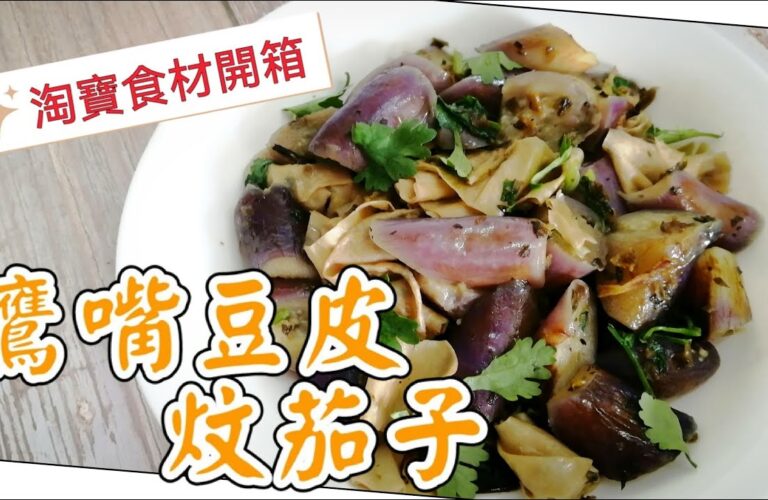
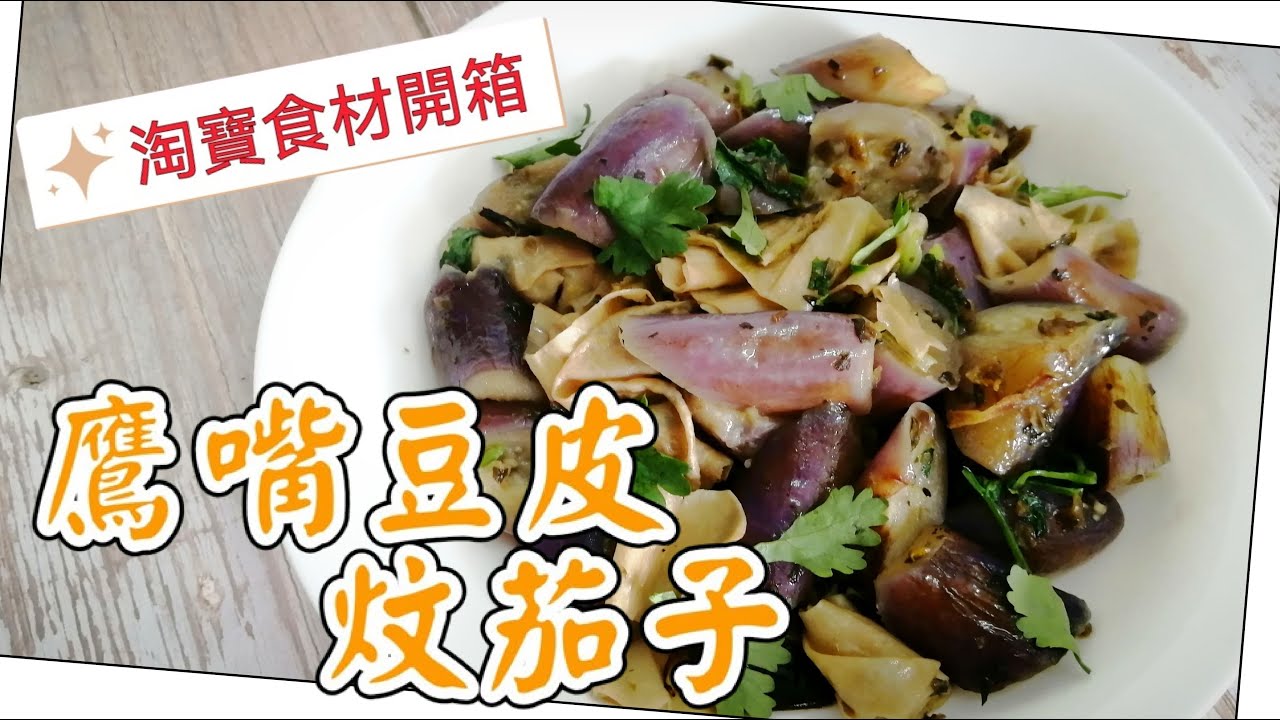
This one-wok braise turns humble eggplant and chickpea-skin ribbons into a deeply savoury, saucy dish perfumed with Sichuan preserved vegetable. 一鍋到底,把平凡的茄子和鷹嘴豆皮,配上四川芽菜炆出濃香下飯的素食家常菜。
📹 Watch the Recipe
Recipe from 素食好煮意 Vegan Idea (善貴).
Why This Dish ❤️
This is home-style Cantonese vegetarian cooking at its most honest — a single wok, a handful of humble vegetables, and a braising liquid that turns them silky and deeply savoury. The hero of the dish is the dried chickpea skin, a thin sheets of protein-rich GIF from the humble chickpea that swells into plump, chewy ribbons with a texture somewhere between tofu skin and a tender cut of mushroom. Soaked, then braised alongside silky eggplant, it drinks up every drop of the sauce.
The true surprise is the Sichuan preserved vegetable (宜賓芽菜) — an intensely savoury, pickled mustard green from Yibin, Sichuan, made by sun-drying and fermenting shredded mustard stems. Just a spoonful unleashes a briny, ancient depth of flavour against the mellow sweetness of the eggplant. A handful of ingredients, one wok, and under 30 minutes — proof that great vegetarian food rarely demands more.
🛒 Ingredients
| Ingredient 食材 | Amount 份量 | Notes 備註 |
|---|---|---|
| Finger eggplant 手指茄 | 3 | the long thin variety that stays tender when braised |
| Dried chickpea skins 鷹嘴豆皮 | 10 pieces | soak ~45 min until soft; substitute with braised bean curd sticks 支竹 |
| Sichuan preserved vegetable 四川芽菜 (宜賓芽菜) | 1 tbsp | rinsed and finely chopped; substitute with pickled cabbage 梅菜 |
| Ginger 薑 | a few slices | thinly sliced into fine shreds |
| Fresh cilantro 芫茜 | small handful | chopped, added at the end |
| White vinegar 白醋 | 1.5 tbsp | for the eggplant soaking bath |
| Salt 食鹽 | 1.5 tsp | for the eggplant soaking bath |
| Sugar 糖 | 1 tsp | balances the salty preserved vegetable |
| Light soy sauce 生抽 | a little | only if the dish needs more seasoning |
👨🍳 Instructions
Step 1: Soak the chickpea skins
- Rinse the dried chickpea skins 1–2 times under running water.
- Submerge them in fresh water and soak for about 45 minutes until pliable.
- Any pieces that still feel hard in the centre — break them apart and let them soak a little longer. They will soften further while cooking.
Step 2: Prepare the eggplant
- Cut the finger eggplants into generous rolling chunks (滚刀塊).
- Dissolve 1.5 tbsp of white vinegar and 1.5 tsp of salt in a bowl of water and pour it over the eggplant.
- Let the eggplant steep for about 15 minutes, stirring once after 5 minutes so every piece is coated.
- Squeeze the eggplant dry. If you worry it is too salty or acidic, rinse it under water first, then press out the excess moisture.
Step 3: Sweat the aromatics
- Heat a wok over low heat with a little oil and fry the ginger shreds for about 1 minute until fragrant.
- Turn the heat up to maximum and add the eggplant, tossing to coat everything in the oil.
- Cover the wok and let the eggplant braise under steam for about 1 minute, then lower the heat to medium.
Step 4: Add the chickpea skins and braise
- Add the soaked chickpea skins to the wok and stir well.
- Season with 1 tsp of sugar only — no extra salt, because the eggplant was soaked in salt and the preserved vegetable is already salty.
- Pour in a splash of hot water, turn the heat back up and bring it to a boil.
- Once boiling, lower to a gentle simmer and cook for about 10 minutes until the eggplant is soft and silky.
Step 5: Finish with the preserved vegetable
- Add the Sichuan preserved vegetable and toss everything together.
- Taste the sauce — if it needs a little more lift, add a splash of light soy sauce.
- Scatter in the chopped cilantro, toss once more, and turn off the heat.
- Serve immediately. No thickening slurry is needed; the natural braising juices do all the work.
💡 Tips & Substitutions
| Question 問題 | Fix 解決 |
|---|---|
| Why soak the eggplant in vinegar and salt? | The acid keeps the flesh pale and stops it browning, while the salt seasons it from within so it needs much less seasoning later. Rinse if you want it milder. |
| I can’t find dried chickpea skins. | Substitute with braised dried bean curd sticks (支竹). They are a touch thinner, so soak them a little less and adjust the braising time down by a few minutes. |
| What exactly is 四川芽菜 (ya cai)? | It is a preserved pickled vegetable from Yibin, Sichuan — one of Sichuan’s four famous pickles — made from dried, fermented mustard greens. Use a little; it is intensely savoury. |
| My eggplant browned or became bitter. | Be generous with the vinegar-salt soak and do not fry on raging heat for too long. The steaming step keeps the flesh juicy instead of scorched. |
📊 Nutrition
Per serving (serves 2–3 as a side): ~180 calories, 6 g protein, 9 g fat, 20 g carbohydrate, 4 g fibre. Naturally vegan, gluten-free and soy-sauce-free*.
Ingredients
Method
- Rinse the dried chickpea skins 1–2 times, then soak in fresh water for about 45 minutes until pliable. Break apart any still-firm pieces and soak longer — they soften further while cooking.
- Cut the finger eggplants into generous rolling chunks. Dissolve 1.5 tbsp white vinegar and 1.5 tsp salt in water and pour over the eggplant. Steep about 15 minutes, stirring once after 5 minutes, then squeeze dry. Rinse first if you prefer it milder.
- Heat oil in a wok over low heat and fry the ginger shreds for about 1 minute. Turn the heat up to maximum, add the eggplant and toss, then cover and braise under steam for about 1 minute. Lower the heat to medium.
- Add the soaked chickpea skins and stir well. Season with 1 tsp sugar only — no extra salt, as the eggplant was soaked in salt and the preserved vegetable is already salty. Add a splash of hot water, bring to a boil, then simmer gently for about 10 minutes until the eggplant is soft and silky.
- Add the Sichuan preserved vegetable and toss. Taste, and add a splash of light soy sauce if needed. Scatter in the chopped cilantro, toss once more, and serve immediately. No thickening slurry is needed.
Notes
🌱 Why This Dish
The philosophy behind the technique comes from the Buddhist temple kitchen tradition — 粗齋 (rough vegetarian) — where every part of the vegetable is used and slow braising draws out sweetness without relying on garlic and onion, keeping the pot strictly 五辛-free for monastic tables. The Sichuan preserved vegetable we use today is 宜賓芽菜, ranked alongside 涪陵榨菜, 南充冬菜 and 內江大頭菜 as one of Sichuan’s four celebrated pickles. In Cantonese homes, a similar eggplant braise is often served over rice during the cooler months, when a gently simmered pot of vegetables feels like a small act of comfort.