 Dou Dou (豆豆)
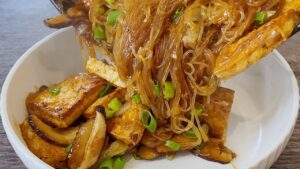
This gentle stir-fry turns humble lotus root into the star of the plate — crisp-seared, sweet, and coated in a savory sauce of olive vegetable and vegan oyster sauce. 蓮藕清洗削皮後切片煎至金黃,加鴻喜菇、橄欖菜和素蠔油燜煮,最後拌入小黃瓜,軟中帶脆、鹹香下飯。
📹 Watch the Recipe
Recipe by 芭樂媽的家 Qistin Wong TV — a Taiwanese-Malaysian vegan home cook.
🥘 Why This Recipe Works
Lotus root often gets stuck as a soup ingredient, but it is actually one of the most satisfying stir-fry vegetables there is. Sliced thin and seared in toasted sesame oil, it develops a golden, lightly charred crust while keeping a wonderful crunchy bite — soft on the inside, crisp at the edge. Qistin Wong’s trick is to cook the mushroom and lotus root first for fragrance, then add a little water to braise them until tender, so the flavors really sink in.
The secret seasoning here is gāilán cài (橄欖菜), a Cantonese preserved olive-and-kale condiment that adds a deep, savory, slightly salty umami. Combined with vegan oyster sauce, a touch of soy, and white pepper, it turns a handful of vegetables into a restaurant-style dish. Fresh cucumber goes in at the very end and keeps its crunch, giving the plate a lovely contrast of textures.
10 ingredients, one pan, about 20 minutes — a simple, nourishing weekday dinner that even kids who “don’t like lotus root” ask for seconds of.
🛒 Ingredients
| Ingredient | Amount | Notes |
|---|---|---|
| 蓮藕 Lotus root | 1 small section | Peeled, thinly sliced |
| 鴻喜菇 Shimeji mushrooms | ¼ pack | Roots trimmed, separated |
| 小黃瓜 Cucumber | ½ | Sliced into rounds, halved |
| 辣椒 Red chili | about ½ | Sliced; adjust to taste |
| 麻油 Toasted sesame oil | 1 tbsp | For searing |
| 橄欖菜 Olive vegetable | 1 tsp | Cantonese preserved condiment |
| 素蠔油 Vegan oyster sauce | 1 tbsp | Mushroom-based |
| 醬油 Soy sauce | ½ tsp | |
| 胡椒粉 White pepper | ¼ tsp | |
| 水 Water | about 100 ml | Add more if needed |
👨🍳 Instructions
Step 1 — Prepare the lotus root
- Scrub the lotus root well to remove any mud, then peel it.
- Trim off the tough ends and cut away the joints.
- Slice into thin rounds, then cut each into quarters or triangles so one piece is one bite.
Step 2 — Prep the vegetables
- Trim the roots off ¼ pack of shimeji mushrooms and pull them apart; tear any very thick ones in half.
- Slice half a cucumber into rounds, then halve them so they match the lotus root size.
- Slice about half a chili; keep it minimal if you prefer mild heat.
Step 3 — Sear the mushroom and lotus root
- Heat about 1 tbsp of toasted sesame oil in a pan over medium heat.
- Add the shimeji mushrooms and toss until fragrant, making room for the lotus root.
- Add the lotus root (it takes longer to cook) and sear for about a minute until the surface turns golden and lightly browned.
Step 4 — Season and braise
- Turn the heat to low and add 1 tsp olive vegetable, 1 tbsp vegan oyster sauce, ½ tsp soy sauce, and ¼ tsp white pepper; toss to coat.
- Turn the heat back up and pour in about 100 ml of water.
- If you want heat throughout, add the chili here. Cover and simmer on medium-low for about 5 minutes, until the liquid reduces and thickens.
Step 5 — Finish and serve
- Add the cucumber, turn the heat to high, and stir-fry quickly to keep it crunchy.
- Toss in the chili just before finishing, then give everything a quick stir.
- Taste — if the lotus root is still hard, add a splash of water and braise a little longer. Once the flavors meld and the sauce clings, transfer to a plate.
💡 Tips & Substitutions
| Question | Fix |
|---|---|
| Don’t have olive vegetable (橄欖菜)? | Substitute 1 tsp of finely chopped preserved mustard greens or add a touch more vegan oyster sauce. |
| Lotus root still hard after braising? | Add a splash of water, cover, and simmer a few more minutes until it reaches your preferred tenderness. |
| Want it spicier? | Add the chili with the water so the heat infuses the whole sauce, or use a hotter variety. |
| No shimeji mushrooms? | Any firm mushroom works — oyster, king oyster, or shiitake all stir-fry beautifully here. |
📊 Nutrition
Approximately 180 calories per serving — about 28g carbs, 7g fat, 4g protein, and 4g fiber. A light, plant-based dish with no added cholesterol.

Ingredients
Method
- Scrub and peel the lotus root. Trim the tough ends and joints, slice into thin rounds, then cut into quarters or triangles so each piece is one bite.
- Trim the roots off the shimeji mushrooms and pull them apart. Slice half a cucumber into rounds and halve them, then slice about half a chili.
- Heat 1 tbsp toasted sesame oil in a pan over medium heat. Add the mushrooms and toss until fragrant. Add the lotus root and sear for about a minute until golden and lightly browned.
- Turn heat to low and add 1 tsp olive vegetable, 1 tbsp vegan oyster sauce, 1/2 tsp soy sauce, and 1/4 tsp white pepper. Toss to coat. Turn up the heat, pour in about 100 ml water (add chili here if you want heat throughout), cover, and simmer on medium-low about 5 minutes until the liquid reduces and thickens.
- Add the cucumber, turn heat to high, and stir-fry quickly to keep it crunchy. Toss in the chili just before finishing. If the lotus root is still hard, add a splash of water and braise a little longer, then serve.
Notes
🌱 Why This Dish
Lotus root (蓮藕, lián ǒu) is the crisp rhizome of the sacred lotus, a plant deeply woven into Buddhist and East Asian culture. The lotus is admired for growing up through muddy water yet blooming unstained — captured in the famous phrase 出淤泥而不染 (rise from the mud unstained) — which makes it a natural ingredient in Buddhist vegetarian cooking, where purity and simplicity are celebrated.
Across China and Taiwan, lotus root appears in soups, cold salads, sweet desserts, and stir-fries like this one. Its cooling, slightly sweet nature makes it a favorite in summer cooking, and its satisfying crunch makes it a family-friendly way to eat more vegetables. This recipe from 芭樂媽的家 Qistin Wong TV shows how even a humble pantry ingredient can become something the whole table enjoys.