 Dou Dou (豆豆)
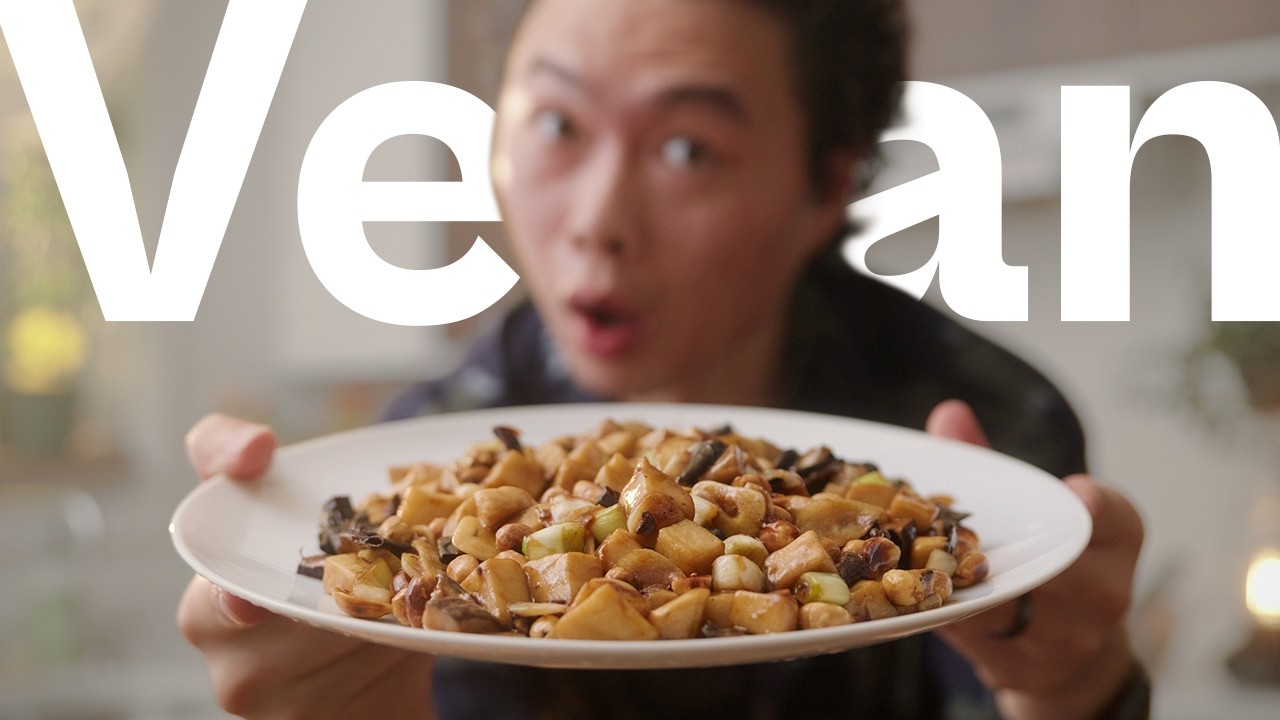
This plant-based riff on Sichuan’s most famous dish swaps the chicken for meaty king oyster mushrooms, tossed in a glossy six-ingredient Kung Pao sauce with toasted peanuts and a tingle of Sichuan peppercorn.
这道川菜名菜的纯素版本,以厚实的杏鲍菇取代鸡肉,裹上六种食材调成的宫保汁,配炒花生与花椒的麻香,一口下去过瘾又满足。
📹 Watch the Recipe
Recipe by Lionel Zeng (Sichuan vegan cooking).
🥘 Why This Recipe Works
True Kung Pao is all about contrast — the snap of crunchy peanuts, the chew of tender protein, and a sauce that is at once sweet, sour, salty, and numb. King oyster mushrooms earn their place here because, cut into thick one-inch cubes and stir-fried hard over high heat, they turn springy and almost meaty, soaking up every drop of the glaze without falling apart.
The real star is a genuinely authentic Sichuan Kung Pao sauce — just Chinese black vinegar, sugar, soy, Shaoxing wine, and a quick cornstarch slurry. No bottled stir-fry sauce, no ketchup, no shortcuts. Frying the dried chilies and Sichuan peppercorns in oil first perfumes the whole dish and delivers that signature numbing tingle.
6 ingredients, one pan, 15 minutes — and it beats takeout. Serve it over steamed rice for a weeknight dinner that tastes like it came from a Chengdu kitchen.
🛒 Ingredients
| Ingredient | Amount | Notes |
|---|---|---|
| King oyster mushrooms (杏鲍菇) | 3 | cut into 1-inch cubes |
| Raw peanuts (花生) | 1/2 cup / 40g | toasted until golden |
| Chinese leek / da cong (大葱) | 1 | cut into 1/2-inch pieces |
| Ginger (姜) | 1 thumb | sliced |
| Garlic (蒜) | 4 cloves | sliced |
| Dried chilies (干辣椒) | 10-15 | snipped into 1-inch pieces |
| Sichuan peppercorns (花椒) | 1 tbsp | for the numbing tingle |
| Neutral oil (食用油) | 2 tbsp | high-heat safe |
| Chinese black vinegar (香醋) | 1 tbsp | Chinkiang, for the sauce |
| Sugar (糖) | 1 tbsp | for the sauce |
| Soy sauce (酱油) | 1 tbsp | for the sauce |
| Shaoxing wine (绍兴酒) | 1 tsp | for the sauce |
| Dark soy sauce (老抽) | 1 tsp | for color, in the sauce |
| Cornstarch (玉米淀粉) | 2 tsp | mixed with 1 tbsp water as slurry |
👨🍳 Instructions
- Mix the Kung Pao sauce
- Stir 1 tbsp black vinegar, 1 tbsp sugar, 1 tbsp soy sauce, 1 tsp Shaoxing wine, and 1 tsp dark soy sauce together in a small bowl.
- Whisk in the cornstarch and 1 tbsp water until smooth, forming a slurry.
- Give it one more stir right before you pour it into the pan.
- Toast the peanuts
- Set a dry pan over medium-low heat and add the raw peanuts.
- Toast for about 5 minutes until lightly golden and fragrant, shaking the pan now and then.
- Tip them onto a plate and set aside — they crisp up further as they cool.
- Bloom the aromatics
- Heat the 2 tbsp of oil over medium heat in the same pan.
- Add the Sichuan peppercorns first, then the dried chilies, and sauté for about 15 seconds until the oil smells fragrant.
- Don’t let the chilies burn — they should just turn glossy and give off their heat.
- Stir-fry the mushrooms
- Turn the heat to high and add the king oyster mushroom cubes.
- Stir-fry for 1 minute, then add the garlic, ginger, and Chinese leek.
- Cook for 1 to 2 more minutes until the mushrooms are tender and lightly browned on the edges.
- Glaze and finish
- Pour in the Kung Pao sauce and keep stirring as it thickens and coats everything.
- Let it bubble until glossy and clinging to the mushrooms.
- Add the toasted peanuts last and give everything a quick toss.
- Serve immediately over steamed rice.
💡 Tips & Substitutions
| Problem | Fix |
|---|---|
| No king oyster mushrooms on hand? | Firm tofu (pressed and cubed), oyster mushrooms, or even cauliflower florets all work well. Pan-fry them for extra texture before adding the sauce. |
| Want it less spicy? | Reduce the dried chilies or deseed them, and use a gentler Sichuan peppercorn hand. The numb factor is adjustable without losing the dish’s character. |
| Sugar-free option? | Swap the sugar for a little maple syrup or a sugar substitute like monk fruit. The sweetness balance matters, so adjust to taste. |
| Peanuts won’t stay crisp? | Add them at the very end, right before serving, so they stay crunchy instead of softening in the hot sauce. |
📊 Nutrition
Per serving (of 2): approximately 320 calories · 14g protein · 22g fat · 22g carbs · 6g fiber. Made with whole plant foods — naturally cholesterol-free and rich in mushroom fiber and B vitamins.
Ingredients
Method
- Stir black vinegar, sugar, soy sauce, Shaoxing wine, and dark soy sauce together in a small bowl. Whisk in the cornstarch slurry until smooth. Stir again right before using.
- Toast the raw peanuts in a dry pan over medium-low heat for about 5 minutes until lightly golden. Set aside.
- Heat the oil over medium heat. Add the Sichuan peppercorns, then the dried chilies, and sauté about 15 seconds until fragrant.
- Turn heat to high. Add the mushrooms and stir-fry 1 minute. Add garlic, ginger, and leek. Cook 1-2 more minutes until mushrooms are tender.
- Pour in the sauce and stir until it thickens and coats everything. Add the peanuts last, toss quickly, and serve with rice.
Notes
🌱 Why This Dish
宫保鸡丁 (Gōng Bǎo Jī Dīng) is one of Sichuan’s most famous exported dishes, named after Ding Baozhen, a 19th-century governor of Sichuan who held the honorary title ‘Gōng Bǎo’ (Palace Guardian). The original recipe was a simple, bold stir-fry — cubed meat, dried chilies, and peanuts tossed in a sweet-sour-numbing sauce. In this vegan version, the chicken becomes king oyster mushroom, but the heart of the dish — that glossy, addictive Kung Pao sauce — stays exactly as it should be.
The word 素 (sù) marks a dish as plant-based, and Buddhist vegetarian cooking has a long tradition of transforming humble ingredients like mushrooms and tofu into convincing ‘meat’ stand-ins — a practice that grew out of temple kitchens and the monastic principle of avoiding harm to living beings. Mushrooms were prized in this cooking precisely because their dense, savory texture mirrors the bite of protein so well.
In Sichuan homes, Kung Pao (宫保) with its unmistakable sweetness, heat, and tingling 麻 (má) numbness is a celebration of balance — a philosophy at the core of Chinese cuisine, where no single flavor is allowed to dominate. Whether served as a main over rice or shared with family, this is comfort food with centuries of story behind it.