 Dou Dou (豆豆)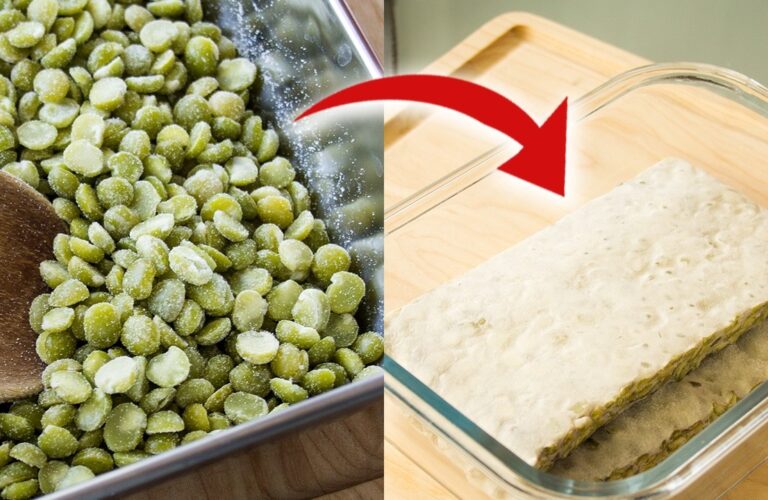
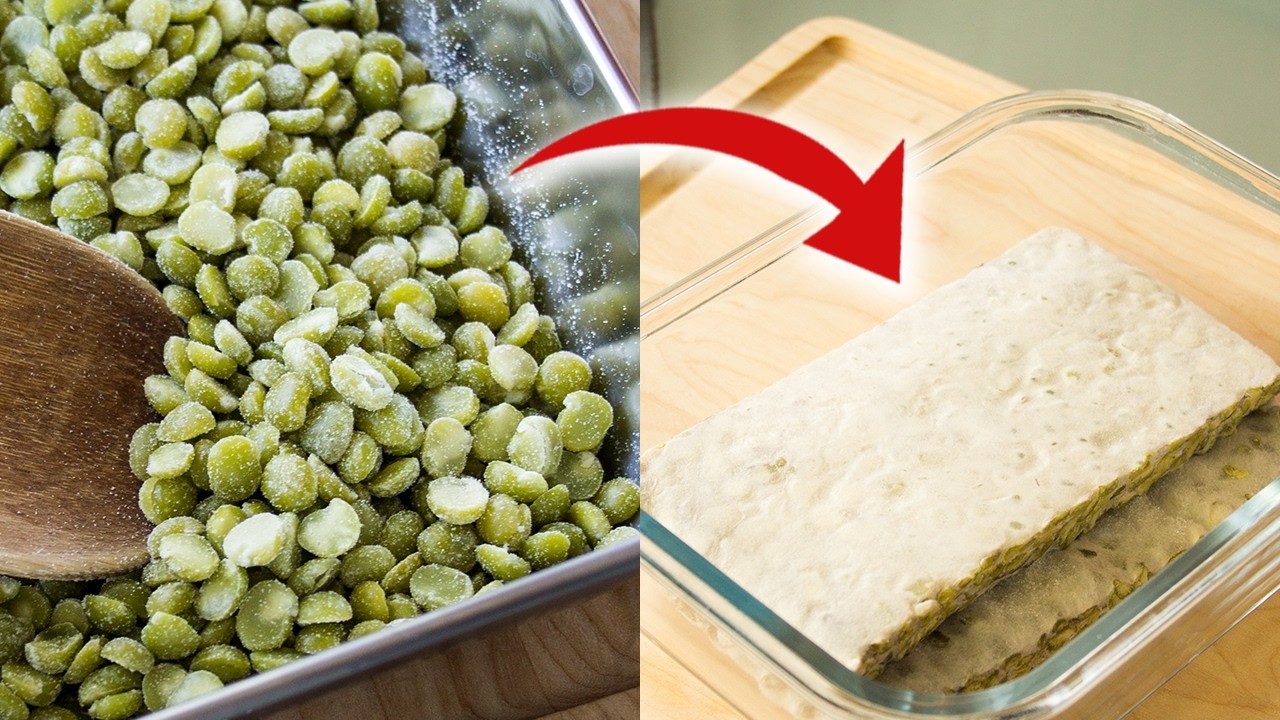
Homemade Tempeh (自製天貝) — a 5-step fermentation that turns 50 cents’ worth of split peas into a chewy, nutty, high-protein cake, and it tastes even better than the store-bought block. 用一把青豆,就能在香港家中發酵出高蛋白的天貝,比市售的更香、更划算。
📹 Watch the Recipe
Recipe & video by Mary’s Test Kitchen.
🥘 Why This Recipe Works
Tempeh is one of the most nutritious and underrated proteins in vegetarian cooking — but the traditional route (soaking, peeling, and splitting whole soybeans by hand) scares almost everyone off. This recipe quietly removes the hardest part: it starts with split peas, which are already hulled and split, so you skip the tedious prep entirely and jump straight to the cook, the ferment, and the reward.
Because the beans are already split, Rhizopus oligosporus — the friendly fungus that binds everything together — can easily blanket each piece, giving you a cleaner, firmer, more reliable cake on the very first try. No laboratory needed: a warm corner, a perforated tray or bag, and about two days of patience is all it takes.
Two ingredients, one warm shelf, and two days of gentle patience yield a protein-dense tempeh block — slice it, pan-fry it, or stir-fry it exactly like tofu. It’s the cheapest, easiest introduction to fermentation you’ll ever make.
🛒 Ingredients
| Ingredient (食材) | Amount | Notes |
|---|---|---|
| Dried split peas / 青豆(去殼) | 3/4 cup (150 g) | Or split fava beans — already hulled & split |
| White vinegar / 白醋 | 1 tsp | Lowers pH, favours the good fungus |
| Tempeh starter / 天貝菌種 | 1 packet (3 g) | Rhizopus oligosporus; enough for 2 cups dried |
| A perforated tray or bag / 透氣盤或袋 | 1 | Air holes ~1″ apart for airflow |
| A warm incubation spot / 溫暖發酵處 | 1 | 86–88°F (30–31°C) |
👨🍳 Instructions
Step 1 — Soak the Split Peas
- Cover the split peas with water and soak overnight.
- Optional but recommended: the soak helps them cook evenly and faster.
- Split fava beans work just as well here.
Step 2 — Cook Until Tender, Not Mushy
- Cook in a pot on the stove or a rice cooker until tender enough to bite through.
- Keep them intact — mushy beans ferment poorly.
- Avoid pressure cookers, which tend to overcook them.
Step 3 — Drain & Acidify
- Drain thoroughly and return to the warm pot.
- Stir in 1 tsp vinegar.
- The acid discourages unwanted bacteria and moulds while helping R. oligosporus thrive.
Step 4 — Dry the Surface
- Let the residual heat dry the surface while stirring occasionally.
- The peas should feel moist inside but dry on the outside — no visible water droplets.
- When in doubt, dry a little longer; slightly too dry recovers better than too wet.
Step 5 — Cool, Inoculate & Mix
- Cool to about body temperature (too hot kills the spores).
- Sprinkle the starter evenly and mix thoroughly so every pea meets the spores.
- Uneven mixing is the usual cause of patchy growth later.
Step 6 — Package & Incubate
- Transfer to a perforated tray or bag, keeping the layer about 1–1½ inches thick.
- Incubate at 86–88°F (30–31°C) — a dehydrator, oven with the light on, or yogurt setting works.
- Expect white mycelium in ~24 hours; the cake is done in 24–48 hours when firm and mushroomy-smelling.
💡 Tips & Substitutions
| Problem / Question | Fix / Answer |
|---|---|
| No tempeh starter on hand? | Harvest spores from a block of mature tempeh to start your next batch — no need to buy again. |
| Can I use this if I’m soy-allergic? | Yes — choose a soy-free starter and use any split legume like fava beans. |
| It smells slightly ammonia-like? | It’s gone too far — refrigerate earlier next time; stop before ammonia notes develop. |
| How do I cook finished tempeh? | Steam, pan-fry, braise, bake, or stir-fry like tofu; it soaks up marinades beautifully. |
📊 Nutrition
Per ~100 g serving (tempeh): ~190 cal, 20 g protein, 7 g fat, 9 g carbs, 8 g fibre — a fermented protein powerhouse.
Ingredients
Method
-
Cover the split peas with water and soak overnight so they cook evenly and faster. Split fava beans work too.
-
Cook on the stove or in a rice cooker until tender enough to bite through while holding their shape. Avoid pressure cookers, which tend to overcook into mush.
-
Drain thoroughly, return to the warm pot, and stir in 1 tsp vinegar. The acid discourages unwanted bacteria and moulds while helping Rhizopus oligosporus thrive.
-
Let residual heat dry the surface while stirring occasionally. The peas should feel moist inside but dry on the outside with no visible droplets. Slightly too dry is easier to recover from than too wet.
-
Cool to about body temperature, then sprinkle the starter evenly and mix thoroughly so every pea meets the spores. Uneven mixing causes patchy growth.
-
Pack into a perforated tray or bag in a layer 1-1.5 inches thick. Incubate at 86-88F (30-31C) using a dehydrator, oven light, or yogurt setting. White mycelium appears in ~24h; the firm, mushroomy cake is ready in 24-48h.
Notes
🌱 Why This Dish
Fermented bean cakes have been at the heart of Chinese temple and monastic cooking for centuries — furu (腐乳, fermented tofu), douchi (豆豉, fermented black beans), and soy sauce itself were born from the same impulse: turning cheap legumes into savoury, keeping food. Tempeh, while born in Indonesia, slots perfectly into that lineage — a thrifty, protein-dense block that Buddhist vegetarian kitchens have embraced across Asia. When steamed or pan-fried it takes on a nutty, mushroomy depth that tofu can’t match, and its name, 天貝, literally echoes a “heaven-given treasure” from a humble bean. It’s the kind of slow, gentle transformation that temple cooking has always honoured — a whole cake rising from almost nothing, ready to be roasted, braised, or tossed in a screaming-hot wok.