 Dou Dou (豆豆)
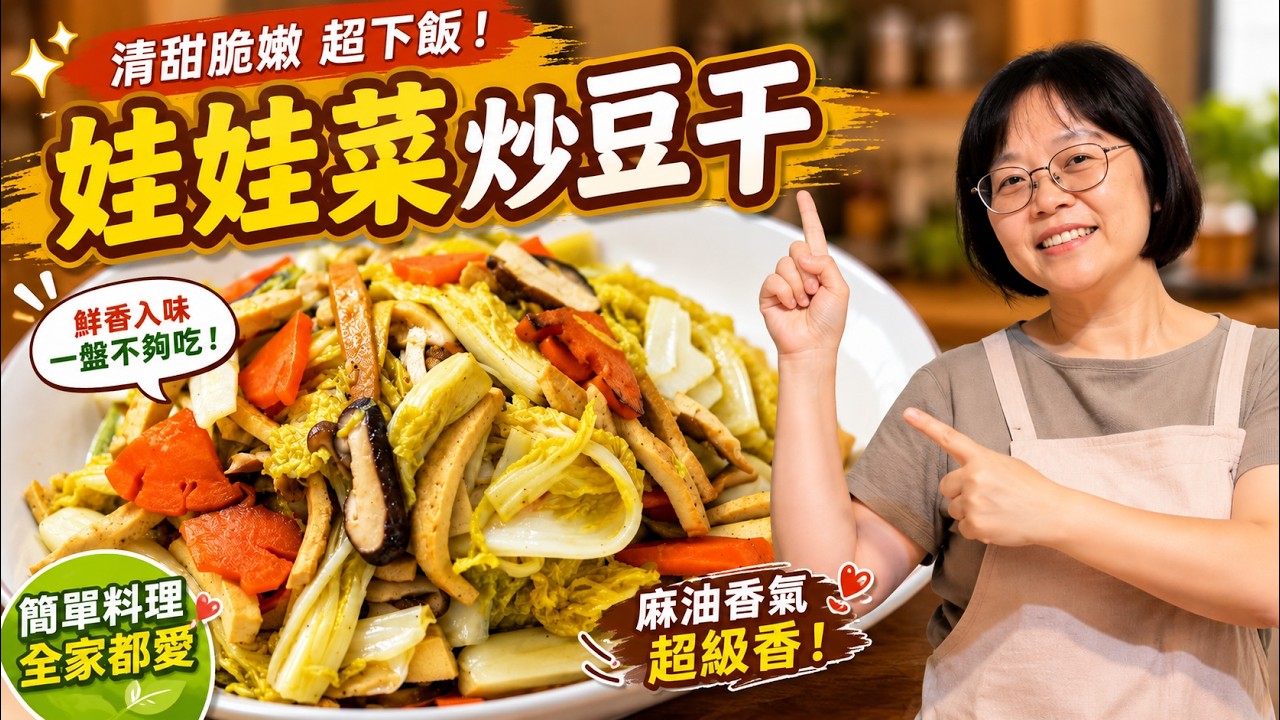
Baby napa cabbage, shiitake mushrooms and golden tofu come together in a single quick wok toss — sweet, savory and begging for rice. 娃娃菜吸滿香菇與豆干的鮮甜醬汁,一鍋快炒十五分鐘,清甜脆嫩,超級下飯!
📹 Watch the Recipe
Recipe by 芭樂媽的家 Qistin Wong TV
🥘 Why This Recipe Works
娃娃菜 (wáwá cài, “baby doll cabbage”) is the miniature, extra-sweet cousin of napa cabbage — tiny heads that look like little cabbages and cook in minutes. In Taiwan’s markets, a bag of four costs about NT$35, which is why home cooks love it: it’s affordable, adorable, and stir-fries into a glossy, tender pile that tastes far more expensive than it is. Paired with fresh shiitake mushrooms — the umami engine of Chinese vegetarian cooking — and slices of white pressed tofu, this is the kind of dish that makes plain rice disappear.
The technique matters as much as the ingredients: the tofu is dry-pan-fried until golden and firm, the mushrooms and carrot are toasted in oil until fragrant, and then the whole pan gets a quick covered braise with just 60 ml of water. The cabbage collapses to half its volume and soaks up every drop of seasoned liquid — sweet, silky and glazed. A final off-heat swirl of black sesame oil sends the aroma through the roof.
This version: 10 ingredients, one pan, 18 minutes.
🛒 Ingredients
| Baby napa cabbage (娃娃菜) | 4 heads | Trimmed, cut into strips |
| Fresh shiitake mushrooms (鮮香菇) | 5 | Sliced; the main umami source |
| Carrot (紅蘿蔔) | 1 small | Thin slices for color and sweetness |
| White pressed tofu (白玉豆干) | 2 pieces | Cut into thin strips |
| Salt (鹽) | 1 tsp | — |
| Soy sauce (醬油) | 1 tbsp | — |
| White pepper (白胡椒粉) | ½ tsp | — |
| Water (水) | 60 ml | For the short braise |
| Cooking oil (食用油) | 2 tbsp | For frying |
| Black sesame oil (黑麻油) | 1 tsp | Stirred in off heat at the end |
👨🍳 Instructions
Step 1: Prep the vegetables
- Trim the dried base off each baby napa cabbage, halve lengthwise, quarter, then peel the layers into long strips; rinse well and drain.
- Slice the carrot into thin pieces and the shiitake mushrooms into slices — finely slice the stems too, they carry lots of flavor.
- Cut the white pressed tofu into thin strips, about the width of the cabbage pieces.
Step 2: Fry the aromatics
- Heat oil in a wok over medium-high heat and add the shiitake and carrot.
- Stir-fry until the mushrooms are fragrant and the edges just start to brown — this toasting builds the dish’s savory base.
Step 3: Golden the tofu
- Add the tofu strips, adding a touch more oil if the pan looks dry.
- Pan-fry, turning occasionally, until the strips are golden brown and slightly firm on the surface.
Step 4: Add the cabbage
- Toss in the baby napa cabbage and turn the heat to high.
- Season with 1 tsp salt, 1 tbsp soy sauce and ½ tsp white pepper, stir-frying so every leaf gets coated.
Step 5: Short covered braise
- Pour in 60 ml of water and stir until the seasoning is evenly distributed.
- Cover the wok, lower the heat and simmer for about 2 minutes — the cabbage softens, turns glossy and shrinks to roughly half its volume.
Step 6: Sesame oil finish
- Turn off the heat and drizzle in the black sesame oil.
- Toss once or twice to coat, then serve hot with steamed rice.
💡 Tips & Substitutions
| Can’t find baby napa cabbage (娃娃菜)? | Use regular napa cabbage (大白菜) or baby bok choy — add a minute or two of braise time for napa cabbage and check tenderness before serving. |
| Want a saucier dish? | Use 80–100 ml of water instead of 60 ml and simmer a minute longer — spoon the extra sauce over rice. |
| No white pressed tofu (白玉豆干)? | Extra-firm tofu works beautifully — press it dry and pan-fry until golden before adding the cabbage. |
| Gluten-sensitive? | Swap regular soy sauce for tamari or coconut aminos; everything else is naturally gluten-free. |
📊 Nutrition
Per serving (serves 4 as a side)
~120 cal · Protein: 6g · Carbs: 9g · Fat: 7g · Fiber: 3g
Ingredients
Method
- Trim the dried base off each baby napa cabbage, halve lengthwise, quarter, then peel the layers into long strips; rinse well and drain. Slice the carrot into thin pieces and the shiitake mushrooms into slices (finely slice the stems too). Cut the white pressed tofu into thin strips.
- Heat oil in a wok over medium-high heat and add the shiitake and carrot. Stir-fry until the mushrooms are fragrant and the edges just start to brown.
- Add the tofu strips with a touch more oil if the pan looks dry. Pan-fry, turning occasionally, until golden brown and slightly firm on the surface.
- Toss in the baby napa cabbage and turn the heat to high. Season with 1 tsp salt, 1 tbsp soy sauce and 1/2 tsp white pepper, stir-frying so every leaf is coated.
- Pour in 60 ml of water and stir until the seasoning is evenly distributed. Cover the wok, lower the heat and simmer about 2 minutes until the cabbage is soft, glossy and shrunk to roughly half its volume.
- Turn off the heat and drizzle in the black sesame oil. Toss once or twice to coat, then serve hot with steamed rice.
🌱 Why This Dish
The name 娃娃菜 (wáwá cài) means “baby doll vegetable,” a nod to its miniature size — it is a small, extra-tender cultivar of napa cabbage (大白菜) that became a Taiwanese and Cantonese market staple. Unlike its big sibling, baby napa cabbage needs almost no cooking time, which is why it shines in hot pot (火鍋) and fast home stir-fries like this one.
Simple vegetable stir-fries are the backbone of Chinese temple vegetarian cooking (寺院素菜), where cooks let each ingredient speak for itself: shiitake for depth, pressed tofu for substance, and the vegetable’s own sweetness for flavor. Across Taiwan, a plate like this — 一菜一飯, one dish with a bowl of rice — is the definition of a good everyday meal: cheap, quick and comforting.