 Dou Dou (豆豆)
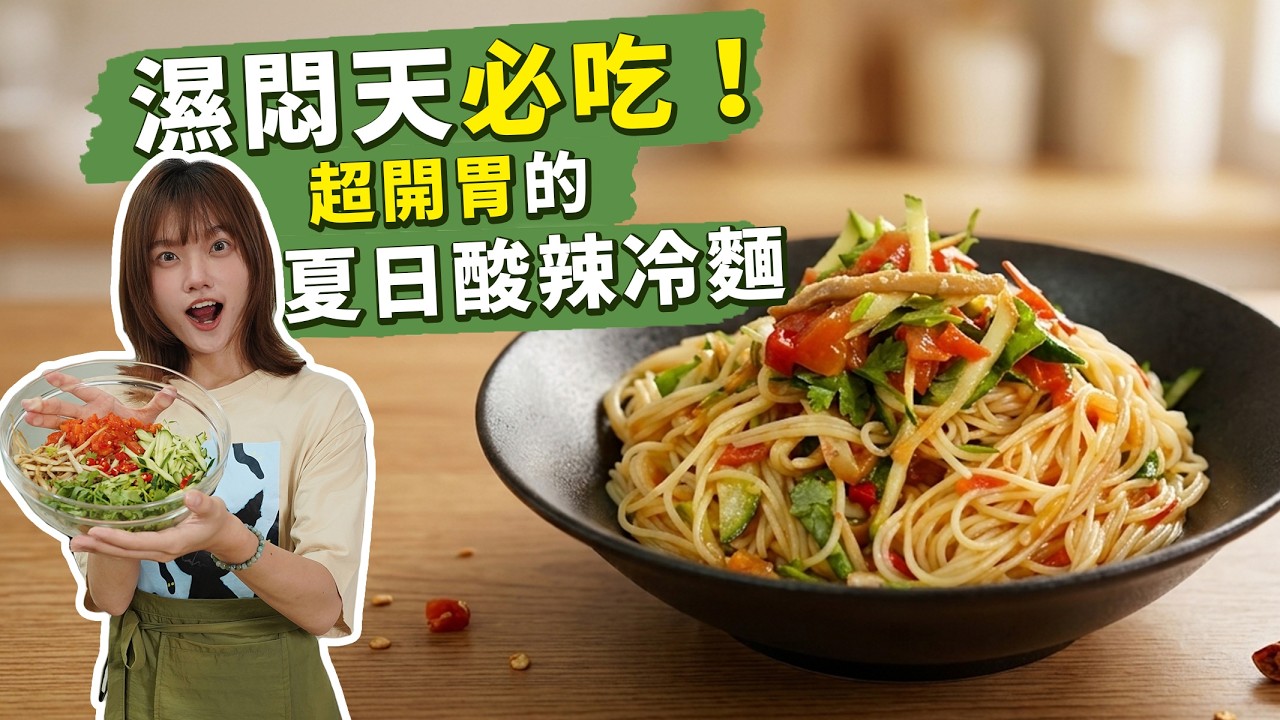
When the weather turns sticky and humid, nothing snaps your appetite back like a bowl of ice-cold, sour-spicy noodles — and this vegan version swaps in angel hair pasta for the most satisfyingly chewy (Q彈) bite you can imagine. 濕悶天氣食慾不振時,來一碗冰涼酸辣、彈牙爽口的冷麵,胃口瞬間就打開了!
📹 Watch the Recipe
Recipe by 野菜鹿鹿 Veggie Deer
🥘 Why This Recipe Works
酸辣冷麵 (suān là lěng miàn, “sour-spicy cold noodles”) is Taiwan’s answer to a sweltering summer afternoon. Where most cold noodle recipes stick to thin wheat noodles or 素麵, Veggie Deer has a clever twist: cook angel hair pasta for just 2–3 minutes and plunge it straight into ice water. The rapid chill sets the starch into an ultra-springy, bouncy texture that slurps beautifully and holds onto every drop of dressing.
The real flavor engine is the hand-torn king oyster mushroom (杏鮑菇). Torn — never sliced — into ragged strips and pan-fried until golden with a pinch of salt, it develops a crisp, meaty bite while the salt coaxes out moisture and completely transforms the mushroom’s earthy smell into deep umami. Combined with a sweet-tart tomato base, crunchy cucumber, bright cilantro, and a dressing of soy sauce, mirin, vegan fish sauce, and fresh lemon, this bowl is cooling on the outside and surprisingly rich on the inside.
This version: 10 ingredients, one pan, 25 minutes.
🛒 Ingredients
| Angel hair pasta (天使細麵) | 200 g | Very thin pasta; soba or thin wheat noodles also work |
| King oyster mushrooms (杏鮑菇) | 300 g | Hand-torn into strips, ~2–3 large stalks |
| Tomatoes (番茄) | 2 medium | Diced small |
| Tomato paste (番茄醬) | 1 tbsp | Use no-salt, no-sugar version if possible |
| Cucumber (小黃瓜) | ½ | Julienned into thin strips |
| Cilantro (香菜) | 1 small bunch | Chopped into short segments |
| Fresh red chili (辣椒) | 1–2 | Adjust to your heat tolerance |
| Lemon (檸檬) | 1 | Juiced — the sour backbone |
| Soy sauce (醬油) | 2 tbsp | For the dressing |
| Mirin (味醂) | 1 tbsp | Adds gentle sweetness |
| Vegan fish sauce (素魚露) | 1 tbsp | Umami depth; skip if unavailable |
| Sesame oil (香油) | 1 tsp | Finish with aroma |
| Salt (鹽) | to taste | For the mushrooms and pasta water |
| Ice water (冰水) | 1 large bowl | For shocking the noodles |
👨🍳 Instructions
Step 1: Prep the vegetables
- Wash the tomatoes and cut them into small dice; julienne the cucumber into thin strips.
- Chop the cilantro and chili into short segments — go with 2 chilis if you love heat, 1 or none if you don’t.
Step 2: Tear and sear the mushrooms
- Insert your fingers into the middle of each king oyster mushroom and tear it apart lengthwise into rough strips — this ragged texture catches sauce better than clean cuts.
- Heat a little oil in a pan and fry the mushroom strips until golden brown, seasoning with a pinch of salt.
- The salt seasons the mushrooms and coaxes out moisture, killing any earthy “mushroom smell” and turning it into pure umami.
Step 3: Build the tomato base
- Add a little more oil to the pan and stir-fry the diced tomatoes until soft.
- Stir in the tomato paste for a thicker, richer flavor, then remove the mixture from the pan and set aside.
- No tomato paste? Tomato purée or mashed fresh tomatoes work just as well.
Step 4: Cook and chill the pasta
- Bring a pot of salted water to a boil and cook the angel hair pasta for just 2–3 minutes — do not overcook.
- Drain, then immediately plunge the noodles into a bowl of ice water so they turn cold and irresistibly Q彈 (chewy-bouncy).
Step 5: Assemble and dress
- Squeeze the juice from the lemon.
- In a large bowl, combine the chilled noodles with the tomato-mushroom mixture, cilantro, cucumber, and chili.
- Season with soy sauce, mirin, vegan fish sauce, sesame oil, and the fresh lemon juice; toss well and serve immediately.
💡 Tips & Substitutions
| I can’t handle spicy food at all | Drop the chili entirely and add a little extra sugar or mirin — you’ll get a sweet-sour cold noodle instead of a spicy one. |
| No angel hair pasta at home | Thin soba, somen (素麵), or any thin wheat noodle works — just adjust the cooking time and always finish with the ice bath. |
| Where do I find vegan fish sauce? | Most Asian grocers carry it (look for 素魚露), or order online; you can also swap it for a splash of mushroom seasoning and extra soy sauce. |
| The mushrooms taste earthy or rubbery | Make sure the pan is hot and the strips are truly golden-brown before flipping — undercooked mushrooms are where the off-flavor lives. |
| Watching sodium intake | Choose no-salt, no-sugar tomato paste and low-sodium soy sauce; the lemon and mirin carry plenty of flavor on their own. |
📊 Nutrition
Per serving (serves 2 as a main)
~420 cal · Protein: 12g · Carbs: 70g · Fat: 9g · Fiber: 6g
Ingredients
Method
- Wash the tomatoes and cut them into small dice; julienne the cucumber into thin strips. Chop the cilantro and chili into short segments — go with 2 chilis if you love heat, 1 or none if you don't.
- Insert your fingers into the middle of each king oyster mushroom and tear it apart lengthwise into rough strips — this ragged texture catches sauce better than clean cuts. Heat a little oil in a pan and fry the mushroom strips until golden brown, seasoning with a pinch of salt. The salt seasons the mushrooms and coaxes out moisture, killing any earthy mushroom smell and turning it into pure umami.
- Add a little more oil to the pan and stir-fry the diced tomatoes until soft. Stir in the tomato paste for a thicker, richer flavor, then remove the mixture from the pan and set aside. No tomato paste? Tomato purée or mashed fresh tomatoes work just as well.
- Bring a pot of salted water to a boil and cook the angel hair pasta for just 2-3 minutes — do not overcook. Drain, then immediately plunge the noodles into a bowl of ice water so they turn cold and irresistibly Q彈 (chewy-bouncy).
- Squeeze the juice from the lemon. In a large bowl, combine the chilled noodles with the tomato-mushroom mixture, cilantro, cucumber, and chili. Season with soy sauce, mirin, vegan fish sauce, sesame oil, and the fresh lemon juice; toss well and serve immediately.
Notes
🌱 Why This Dish
Cold noodles have been a summer survival strategy across China and Taiwan for centuries — 冷麵 (lěng miàn) is served from street stalls to temple kitchens whenever the mercury climbs. In Buddhist vegetarian tradition, where meals are built around what is seasonal, cooling, and easy on the body, the sour-spicy, ice-chilled bowl is a perfect fit: the sourness (酸) wakes the appetite, the mild heat (辣) encourages gentle perspiration that helps the body cool down naturally, and the vegetables keep the meal light yet satisfying.
The Chinese name 酸辣冷麵 breaks down simply: 酸 (suān) sour, 辣 (là) spicy, 冷 (lěng) cold, 麵 (miàn) noodles. It belongs to the same family as Sichuan’s 涼麵 and Japan’s hiyashi chūka — a reminder that the love of chilled, boldly dressed noodles crosses every border. Here it goes fully plant-based, with hand-torn mushrooms standing in for the shredded chicken you’d find in a traditional Taiwanese 雞絲涼麵, proving that a temple-cuisine mindset — humble ingredients, clever technique, nothing wasted — can produce a bowl this joyful.