 Dou Dou (豆豆)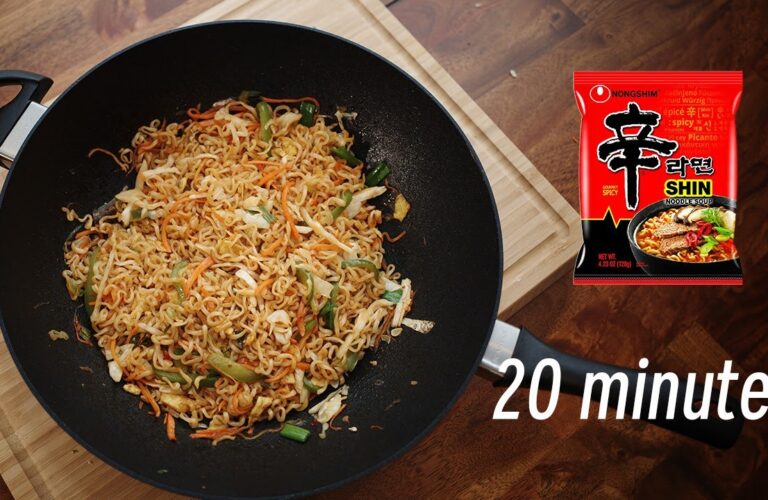
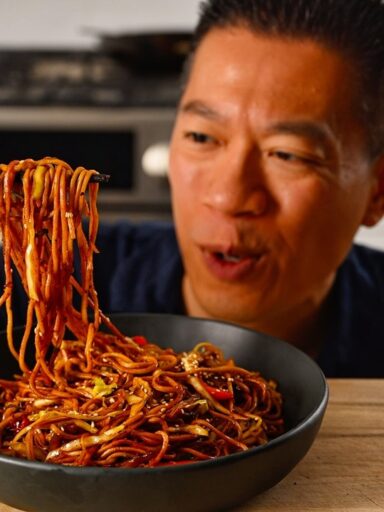
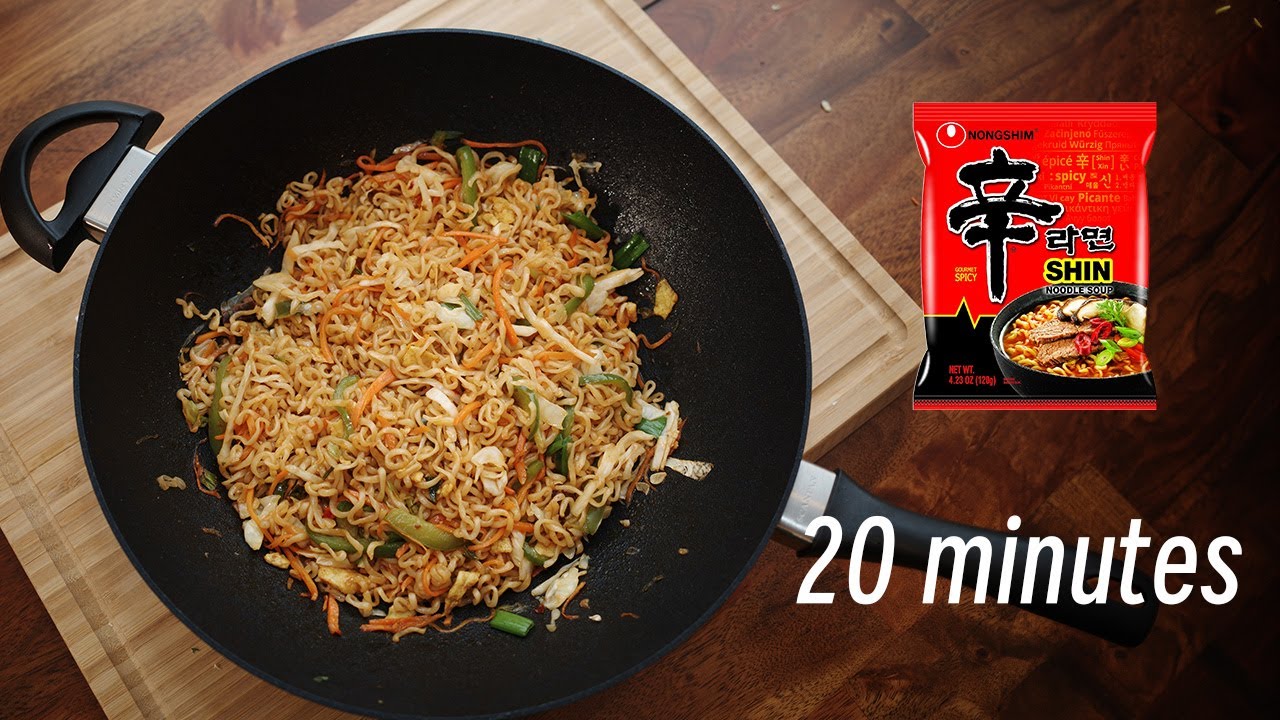
That pack of instant Shin Ramen in your pantry can become the best chow mein you have ever tasted — smoky, saucy, and wok-fried in under 20 minutes. 兩包辛拉麵變身鑊氣十足的炒麵,香辣惹味,比餐廳外賣還要好吃。
📹 Watch the Recipe
Recipe by Lionel Zeng
🥘 Why This Recipe Works
Chow mein (炒麵, chǎo miàn — “stir-fried noodles”) is Cantonese street-food royalty: springy noodles, charred vegetables, and that smoky breath of the wok called 鑊氣 wok hei. Here, Sichuan-born chef Lionel Zeng pulls off a delicious cultural mashup — taking a pack of Korean instant Shin Ramen and giving it the full Chinese wok treatment.
The magic is a double-hit of flavor: half the ramen’s own seasoning packet folded into soy sauce, a touch of oyster sauce, sugar, and sesame oil. Boil the noodles just until they separate, then toss them over screaming-hot oil so every strand picks up a toasty, caramelized edge. It is fast, frugal, and shockingly close to proper wok-fried chow mein.
This version: 14 ingredients, one wok, 20 minutes.
🛒 Ingredients
| Shin Ramen instant noodles (辛拉麵) | 2 packs | Save 1 seasoning packet for the sauce |
| Carrot (紅蘿蔔) | 1 small (about 80 g) | Sliced into thin strips |
| Cabbage (椰菜) | 150 g | Shredded |
| Green bell pepper (青椒) | ½ | Cut into thin strips |
| Eggs (雞蛋) | 2 | Beaten; see tips for a vegan swap |
| Green onions (青蔥) | 3 stalks | White and green parts separated |
| Garlic (大蒜) | 3 cloves | Smashed and coarsely diced |
| Light soy sauce (生抽) | 10 g | About 2 teaspoons |
| Chinese dark soy sauce (老抽) | 5 g | Mostly for color; optional |
| Oyster sauce / vegan mushroom sauce (蠔油 / 素蠔油) | 6 g | About 1 teaspoon |
| Sugar (砂糖) | 5 g | About 1 teaspoon |
| Sesame oil (麻油) | 5 g | About 1 teaspoon |
| Avocado oil or other high-smoke-point oil (牛油果油) | 3 tbsp | For stir-frying |
| Salt and white pepper (鹽、白胡椒粉) | a pinch | For the eggs |
👨🍳 Instructions
Step 1: Prep the vegetables
- Slice the carrot, cabbage, and pepper into thin strips — a cheese grater works great for the carrot.
- Trim the green onion roots, dice the white parts, and chop the green parts into short pieces; keep them separate.
- Smash and peel the garlic, dice it coarsely, and set it aside with the white onion so it won’t burn during the fast stir-fry.
Step 2: Whisk the eggs
- Crack the eggs into a bowl and add a pinch of salt and white pepper.
- Beat until small bubbles form on the surface — this aerates them for a fluffier scramble.
Step 3: Mix the secret sauce
- Use half of the ramen seasoning — one packet for two packs of noodles — so the dish isn’t overpoweringly salty.
- Add the light soy sauce, dark soy sauce, oyster sauce, sugar, and sesame oil.
- Stir until the sugar is fully dissolved. This is the flavor bomb for the whole dish.
Step 4: Par-boil the noodles
- Boil the ramen for about 2 minutes, just until the noodles separate — they finish cooking in the wok.
- Drain and spread on a tray or large plate, tossing with chopsticks or tongs to cool.
- Mix in a little oil to keep the strands from clumping together.
Step 5: Fry the eggs, then the aromatics
- Heat oil in the wok past 300°F (150°C), pour in the eggs, and cook until they develop a beautiful golden-brown surface.
- Chop the eggs into small pieces with a spatula and return them to a bowl.
- Reheat the wok to 400°F (200°C), add fresh oil, and sauté the garlic and white onion for 15 seconds.
- Add the carrot and pepper and stir-fry for 30 seconds, then the cabbage for 1–2 minutes until you smell a toasty aroma.
Step 6: Toss everything together
- Return the eggs and noodles to the wok and stir-fry for 1 minute, using chopsticks or tongs so the noodles don’t break.
- Stir in the sauce and cook for another 1–2 minutes until every strand is glossy and lightly charred.
- Finish with the green onion tops, give it one final toss, and serve immediately.
💡 Tips & Substitutions
| Is Shin Ramyun seasoning vegan? | Traditional Shin Ramyun seasoning contains beef extract. For a fully plant-based bowl, use a vegan instant noodle brand (or the vegetable version) and keep the same sauce ratios, or swap the packet for chili flakes, garlic powder, and a pinch of Sichuan pepper. |
| Can I make it egg-free? | Yes — omit the eggs or fry crumbled firm tofu until golden-brown for the same protein boost and crispy texture. |
| No wok at home? | Use the largest skillet or cast-iron pan you own, preheat it until smoking-hot, and work quickly so the noodles char instead of steam. |
| Noodles clumping together? | Don’t overboil — 2 minutes max — and toss the drained noodles with a little oil while they cool. They finish cooking in the wok, so slightly underdone is perfect. |
📊 Nutrition
Per serving (serves 2 as a main)
~520 cal · Protein: 16g · Carbs: 70g · Fat: 18g · Fiber: 4g
Ingredients
Method
Notes
🌱 Why This Dish
The name says it all: 炒麵 (chǎo miàn) is literally “stir-fried noodles” — 炒 (chǎo) means to stir-fry over intense heat, and 麵 (miàn) means noodles. The technique is pure Cantonese wok craft: every ingredient is cut small, cooked fast, and tossed in a smoking-hot wok so the noodles come out glossy, slightly charred, and perfumed with wok hei (鑊氣).
Chow mein has deep roots in Chinese vegetarian cooking — temple kitchens and Buddhist households stir-fried vegetable noodles with exactly this discipline, building depth from heat, aromatics, and sauce rather than meat. Today the dish rules dai pai dong street stalls (大牌檔) from Hong Kong to Chinatowns worldwide, where it is a beloved late-night comfort food.
What makes this version special is its cross-cultural spark: Korean instant noodles (即食麵), the pantry shortcut of students and night-shift workers everywhere, elevated by a Sichuan chef’s hand into proper Chinese wok-fried noodles. Humble ingredients, honest technique — and dinner in twenty minutes.