 Dou Dou (豆豆)
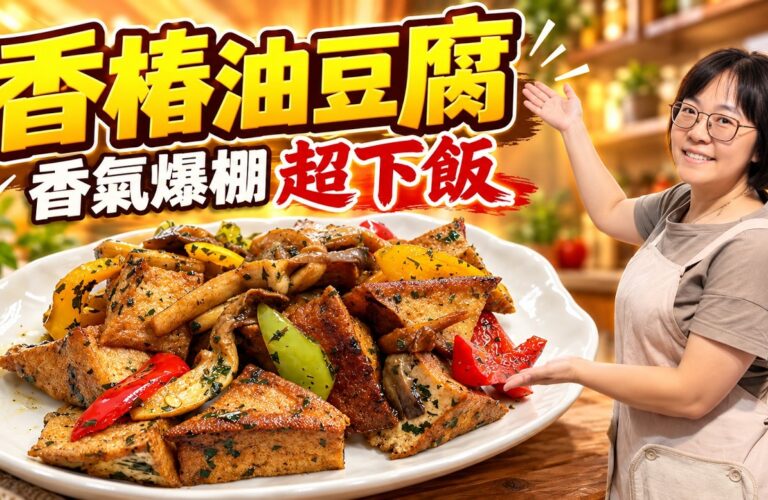
Golden fried tofu puffs soak up a fragrant toon-paste sauce in this ten-minute waterless stir-fry — no garlic, no scallions, and not a drop of added water. 金黃油豆腐吸滿香椿醬汁,不加一滴水、不用蒜蔥,十分鐘就能炒出超下飯的家常菜。
📹 Watch the Recipe
Recipe by 芭樂媽的家 Qistin Wong TV
🥘 Why This Recipe Works
Toon paste (香椿醬 / xiāng chūn jiàng) is one of the quiet superstars of Chinese vegetarian cooking. It is made from the young shoots of Toona sinensis — the “tree vegetable” that Chinese cooks have harvested every April for centuries — blended with oil and salt into a dark, deeply savory paste that tastes like spring onions, roasted nuts and new grass all at once. A single spoonful will scent an entire kitchen, which is exactly why temple cooks reach for it when a dish needs the aromatic backbone that garlic and scallions would normally provide.
The second hero here is the oil tofu (油豆腐 / yóu dòu fu): tofu that has been pressed, cut into triangles and flash-fried so its surface turns into a sponge of tiny air pockets. Those pockets are the whole point. When you toss it in a sauce, it drinks the liquid in and stays juicy on the inside while keeping a slightly chewy, meaty skin on the outside. Bell peppers and hand-torn oyster mushrooms are there for sweetness, colour and texture contrast, so the plate reads bright instead of heavy.
The technique is a genuinely Chinese one: waterless stir-frying (無水快炒). Instead of adding stock or water to create a sauce, the cook relies on the moisture the oyster mushrooms release and the water carried by the soy sauce itself. Because that liquid is tiny, it cooks off fast, concentrating onto the tofu instead of diluting it. The result is a glaze rather than a gravy — which is why this dish tastes so much bigger than its short ingredient list.
This version: 10 ingredients, one wok, 15 minutes.
🛒 Ingredients
Serves 2 as a main with rice, or 4 as part of a shared table.
| Triangular oil tofu (三角油豆腐) | 5 pieces | Look for non-GMO. This is the fried, spongy tofu sold in the refrigerated case, not firm block tofu. |
| Red bell pepper (紅甜椒) | 1/2 | Remove the stem and the white inner membrane, then slice into bite-size pieces. |
| Yellow bell pepper (黃甜椒) | 1/2 | Sliced the same way — mostly for colour and sweetness. |
| Optional: mini sweet peppers (水果彩椒) | A small handful | Pale green or purple snacking peppers. Purely visual — add any colour you have. |
| Oyster mushrooms (秀珍菇) | 2 large | Torn by hand, not sliced. They supply the moisture that makes the waterless method work. |
| Cooking oil (食用油) | 1 tbsp | Grapeseed, rice bran or any neutral oil. |
| Soy sauce (醬油) | 1 tbsp | Light soy sauce. Its water content is part of the sauce — don’t use a thick dark soy here. |
| Toon paste (香椿醬) | 1 tbsp | The star ingredient. Sold jarred in Chinese/Taiwanese groceries; keep it frozen and scoop straight from frozen. |
| Vegetarian oyster sauce (素蠔油) | 1 tsp | Mushroom-based. Deepens and rounds out the toon aroma. |
| White pepper (胡椒粉) | 1/4 tsp | Freshly ground if possible — it is brighter than black pepper here. |
👨🍳 Instructions
Step 1: Rinse the frying oil out of the tofu
- Hold each triangle under a thin stream of water and gently rub the surface with your fingers while pressing and releasing it.
- You will see cloudy oil bleed out — that is exactly what you want to remove. Fried tofu carries the oil it was cooked in, and that oil is what turns dishes greasy.
- Press firmly enough to flush it, but never squeeze hard: the skin tears easily and the tofu will break apart in the wok.
Step 2: Cut the tofu, slice the peppers
- Cut each triangle in half so you get smaller, sauce-friendly pieces.
- Halve the red and yellow peppers, cut away the stem and the pale inner membrane, then slice into pieces roughly the size of the tofu.
- Slice any mini sweet peppers the same way — they are there for colour, so keep them thin and bright.
Step 3: Tear the mushrooms and sear them golden
- Tear the oyster mushrooms into strips by hand. Tearing leaves a rougher surface than a knife, which catches the sauce better.
- Heat the oil over medium-high heat and add the mushrooms first, alone. Fry until they turn golden at the edges and smell nutty.
- This step is not optional: mushrooms cooked from the start with everything else stay pale and watery, and the whole dish loses its aroma base.
Step 4: Add tofu and peppers, then season off the heat
- Add the oil tofu and all the bell peppers, pour in the soy sauce and toss to coat.
- Drop the heat to low, then add the toon paste, vegetarian oyster sauce and white pepper. Toon paste is a fresh-herb paste — hitting it with full heat immediately scorches its aroma, so give it a few seconds to melt into the oil first.
- As soon as the paste loosens and smells intensely fragrant, turn the heat back to high.
Step 5: Waterless toss and serve
- Do not add water. The mushrooms are already releasing moisture, and the soy sauce carries its own. You will see the pan turn glossy and slightly wet on its own.
- Toss constantly over high heat for roughly 30–40 strokes, until every piece is coated and the tofu looks heavier and darker — a sign it has absorbed the sauce.
- Turn off the heat and plate immediately, while the peppers still have snap. Serve with plain rice; the sauce is intensely savory and needs rice to balance it.
💡 Tips & Substitutions
| My oil tofu tastes greasy or smells of old frying oil | Rinse and press it under running water before cooking — you’ll see the cloudy oil come out. Skip this and the whole dish tastes like the fryer. |
| I can’t find toon paste. What else can I use? | There is no exact twin. For a similar allium-free aromatic hit, use 1 tbsp finely chopped Thai basil (九層塔) or 1 tsp fermented black bean paste for a deeper savory direction. If you can get fresh 香椿 leaves, blend them with plenty of oil and freeze in small portions. |
| The pan looks dry and things start to catch | That’s the design — no water is added. Keep the heat high and keep tossing. If it genuinely sticks, add 1 tbsp water only, toss once more, and serve. |
| Can I make this ahead for a lunchbox? | Yes, and it gets better. Re-steamed the next day the tofu has absorbed even more sauce, which is why this is a classic Taiwanese 便當菜 (bento dish). |
📊 Nutrition
Per serving (serves 2 as a main with rice)
~230 cal · Protein: 13 g · Carbs: 12 g · Fat: 15 g · Fiber: 3 g
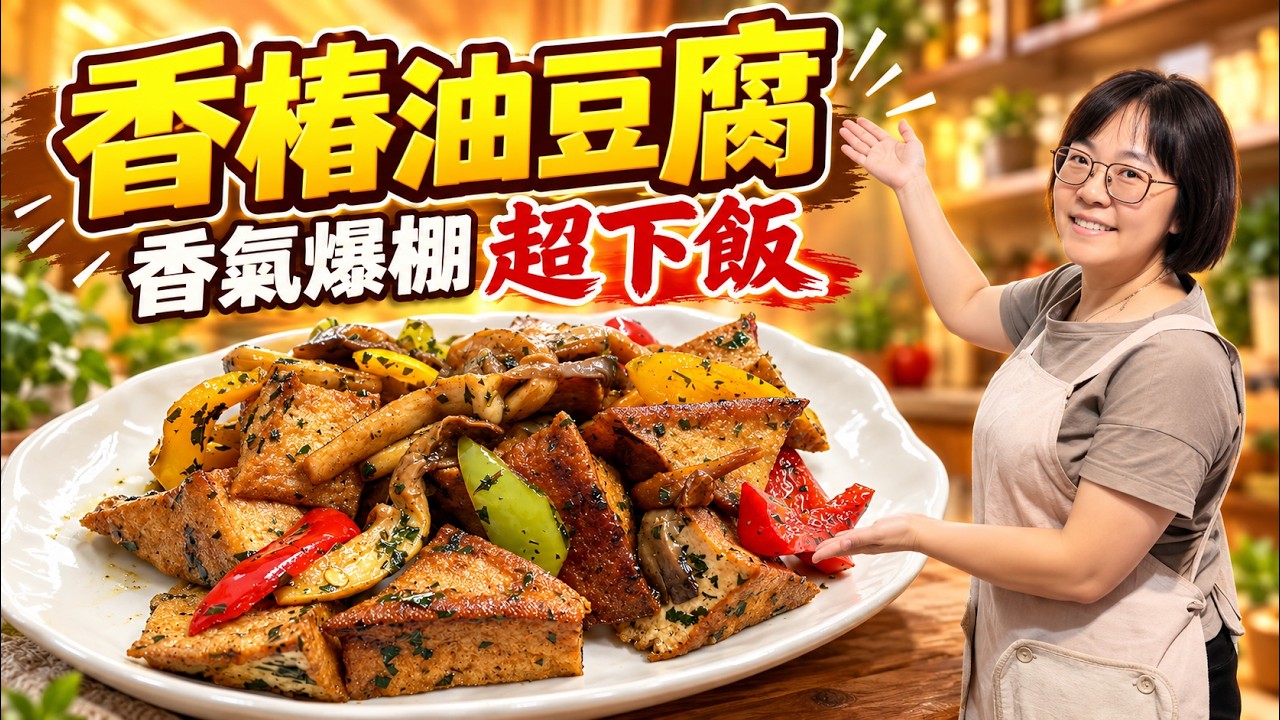
Stir-Fried Oil Tofu with Toon Paste (香椿彩椒炒油豆腐)
Ingredients
Method
- Hold each triangle under a thin stream of water and rub gently while pressing and releasing. Cloudy oil will bleed out. Press enough to flush it, but never squeeze hard or the skin tears and the tofu breaks apart in the wok.
- Cut each triangle in half into smaller sauce-friendly pieces. Halve the red and yellow peppers, remove stem and inner membrane, and slice into pieces roughly the size of the tofu. Slice any mini sweet peppers the same way.
- Tear the oyster mushrooms into strips by hand. Heat the oil over medium-high heat and fry the mushrooms alone until golden at the edges and nutty-smelling. This aroma base cannot be recovered if the mushrooms are added later.
- Add the oil tofu and all bell peppers, pour in the soy sauce and toss to coat. Drop the heat to low, then add toon paste, vegetarian oyster sauce and white pepper. Let the paste melt into the oil for a few seconds, then return to high heat.
- Add no water: the mushrooms and soy sauce supply all the moisture. Toss constantly over high heat for about 30-40 strokes until every piece is coated and the tofu looks darker and heavier. Turn off the heat and plate immediately; serve with plain rice.
Notes
🌱 Why This Dish
The word 香椿 (xiāng chūn) literally means “fragrant toon,” and the tree behind it, Toona sinensis, is one of the oldest cultivated vegetables in China. Its shoots appear for only a few weeks each spring, which gave rise to the phrase 樹上蔬菜 — “the vegetable that grows on trees.” Zhuangzi wrote of an ancient tree called 大椿 that took eight thousand years for a single spring, and from that image 椿 became a symbol of longevity: you still see 椿萱 (toon and daylily) used in classical poetry to mean one’s parents. In Chinese folk tradition, toon shoots were eaten at the New Year precisely because they stood for a long life.
Its real home, though, is Buddhist vegetarian cooking. Monastic cuisine avoids 五辛 — the five pungent vegetables: garlic, onion, scallion, chives and leek — because they are said to heat the body and unsettle the mind during meditation. That leaves temple cooks with a structural problem: how do you build the savory, aromatic backbone that garlic normally provides? Toon is one of the great answers. Its aroma is pungent and green rather than sulfurous, so it delivers the “savory lift” without breaking the rule, which is why 香椿 appears across Buddhist kitchens from Jiangsu to Taiwan in dishes like 香椿拌豆腐 (toon paste tossed with cold silken tofu) and 香椿炒飯 (toon fried rice). Toon paste in a jar is simply that tradition made shelf-stable — leaves blended with oil and salt, frozen, and scooped out as needed.
The tofu half of the dish has its own history. 油豆腐 — tofu pressed to expel water, cut and deep-fried until the surface puffs into a honeycomb — is a preservation trick from an era without refrigeration: frying sealed the bean curd and let it keep for days. Cooks quickly learned that the same honeycomb made it the best sauce-carrier in the pantry, and it became the backbone of 白菜滷, 關東煮 and countless home stir-fries. Paired here with sweet peppers and mushrooms, the dish lands squarely in Taiwanese 家常菜 territory: quick, cheap, allium-free, and built to be packed into a lunchbox the next morning.