 Dou Dou (豆豆)
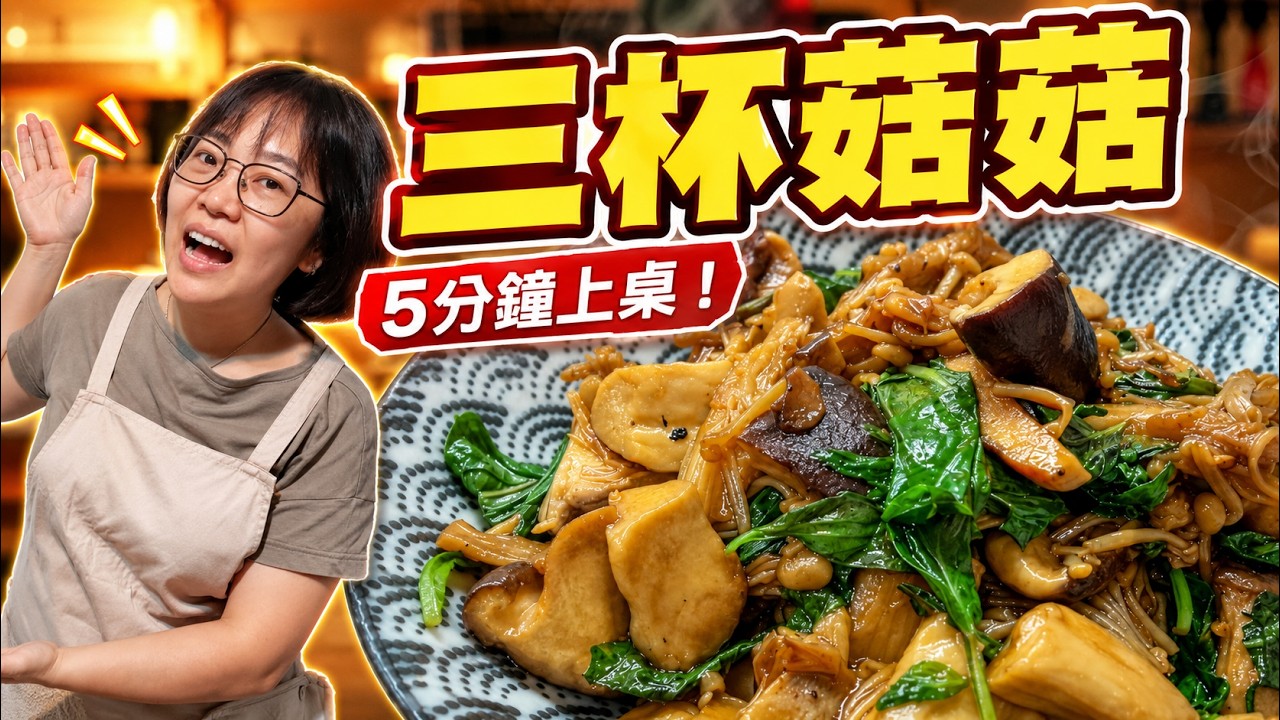
This Three Cup Mushroom stir-fry brings together three varieties of mushrooms in a fragrant, savory-sweet sauce with aromatic Thai basil — ready in just 5 minutes.
這道三杯菇菇將三種菇類結合在香濃的醬汁中,搭配九層塔的獨特香氣,只需5分鐘就能完成,是忙碌上班族最理想的快速家常菜。
📹 Watch the Recipe
Full video tutorial by 芭樂媽的家 Qistin Wong TV:
🥘 Why This Recipe Works
The “Three Cup” (三杯/sān bēi) technique is one of Taiwan’s most beloved cooking methods, traditionally using equal parts soy sauce, sesame oil, and rice wine to create a deeply savory, slightly sweet glaze. In this vegan adaptation, we swap the wine for vegan oyster sauce and add a touch of agave nectar, letting three different mushroom varieties absorb every drop of flavor.
What makes this dish truly shine is the contrast of textures: tender king oyster mushrooms torn into irregular strips that grip the sauce, silky enoki mushrooms that soften into the background, and a third mushroom of your choice that adds its own unique bite. The Thai basil — added at the very last moment — releases its peppery, anise-like fragrance in seconds, elevating the entire dish from simple stir-fry to restaurant-quality comfort food.
3 kinds of mushrooms, one pan, 5 minutes. No deep-frying, no complicated sauces — just golden-seared mushrooms tossed in a glossy umami glaze and finished with fresh herbs. Serve over steamed rice for a complete weeknight dinner that rivals any takeout.
🛒 Ingredients
| Ingredient | Amount | Notes |
|---|---|---|
| 杏鮑菇 (king oyster mushrooms) | 2 | Torn into irregular strips by hand |
| 金針菇 (enoki mushrooms) | 1 pack | Trimmed, cut into thirds, separated |
| 其他菇類 (additional mushrooms) | 1 cup | Shiitake, shimeji, or your favorite |
| 九層塔 (Thai basil) | 1 handful | Leaves picked, washed, dried |
| 葡萄籽油 (grape seed oil) | 2 tbsp | Or other neutral cooking oil |
| 素蠔油 (vegan oyster sauce) | 1 tbsp | Mushroom-based sauce |
| 醬油 (soy sauce) | 1 tbsp | Light soy sauce preferred |
| 龍舌蘭蜜 (agave nectar) | 1 tsp | Or maple syrup / sugar |
| 黑胡椒 (black pepper) | To taste | Freshly ground |
| 香辣粉 (chili powder) | To taste | Optional, for heat |
👨🍳 Instructions
Step 1: Prepare the Mushrooms
- Trim the enoki mushrooms at the root end and cut into thirds. Gently separate the strands with your fingers so they cook evenly.
- Tear the king oyster mushrooms lengthwise into thick, irregular strips — the uneven surface catches more sauce than a clean knife cut.
- Cut your third mushroom variety into bite-sized pieces (halve or quarter shiitake caps, separate shimeji clusters).
- Pick the Thai basil leaves from the stems, wash thoroughly, and pat dry. Set aside.
Step 2: Sear the Mushrooms
- Heat a large non-stick or well-seasoned wok over medium-high heat.
- Add grape seed oil and swirl to coat the surface. Because mushrooms absorb oil quickly, you may need to add a little more as they cook.
- Add all the prepared mushrooms to the pan in a single even layer. Let them sear undisturbed for 1-2 minutes until the bottoms turn golden.
- Toss and continue cooking for another 2-3 minutes until the mushrooms are softened, shrunken, and evenly golden-brown on the edges.
Step 3: Add the Sauce
- Reduce heat to medium. Add vegan oyster sauce (1 tbsp), soy sauce (1 tbsp), and agave nectar (1 tsp).
- Stir vigorously to coat every piece of mushroom in the glossy sauce.
- Sprinkle in black pepper and chili powder (if using) to taste. Toss to combine.
Step 4: Finish with Thai Basil
- Add the Thai basil leaves all at once.
- Stir for just 3-5 seconds — the residual heat will wilt the leaves instantly.
- Remove from heat immediately. Overcooking turns Thai basil dark and bitter.
Step 5: Serve
- Transfer to a serving plate immediately. The mushrooms will continue to absorb the sauce even off the heat.
- Serve piping hot over steamed jasmine rice or tossed into noodles.
- Garnish with extra Thai basil leaves and a sprinkle of white sesame seeds if desired.
💡 Tips & Substitutions
| Problem | Solution |
|---|---|
| No Thai basil available? | Substitute with fresh cilantro (香菜) — it adds a different but equally aromatic note. Or use regular basil for a milder Italian twist. |
| No agave nectar? | Any liquid sweetener works: maple syrup, date syrup, or a pinch of white sugar dissolved in a teaspoon of water. |
| Mushrooms releasing too much water? | Make sure your pan is hot enough before adding the mushrooms. Sear in a single layer and don’t overcrowd — working in batches if necessary. The drier the sear, the more flavor. |
| Want more protein? | Add cubed firm tofu or pre-cooked edamame during the sauce step. They’ll absorb the three-cup flavors beautifully. |
📊 Nutrition
Per serving (1/3 of recipe, without rice): ~95 calories, 5g protein, 6g fat, 8g carbohydrates, 3g fiber. A light, nutrient-dense dish that’s naturally gluten-free (check your oyster sauce label) and oil-free optional.
Ingredients
Method
🌱 Why This Dish
The “Three Cup” (三杯) method traces its roots to the Hakka people of southern China and Taiwan, where the combination of soy sauce, sesame oil, and rice wine became a foundational flavor profile. The three equal measures symbolize balance and harmony — a philosophy central to both Hakka cooking and Chinese medicine.
In Buddhist vegetarian cuisine (寺院素食 / sì yuàn sù shí), the technique was adapted by replacing rice wine with mushroom broth or water, making it suitable for monastic kitchens that abstain from alcohol. Mushrooms have long been prized in Chinese Buddhist cooking as a “meat substitute” (素肉 / sù ròu) because of their dense umami and satisfying chew. The shiitake mushroom (香菇 / xiāng gū), in particular, is considered a “longevity food” in traditional Chinese medicine, believed to boost immune function and nourish the blood.
Today, three-cup mushroom dishes are found everywhere from temple dining halls in Taipei to vegan restaurants in Kuala Lumpur and Shanghai. The name 三杯菇菇 (sān bēi gū gū) literally means “three-cup little mushrooms” — the doubled 菇 (gū, mushroom) adding a playful, affectionate tone in Chinese that hints at the dish’s homestyle, unpretentious character.
This quick, one-pan version honors that tradition while making it accessible for busy home cooks. Five minutes, three mushrooms, one unforgettable meal.