 Dou Dou (豆豆)
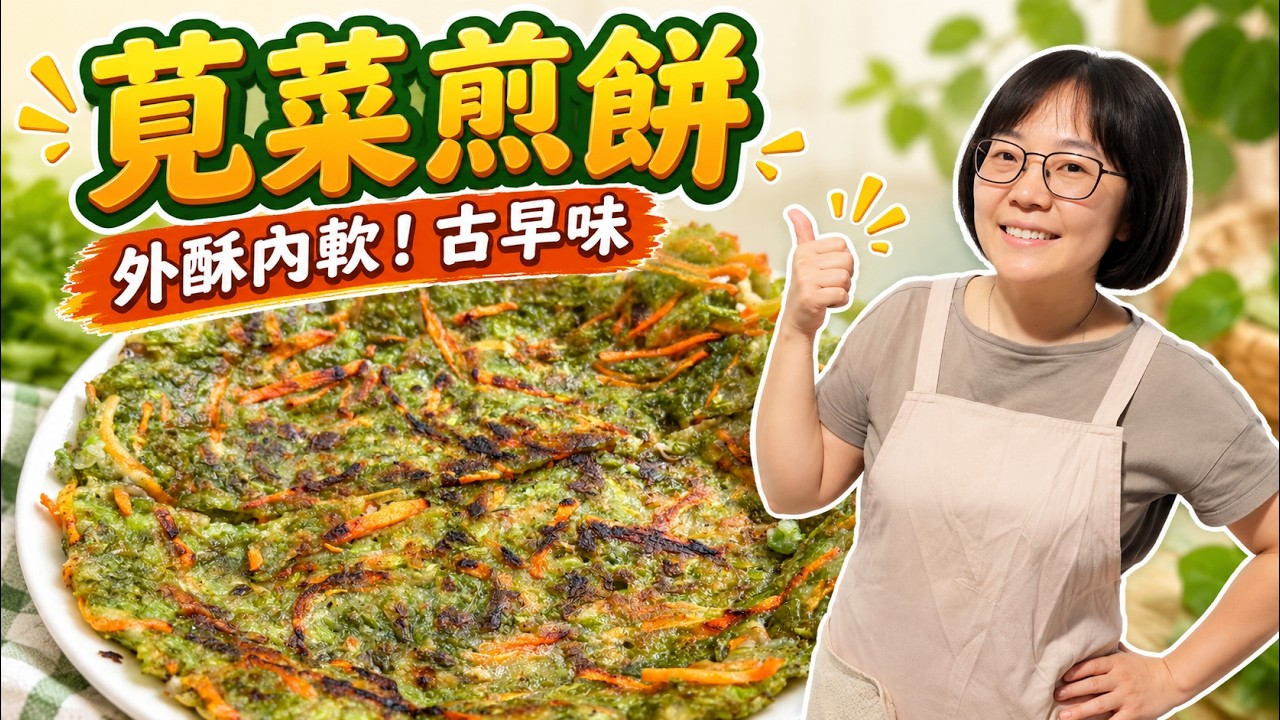
This egg-free, crispy Taiwanese amaranth pancake (莧菜煎餅) is a beloved old-school home classic — golden-crisp outside, soft and springy inside, packed with hidden greens.
這道不加蛋的古早味莧菜煎餅,外酥內軟、帶點Q度,把莧菜、紅蘿蔔和秀珍菇包進一點點粉漿裡,是懷舊又討喜的家常味道。
📹 Watch the Recipe
Recipe by 芭樂媽的家 Qistin Wong TV
🥘 Why This Recipe Works
On the island of Taiwan, few things taste more like a grandmother’s kitchen than a pan of 莧菜煎餅 (gǒucài jiānbǐng) sizzling on the stove. Qistin Wong’s take is brilliantly simple: instead of stir-frying amaranth, she folds the tender leaves into a whisper-thin batter that only lightly coats the greens — just enough to hold them together, never so much that you taste raw flour.
The genius is in the flour blend. A trio of all-purpose flour, rice flour, and corn starch gives the pancake its signature contrast: a shatteringly crisp golden edge that gives way to a soft, gently chewy (Q) center. Shredded oyster mushrooms mimic shredded chicken for body and an umami boost, while fine carrot strips add natural sweetness and color — a favorite trick for sneaking vegetables into picky kids.
8 simple ingredients, one pan, 20 minutes — a breakfast or afternoon tea snack that proves vegan home cooking at its most humble and satisfying.
🛒 Ingredients
| Ingredient | Amount | Notes |
|---|---|---|
| 莧菜 (Amaranth greens) | ½ bunch | Washed, finely chopped |
| 紅蘿蔔 (Carrot) | a small handful | Shredded into fine strips for color |
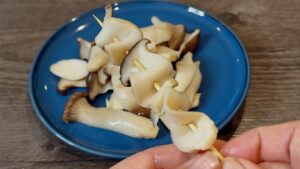
| 秀珍菇 (Oyster mushrooms) | 3 pieces | Pulled into thin threads like shredded chicken |
| 中筋麵粉 (All-purpose flour) | 70 g | Structure of the batter |
| 再來米粉 (Rice flour) | 1 tbsp | Adds crispness |
| 玉米粉 (Corn starch) | 1 tbsp | For the soft, chewy Q texture |
| 水 (Water) | 130 ml | Adjust to your greens’ moisture |
| 胡椒粉 (White pepper) | ½ tsp | Warm, subtle heat |
| 鹽 (Salt) | ½ tsp | To taste |
| 食用油 (Cooking oil) | as needed | For pan-frying |
| 海苔碎 (Nori strips, optional) | a handful | Chopped fine — adds aroma |
👨🍳 Instructions
Step 1 — Prep the greens
- Wash the amaranth well and use about half the bunch. Shake off excess water, then chop it finely into small, even pieces.
- Shred a small carrot into fine matchstick strips so it threads color through every bite.
- Pull the oyster mushrooms apart into thin, feathery threads — as if you were shredding cooked chicken.
Step 2 — Make the batter
- In a large bowl, combine 70 g all-purpose flour with 1 tbsp rice flour and 1 tbsp corn starch.
- Add the chopped amaranth, carrot strips, and mushroom threads to the dry mix.
- Gradually pour in 130 ml water, stirring until everything comes together into a loose, slightly runny batter that just coats the leaves.
- Season with ½ tsp salt and ½ tsp white pepper, and fold to distribute. If adding nori, toss in the chopped strips now.
Step 3 — Fry the pancake
- Heat a generous slick of oil in a large (28 cm) non-stick pan over medium heat.
- Pour in the whole batter and spread it into a single thin, even pancake, pressing it flat with a spatula.
- For a crisp edge, press it as thin as you dare — the thinner the cake, the crunchier the rim.
Step 4 — Flip & finish golden
- Cook over medium-low until the underside turns a deep golden brown.
- Cut the pancake into 4 sections with a spatula to make flipping easy, then flip each piece.
- Continue cooking until the second side is equally golden and crisp.
Step 5 — Serve
- Transfer to a plate, cut into wedges, and eat hot while the edges are at their crispiest.
- Perfect as breakfast, an afternoon snack, or a side with congee.
💡 Tips & Substitutions
| Problem / Question | Fix / Answer |
|---|---|
| Why rice flour + corn starch? | The trio gives that signature contrast — crisp outer shell, soft chewy (Q) center. Skipping either changes the texture. |
| My kids won’t eat vegetables | The batter coats everything, so carrots and mushrooms vanish into a tasty pancake — they’ll eat the greens without noticing. |
| Batter too thick or too thin? | It should only barely coat the leaves, not drown them. Add a splash of water if stiff; a spoon of flour if too runny. |
| No amaranth on hand? | Swap in long beans (長豆/菜豆) cut into small pieces, or any leafy green — the creator’s mother made it with yard-long beans. |
| Thin & crispy or thick & soft? | Both work — press thin for crisp edges, leave thick for a softer, breadier pancake. It’s personal preference. |
📊 Nutrition
~240 calories per serving (makes 2–4 servings). Carbs ~38 g · Protein ~5 g · Fat ~7 g. A light, mostly-vegetable pancake — the batter is the only source of carbs, so it’s naturally low in fat and filling.
Ingredients
Method
- Wash and finely chop about half a bunch of amaranth. Shred a small carrot into fine strips. Pull 3 oyster mushrooms into thin, feathery threads.
- In a large bowl mix 70 g all-purpose flour, 1 tbsp rice flour, and 1 tbsp corn starch. Add the greens, carrot, and mushrooms. Gradually stir in 130 ml water until a loose batter that just coats the leaves. Season with ½ tsp salt and ½ tsp white pepper; fold in chopped nori if using.
- Heat oil in a large 28 cm non-stick pan over medium. Pour in the batter and spread into one thin, even pancake, pressing flat with a spatula. The thinner, the crispier the edge.
- Cook over medium-low until the underside is deep golden. Cut into 4 sections to make flipping easy, then flip each piece. Cook until both sides are golden and crisp.
- Transfer to a plate, cut into wedges, and eat hot while the edges are crispest. Great for breakfast or an afternoon snack.
Notes
🌱 Why This Dish
古早味 (gǔzǎo wèi) translates literally to “old-early flavor” — Taiwan’s affectionate term for food that tastes of childhood, made the way grandmothers made it with whatever was cheap and in season. Amaranth (莧菜) is one of the humblest of greens, and turning it into a pancake was the frugal home cook’s way of stretching leafy vegetables into a filling, budget-friendly meal for a crowd of hungry kids.
The Chinese name 煎餅 (jiān bǐng, “pan-fried cake”) refers to a broad Taiwanese home tradition of griddled, flour-bound vegetable cakes. The egg-free version shown here sits naturally within the island’s Buddhist vegetarian heritage, where temple-adjacent kitchens developed plant-based breakfast pancakes seasoned simply with salt and pepper. It was eaten for breakfast or as an afternoon tea (下午茶) snack that both costs almost nothing and satisfies.
For Qistin Wong (芭樂媽), the dish is pure nostalgia — it’s what her mother made when the family was short on pickled greens, substituting yard-long beans when amaranth was out of season. A simple, honest reminder that the best comfort food needs no eggs, no meat — just fresh greens, a little flour, and a hot pan.