Dou Dou (豆豆)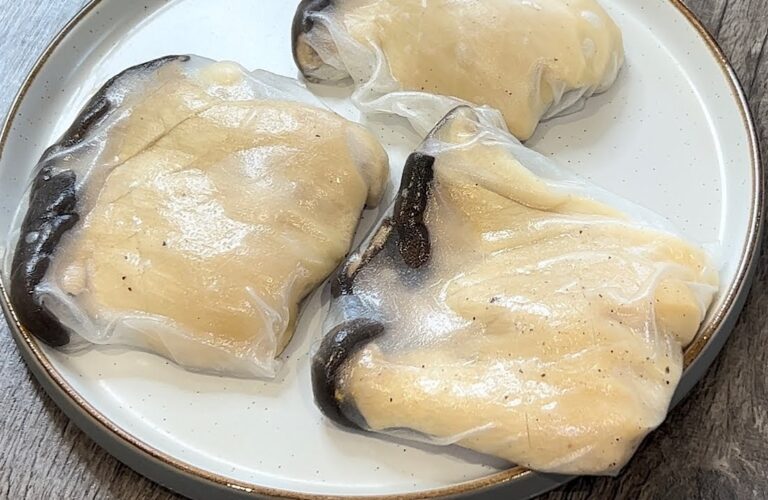
Crispy on the outside, impossibly juicy on the inside — this vegan king oyster mushroom katsu mimics fried chicken so convincingly you’ll do a double-take. The secret? Rice paper wrapping that creates a thin, crackling skin, while the mushroom itself delivers that tender, pull-apart texture. 这道纯素杏鲍菇炸排脆嫩多汁,米纸包裹的杏鲍菇炸出鸡排般的口感与层次,配上浓郁日式咖喱,令人欲罢不能。
📹 Watch the Recipe
Recipe by 家常素 Irene Yong (@HomemadeVeganIreneYong)
🥘 Why This Recipe Works
杏鲍菇炸排 (xìng bào gū zhá pái) is a brilliant plant-based take on Japanese katsu — a dish traditionally made with pounded chicken breast, breaded and deep-fried until golden. Here, king oyster mushrooms (杏鲍菇) take centre stage. Their dense, meaty texture makes them the ideal candidate for katsu; when boiled briefly and scored, they become tender enough to tear like shredded chicken while retaining a satisfying bite.
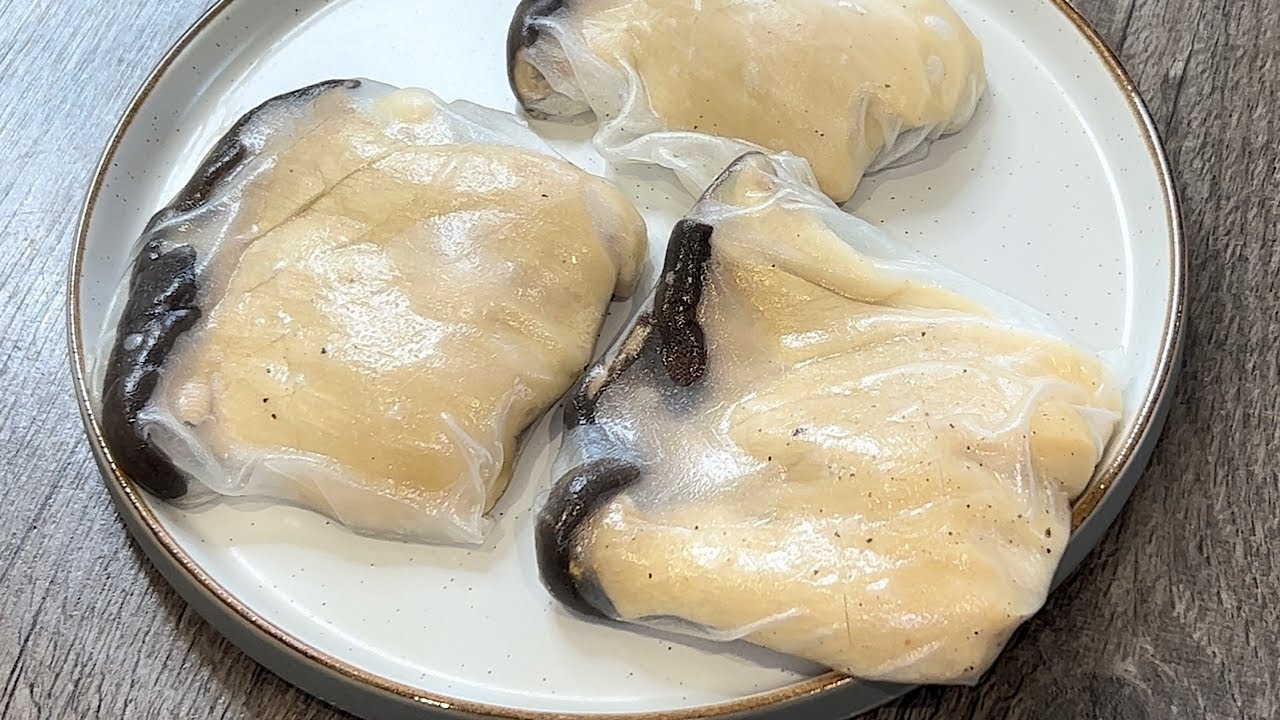
The rice paper trick is the game-changer. A single sheet, softened and wrapped around each mushroom piece, forms a thin, crackling “skin” when fried — exactly what makes chicken katsu so addictive. A light batter of flour and nutritional yeast adds a savoury umami boost, while panko breadcrumbs deliver that signature shatter-crunch. Paired with a rich Japanese curry studded with carrots and potatoes, this dish turns a humble mushroom into a showstopping centrepiece.
11 ingredients, one skillet, 45 minutes.
🛒 Ingredients
For the Katsu
| King oyster mushrooms (杏鲍菇, xìng bào gū) | 200g | About 3-4 large stems |
| Rice paper sheets (米纸, mǐ zhǐ) | 4-6 sheets | Round sheets, 22cm diameter |
| Plain flour (普通面粉, pǔ tōng miàn fěn) | 50g | |
| Nutritional yeast (营养酵母, yíng yǎng jiào mǔ) | 1 tbsp | Adds savoury/umami flavour |
| Water (水, shuǐ) | 120ml | For the batter |
| Panko breadcrumbs (面包糠, miàn bāo kāng) | 1 cup | Japanese-style coarse crumbs |
| Salt & black pepper (盐和黑胡椒, yán hé hēi hú jiāo) | To taste | |
| Cooking oil (食用油, shí yòng yóu) | For deep frying | Neutral oil like canola or sunflower |
For the Japanese Curry
| Carrot (胡萝卜, hú luó bo) | 100g | Diced into small cubes |
| Potato (土豆, tǔ dòu) | 200g | Peeled and cubed |
| Onion (洋葱, yáng cōng) | 100g | Diced |
| Japanese curry cubes (日式咖喱块, rì shì gā lí kuài) | 2 cubes (55g) | Mild or medium spicy |
| Water (水, shuǐ) | 750ml | |
| Cooking oil (食用油, shí yòng yóu) | ½ tbsp | For sautéing |
👨🍳 Instructions
Step 1: Prepare the Mushrooms
- Bring a pot of water to a boil. Add the king oyster mushrooms and boil for 5 minutes
- Drain and let cool slightly until comfortable to handle
- Use a roll-cut technique: cut each mushroom diagonally into thick, flat pieces (about 1.5cm thick), rotating the mushroom 90° between cuts
- Lightly score the cut surfaces in a crosshatch pattern — this helps the seasoning penetrate and mimics the texture of shredded chicken
- Season both sides with salt and black pepper
Step 2: Make the Japanese Curry
- Heat ½ tablespoon of oil in a pot over medium heat. Sauté the diced onion until it starts browning, about 3 minutes
- Add the cubed potato and carrot, stir-fry for 1-2 minutes
- Pour in 750ml water and bring to a boil
- Add the Japanese curry cubes, stirring until dissolved
- Reduce heat to low, cover, and simmer for 10-15 minutes until the vegetables are tender
- Taste and adjust seasoning if needed. Keep warm
Step 3: Wrap in Rice Paper
- Fill a shallow dish with lukewarm water
- Dip one rice paper sheet in the water for 3-5 seconds until just softened — it should be pliable but not soggy
- Lay the softened sheet on a clean work surface. Place one mushroom piece in the centre
- Fold the sides of the rice paper over the mushroom, then roll to seal completely. Repeat for all pieces
- Use a bamboo skewer or toothpick to poke several small holes through each wrapped piece — this prevents air pockets during frying
Step 4: Batter and Bread
- In a shallow bowl, whisk together the flour, nutritional yeast, and 120ml water until smooth — the batter should be thin enough to drip but thick enough to coat
- Place the panko breadcrumbs in another shallow dish
- Working one at a time, dip each rice-wrapped mushroom into the batter, letting excess drip off
- Transfer to the panko and press firmly on all sides to coat evenly. Turn and press again
Step 5: Deep Fry
- Heat oil in a deep pan or wok to 170°C (340°F) — test with a breadcrumb; it should sizzle immediately
- Gently lower the breaded mushrooms into the oil, working in batches to avoid crowding
- Fry for 2-3 minutes per side until deep golden brown and crispy
- Drain on a wire rack or paper towel-lined plate
- Slice each katsu into strips and serve over steamed rice with the Japanese curry
💡 Tips & Substitutions
| Can’t find king oyster mushrooms? | Use large portobello mushrooms sliced into thick steaks. The texture will be slightly different but still delicious. |
| No nutritional yeast? | Skip it, or add ½ tsp garlic powder and ½ tsp onion powder to the batter for savoury depth. |
| Don’t have a thermometer? | Drop a pinch of panko into the oil — if it bubbles steadily and floats to the surface immediately, the oil is ready (around 170°C). |
| Can I bake instead of deep-fry? | Yes. Arrange on a baking tray, spray or brush with oil, and bake at 200°C (400°F) for 15-18 minutes, flipping halfway. Less crispy but still tasty. |
| Japanese curry cubes not available? | Use 2 tbsp curry powder + 1 tbsp flour + 1 tsp sugar + 500ml vegetable stock. Simmer until thickened. |
📊 Nutrition
Per serving (serves 2 with curry and rice)
~420 cal · Protein: 12g · Carbs: 52g · Fat: 18g · Fiber: 6g
Ingredients
Method
Notes
🌱 Why This Dish
杏鲍菇炸排 (xìng bào gū zhá pái) — King Oyster Mushroom Katsu — is a creative vegan interpretation of Japanese katsu (カツ), a beloved dish introduced to Japan from the West in the late 19th century. The word katsu is a shortening of cutlet, and it traditionally refers to a breaded, deep-fried pork or chicken cutlet served with a thick Worcestershire-based sauce. Over time, Japanese curry rice (カレーライス, karē raisu) became an inseparable partner — curry katsu is now a staple of Japanese home cooking and comfort food shops alike. This vegan version honours that tradition while showcasing the remarkable versatility of king oyster mushrooms, which have been cultivated in East Asia for over a century. The rice paper wrapping technique is a clever innovation from the plant-based community, solving the problem of creating a cohesive “skin” without eggs or dairy. In Chinese Buddhist vegetarian cooking (斋菜, zhāi cài), the art of using mushrooms to mimic meat textures has been refined over centuries, and this dish is a modern, cross-cultural expression of that philosophy — proving that plant-based eating need never sacrifice flavour or satisfaction.