 Dou Dou (豆豆)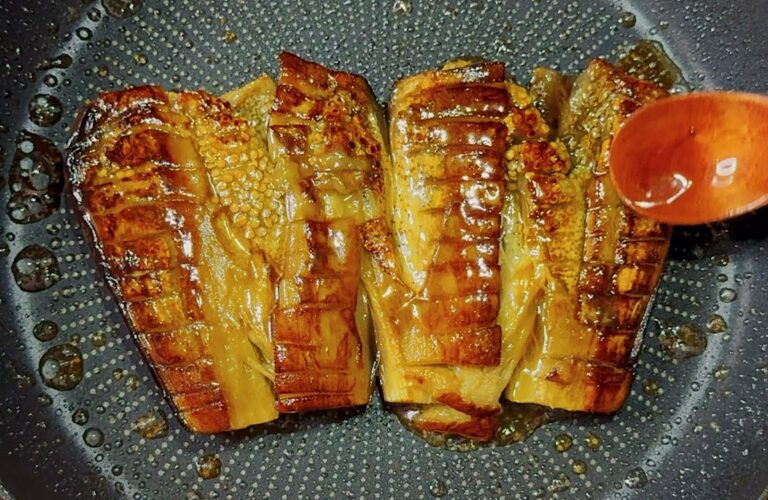
Eggplant transformed into sweet, savory “unagi” — glazed in a rich kabayaki sauce and absolutely irresistible. Ready in 30 minutes. 将茄子变身成香甜的”素鳗鱼”,淋上浓郁蒲烧酱汁,30分钟即可享用。
📹 Watch the Recipe
Recipe by Homemade Vegan Irene Yong
🥘 Why This Recipe Works
Kabayaki (蒲烧 / pú shāo) is a classic Japanese grilling technique where ingredients are brushed with a sweet soy glaze and cooked until caramelized. Traditionally used for eel (unagi), this genius vegan version swaps in eggplant — and the result is stunning.
Eggplant (茄子 / qié zi) soaks up the kabayaki sauce like a sponge, delivering that same tender-yet-satisfying bite as unagi, with zero seafood. The skin gets slightly charred, the flesh turns silky, and the glaze caramelizes into pure umami.
This version is: 6 ingredients, one pan, 30 minutes.
🛒 Ingredients
| Eggplant (茄子) | 2 large | Chinese or Japanese — long, slender ones work best |
| Soy sauce (酱油) | 3 tbsp | Light soy sauce preferred |
| Mirin (味醂) | 2 tbsp | Or substitute 1 tbsp sugar + 1 tbsp water |
| Sugar (糖) | 1 tbsp | Brown sugar or coconut sugar |
| Ginger, grated (姜) | 1 tsp | Fresh, for the sauce |
| Vegetable oil | 2 tbsp | For pan-frying |
| Optional: Sesame seeds (芝麻) | 1 tsp | Toasted, for garnish |
| Optional: Nori (seaweed) sheet (紫菜) | 1 sheet | Wrap around eggplant for extra “unagi” vibe |
👨🍳 Instructions
Step 1: Prep the Eggplant
- Wash eggplant and pat dry. Do not peel — the skin holds everything together
- Slice each eggplant in half lengthwise
- Steam or microwave for 3-4 minutes until just tender (this shortens pan time)
- Gently press out excess moisture with paper towels
Step 2: Make the Kabayaki Sauce
- In a small bowl, whisk together soy sauce, mirin, sugar, and grated ginger
- Stir until sugar dissolves completely
Step 3: Pan-Fry the Eggplant
- Heat oil in a non-stick pan over medium-high heat
- Place eggplant halves cut-side down
- Cook 3-4 minutes until the cut side is golden brown and caramelized
- Flip and cook the skin side 2 minutes
Step 4: Glaze
- Reduce heat to medium-low
- Pour kabayaki sauce into the pan
- Let it simmer and bubble — spoon sauce over the eggplant repeatedly
- Cook 2-3 minutes until the sauce thickens into a glossy glaze
- The eggplant should look lacquered and deeply caramelized
Step 5: Serve
- Optional: wrap each eggplant half with a strip of nori before serving
- Sprinkle toasted sesame seeds on top
- Serve over steamed rice with a side of pickled ginger or vegetables
💡 Tips & Substitutions
| Sauce too thin? | Simmer longer — it should coat the back of a spoon |
| No mirin? | Mix 1 tbsp sugar + 1 tbsp water + splash of vinegar |
| Want it crispier? | Skip the steaming step — go straight to pan-frying (adds 5 min) |
| Eggplant too bitter? | Sprinkle salt on cut sides, let sit 10 min, rinse — this draws out bitterness |
📊 Nutrition
Per serving (serves 2 as a main over rice)
~185 calories · Protein: 4g · Carbs: 22g · Fat: 10g · Fiber: 6g
🌱 Why This Dish
Kabayaki-style cooking is a beautiful example of how Chinese and Japanese culinary traditions overlap in Buddhist vegetarian cooking. The technique of glazing vegetables in a sweet soy reduction appears across East Asian temple cuisine, where monks needed satisfying, protein-rich meals without meat or seafood.
Eggplant is a particular favorite in Chinese Buddhist kitchens (斋菜 / zhāi cài) because its meaty texture and ability to absorb flavors make it an ideal stand-in for heavier ingredients. This dish proves you don’t need fish to make unforgettable kabayaki.